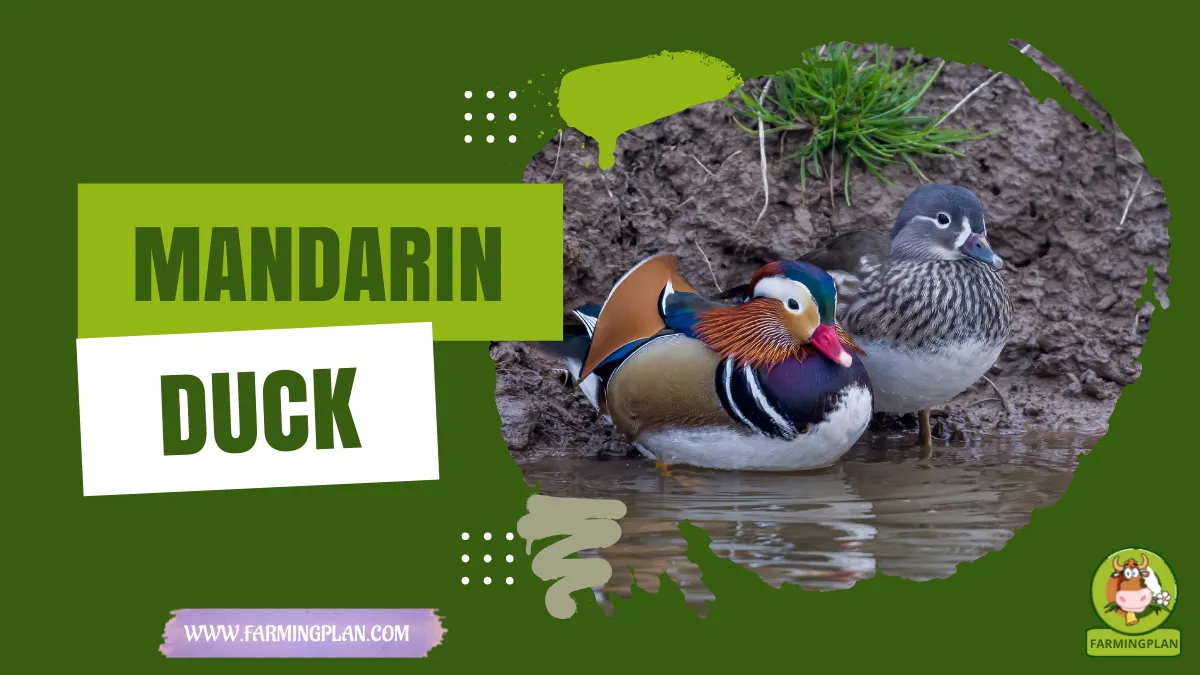
The Mandarin Duck (Aix galericulata) stands out as one of the most stunning bird species in the world of waterfowl. As a long-time farming specialist, I always feel pure excitement whenever I watch these beautiful birds glide across small lakes, slow-moving streams, or quiet backyard ponds. Native to East Asia, including regions across China, Japan, and eastern Russia, these medium-sized perching ducks belong to the same genus as the North American Wood Duck. People instantly recognize the vibrant male by his metallic green crest, broad white spectacles around his dark eyes, soft purple breast, and iconic orangey “sail fins” that rise gracefully off his back.
The female Mandarin duck presents a far more subtle beauty with her gray head, white eye ring, and mottled brownish plumage designed by nature for perfect camouflage during nesting. Over the decades, escapees from private collections have established wild, naturalized populations across Western Europe, Eurasia, Central Park in New York City, and various park sites throughout the Bay Area. Whether you spot them in nature reserves or raise them in private aviaries, caring for these exotic-looking birds remains a deeply rewarding adventure.
History and Origin of Mandarin Duck
I remember reading old natural history texts when I first began breeding exotic waterfowl, and the rich heritage of this species instantly captivated me. Historically documented by early naturalists like Engelbert Kaempfer and George Edwards, the bird gained wide scientific recognition through Johann Friedrich Gmelin and Carl Linnaeus’s early taxonomic works such as Systema Naturae. German naturalist Friedrich Boie formally established its genus, distinguishing it within the Palearctic birding world.
In traditional Asian folklore, especially across China and Japan, people view these birds as lifelong symbols of love and fidelity because pairs form strong seasonal bonds. Wild populations originally nested in dense, deciduous forests along river valleys throughout China, Korea, Japan, and Far East Russia. During the nineteenth and twentieth centuries, European waterfowl collectors imported these colorful birds for public parks and private estates.
Over time, accidental escapees established healthy breeding flocks in places like Berlin, London, and the United Kingdom. In North America, escapees sparked huge excitement among local birders, long-lensed Homo sapiens, and photographers. Famous sightings at Central Park in New York City, the Hudson Valley, and West Coast spots like Burnaby Lake, Stow Lake in Golden Gate Park, and Juanita Beach Park near the City of Kirkland drew massive crowds. Today, taxonomy experts confirm that despite their unique acrocentric chromosomes, they share deep evolutionary ties with forest-dwelling wood ducks.
Read More: Chigu Goat Care Guide: Master High-Altitude Breed Farming
Characteristics of Mandarin Duck
When you look closely at a male Mandarin Duck pair, the striking differences between the sexes immediately grab your attention. The drake sports an intricate display of bright colors during the autumn and winter breeding season. He has a crimson red bill, deep orange cheeks, a wide white stripe over each eye, and brilliant iridescently shaded feathers along his back. His most famous features remain the two raised orange wing sails that stick up like miniature boat sails. These remarkable feathers help him attract females during courtship displays.
The female looks entirely different but equally graceful. She wears a gray head, a neat white spectacle mark around her eye, and light brown mottled feathers across her body. Her subtle colors give her perfect natural protection while she sits on eggs inside hollow tree cavities. During the late summer molt, males shed their bright colors and enter an “eclipse plumage” state. For a few months, the male looks almost identical to the female, saving his energy while growing fresh flight feathers. Both sexes possess sharp claws on their webbed feet, allowing them to perch comfortably on tree branches high above the ground.
Nature and Natural Temperament of Mandarin Duck
In my years managing farm aviaries, I have observed that Mandarins display a surprisingly calm yet active personality compared to standard domestic Mallards. They love spending their days swimming peacefully, foraging along grassy banks, and preening their feathers on semi-submerged logs. They are shy around humans by nature, but they quickly become accustomed to a consistent daily routine and a gentle keeper. Unlike noisy farm ducks, Mandarins communicate through quiet whistles, soft grunts, and low clucks.
These birds naturally live in small flocks, enjoying the company of their own kind and other non-aggressive waterfowl like Hooded Merganser pairs. During the spring mating season, males display feisty behavior as they chase rivals to defend their chosen mate. They display strong agility in the air, flying easily through dense tree branches. Because they retain their wild instincts, they will fly away if you do not house them in a fully enclosed aviary or pin their flight feathers safely. They rarely display aggression toward humans, making them a delightful addition to any well-planned natural sanctuary.
Food Guidelines and Nutrition of Mandarin Duck
Feeding your waterfowl a clean, balanced diet remains the absolute key to keeping their colors bright and their immune systems strong. In the wild, these omnivorous birds eat a diverse mixture of seeds, acorns, aquatic plants, small fish, snails, and insects. On the farm, I mirror this natural diet by offering a high-quality commercial waterfowl pellet as their daily staple feed.
- Daily Staple: Floating waterfowl pellets containing sixteen percent protein for adults.
- Fresh Greens: Shredded romaine lettuce, duckweed, watercress, and chopped spinach.
- Natural Treats: Whole acorns, mealworms, crickets, and small feeder fish.
- Grit & Calcium: Free-choice insoluble granite grit and crushed oyster shells for proper digestion.
- Clean Water: Fresh, unpolluted water for drinking and washing food.
Avoid throwing white bread, crackers, or processed human snacks into their pond. Bread lacks proper nutritional value and quickly rots in the water, causing dangerous bacterial blooms and respiratory disease. Make sure your birds always have access to clean, moving water while eating, as they must soak their food to swallow it safely.
Purpose and Real-World Usage of Mandarin Duck
People across the world keep these ornamental birds primarily for conservation, private aviculture, education, and aesthetic enjoyment. Unlike domestic white Pekins or heavy Muscovy breeds, farmers do not raise Mandarins for commercial meat or high-volume egg production. Their small body size and unique wild instincts make them ideal for open-air display aviaries, botanical parks, and private waterfowl sanctuaries.
- Ornamental Display: Enhancing private backyard ponds and public gardens with vibrant color.
- Avicultural Preservation: Preserving pure bloodlines and genetic diversity through captive breeding.
- Educational Exhibits: Teaching park visitors about forest ducks and migratory patterns.
- Photography & Art: Inspiring wild bird photography enthusiasts and wildlife artists.
Many birding groups, like the Golden Gate Bird Alliance, feature these birds during educational birding tours. Observing their unique tree-nesting behavior gives students and hobbyists fantastic insights into specialized waterfowl biology.
Features and Rare Qualities of Mandarin Duck
One of the most remarkable traits of this bird involves its unusual nesting habits. While most ducks nest directly on the ground in hidden grass, Mandarins build their nests high up inside hollow tree cavities. After the ducklings hatch, the mother flies down to the ground and calls softly. The tiny, fluffy ducklings jump right out of the high tree hole, bouncing harmlessly off the leaf litter below before following their mother to the nearest water source.
Another fascinating trait involves their genetics. Although they often mingle with other species like Mallards, wild genetic hybridization remains extremely rare due to structural differences in their acrocentric chromosomes. Females also practice conspecific brood parasitism on occasion, laying eggs inside the nest boxes of neighboring females. Their exceptional maneuverability allows them to launch straight out of the water vertically, dodging low tree branches with ease.
“Caring For A Mandarin Duck Brings Endless Joy And Radiant Natural Beauty To Your Backyard Waterfowl Sanctuary.”
Health Issues and Disease Prevention
Maintaining top-tier flock health requires active care, clean water, and daily observation. Waterfowl are generally tough, but poor sanctuary management quickly leads to preventable health troubles.
- Bumblefoot (Pododermatitis): Foot pad infections caused by sharp gravel or rough concrete surfaces. Provide smooth gravel, natural grass, and clean logs.
- Avian Influenza: A dangerous viral infection spread by wild migratory birds. Keep aviaries covered to prevent wild bird droppings from landing inside.
- Aspergillosis: A severe fungal lung infection caused by moldy bedding or rotten feed. Use clean pine shavings and store grain in dry containers.
- Parasites (Flukes & Worms): Internal parasites picked up from dirty standing mud. Deworm your flock twice a year under veterinary guidance.
- Wet Feather: A condition where feathers lose waterproofing due to dirty water or dirty preen glands. Provide daily access to fresh, clean swimming water.
Keep a close eye on your birds every morning. A healthy bird acts alert, swims actively, and maintains crisp, clean feathers. If a bird sits isolated with ruffled feathers, move it to a quiet warm quarantine pen immediately.
Step-by-Step Pet Owner Care Guide of Mandarin Duck
Starting your journey with ornamental waterfowl requires proper preparation, clean space, and the right equipment. Follow these fundamental steps to build a safe, comfortable home for your new birds.
Enclosure Design and Predation Defense
First, construct a completely enclosed predator-proof aviary using half-inch heavy gauge hardware cloth over all sides and the roof. Wild predators like raccoons, foxes, mink, hawks, and stray cats quickly catch free-roaming birds. Bury your wire fencing at least twelve inches underground sloping outward to stop digging animals. Provide plenty of space, aiming for a minimum of fifty square feet per pair. Plant safe ground cover like non-toxic grasses, small shrubs, and weeping willow trees inside the enclosure to offer natural shade and hiding spots.
Water Quality and Pond Setup
Second, install a durable pond system with continuous filtration or a fast drain setup. Mandarins need water to keep their eyes clean, condition their feathers, and mate naturally. A deep rubber stock tank or custom concrete pond with a smooth bottom works best. Install a heavy-duty biological filter combined with a waterfall pump to keep the water moving continuously. Dump and scrub small ponds twice a week to remove waste, algae, and dropped feathers. Ensure your pond features gentle sloping ramps or shallow edges so young ducklings can climb out easily without drowning.
Elevated Nesting Box Installation
Third, mount specialized wood duck style nest boxes high off the ground along the inner walls of your enclosure. Position the boxes four to six feet high, placing a sturdy wooden ramp or thick tree branch right below the entrance hole. Fill the bottom of each nest box with four inches of clean, dry cedar or pine wood shavings. Make sure the entrance hole measures approximately four inches in diameter so the female enters comfortably while larger predators stay out. Place nest boxes away from direct wind and heavy rain.
Daily Feeding and Care Routine
Fourth, establish a calm daily feeding routine to build trust with your birds. Scatter floating waterfowl pellets on top of clean water troughs twice a day, offering just enough food for them to finish within twenty minutes. Throw fresh greens like chopped romaine lettuce into the pond during afternoon visits. Daily visual checks help you catch early signs of illness or injury before problems spread. Always keep fresh drinking water available near feed stations, away from dirty roosting perches.
Winter Maintenance and Seasonal Care
Fifth, prepare your aviary for harsh winter weather by installing water heaters or aeration pumps to keep the pond surface open and free of ice. Mandarins handle cold temperatures well, but their webbed feet can freeze if left on thick ice for extended periods. Build a dry, draft-free three-sided wooden shelter packed with deep straw bedding where your birds can sleep out of the cold winter wind. Increase their feed rations slightly during cold months to help them maintain healthy body weight and warm thermal energy.
Read More: Bango Pigeon Care Guide for Passionate Pigeon Breeders
Expert Tips and Best Practices for Mandarin Duck
- Pinioning vs. Flight Restraints: Pinion young ducklings during their first week if you plan to keep them in open ponds, or keep adult birds in fully roofed aviaries with unclipped wings.
- Mixed Aviary Compatibility: Keep Mandarins alongside peaceful species like Wood Ducks, Teal, or Ringed Teal, avoiding large, aggressive geese or assertive Mallards.
- Provide Elevated Perches: Secure natural oak or pine tree branches across high spots in the enclosure to satisfy their natural perching instinct.
- Maintain Clean Nesting Media: Change out old nest box shavings every spring before the breeding season begins to prevent mold spores.
- Minimize Stress: Avoid sudden loud noises, bright flashlights at night, or frequent capture handling to keep your flock relaxed and healthy.
FAQs
Are Mandarin Ducks legal to own as pets in the USA?
Yes, private keepers can legally own them in most states, but local regulations vary. Some state wildlife agencies require basic permits for non-native waterfowl, so check your local state laws before buying.
Can Mandarin Ducks live peacefully with domestic ducks?
They can live near smaller, gentle duck species in large spaces. However, heavy domestic breeds like Pekins or Rouens can accidentally crush or bully small Mandarins near food bowls.
How long do Mandarin Ducks live in captivity?
With proper care, clean water, and protection from predators, these resilient birds live between twelve to fifteen years in captive aviary settings.
What do Mandarin Duck eggs look like?
The female lays small, smooth, buff-to-ivory white eggs. A typical clutch contains eight to twelve eggs, which she incubates for roughly twenty-eight days.
Where can I find a Mandarin duck for sale?
You can purchase healthy pairs from licensed waterfowl breeders, exotic game bird farms, or specialized aviculture auctions. Always choose reputable breeders who prioritize genetic diversity and bird health.
Conclusion
Bringing these colorful waterfowl onto your farm or backyard sanctuary transforms your outdoor space into a vibrant living haven. From their fascinating tree-nesting behaviors to their striking plumage, caring for them offers endless rewards for dedicated aviculturists and hobby farmers alike. By providing a secure enclosure, clean swimming water, and a balanced diet, you ensure your flock stays happy and vibrant for years to come. Do you have experience raising exotic waterfowl, or are you planning your very first enclosure setup? Share your thoughts, questions, and personal farm stories in the comments below, and pass this guide along to your fellow bird lovers! Discover the vibrant Mandarin Duck! Learn care, behavior, and history in this complete guide for enthusiasts.