Ankole Watusi Cattle captivate everyone who visits my ranch because their dramatic appearance instantly commands attention. As a lifelong livestock specialist, I love working with these legendary animals every single day. Their ancient lineage traces back thousands of years to the Nile River Valley, where early human civilizations first domesticated them. Today, farmers across North America, Europe, Australia, and South America cherish these gentle giants for their striking looks and remarkable survival instincts. Feeding Ankole Watusi Cattle high-quality forage keeps them thriving, while studying Ankole Watusi Cattle traits helps breeders maintain strong genetic heritage across generations.
Whether you manage a large commercial ranch or keep zoo specimens, these magnificent grazers adapt remarkably well to hot, dry grasslands and cold winter conditions alike. In this comprehensive guide, I will share my real-world advice to help you successfully raise, feed, and manage your own majestic herd. Today, farmers across North America, Europe, Australia, and South America cherish Ankole Watusi Cattle for their striking looks, magnificent horns, and remarkable survival instincts. Whether you manage a large commercial ranch with Ankole Watusi Cattle or keep zoo specimens in protected enclosures, these majestic grazers adapt remarkably well to hot, dry grasslands and cold winter conditions alike.

History & Origin of Ankole Watusi Cattle
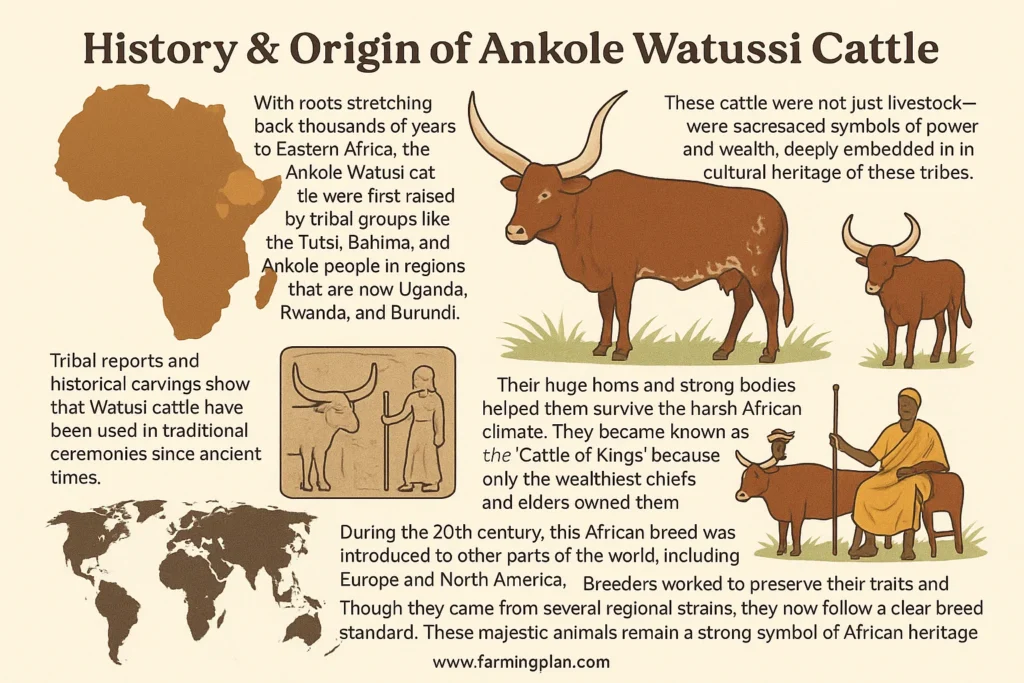
The rich story of these animals begins thousands of years ago along the Nile River Valley in East Africa. Ancient Egyptian hieroglyphs show clear drawings of long-horned cattle that look identical to our modern stock. These early creatures emerged from crossbreeding indigenous long-horned Zebu cattle with ancient Sanga and Aurochs breeds. Over centuries, pastoral groups like the Tutsi tribe and Nkole tribe moved south with their herds into modern-day Uganda, Rwanda, Burundi, and Tanzania. The local people held these beasts in high regard, calling them the “Inyambo” or “Royal Ox.” Ownership symbolized wealth, status, and tribal power rather than mere meat production.
During the late nineteenth and early twentieth centuries, European explorers imported several specimens to European zoos. American ranchers later imported these African longhorns during the mid-twentieth century to build sustainable domestic herds. Registries like the World Watusi Association and the Ankole-Watusi International Registry now track lineage standards, including Foundation Pure and Native Pure lines. The Livestock Conservancy tracks population numbers to ensure conservation efforts preserve this historic genetic pool. By breeding these cattle today, we directly participate in protecting an ancient agricultural legacy that survived centuries of environmental challenges.
Read More: Grey Back Goose Secrets for Amazing Farm Success
Characteristics of Ankole Watusi Cattle
The most eye-catching feature of these animals is undeniably their enormous, sweeping horn structure. These massive crowns are not just for display; they contain complex, honeycombed blood vessels that act as natural radiators. When blood circulates through the internal horn matrix, air passes over the outer surface to thermo-regulate body heat. This natural cooling system lets the animals thrive easily in scorching summer heat without suffering heat stroke.
A single adult’s horn circumference can reach astounding sizes, with legendary bulls setting Guinness World Records like the famous CT Woodie. Beyond their horns, these medium-sized bovines possess lean, athletic bodies belonging to the Bos taurus taxological family. Bulls typically weigh between 1,000 and 1,600 pounds, while cows weigh between 900 and 1,200 pounds. Their short coat comes in vibrant dark red, chestnut, black, or speckled combinations with distinct white markings. They sport noticeable shoulder humps and loose skin dewlaps that help dissipate excess warmth. Newborn calves are born remarkably small, usually weighing only 30 to 50 pounds, which makes calving extremely easy for mother cows.
Temperament, Behavior, and Protective Instincts of Ankole Watusi Cattle
Many beginner ranchers ask me if these long-horned animals display aggressive behavior around humans. In my direct experience, they actually possess a surprisingly calm, curious, and gentle temperament when handled with routine respect. They quickly get used to their caretakers and will walk right up to you in pasture meadows if you offer sweet grain treats. However, you must always stay conscious of their wide horn span when walking past them.
Accidental horn strikes happen easily if an animal turns its head quickly to chase off a pesky fly. Their wild survival instincts remain very strong compared to typical domestic breeds. In the pasture, they exhibit a powerful herd instinct that keeps the group tightly bound together against potential predators. At night, cows gather all calves into the center of the field while adults sleep in a circle facing outward with their massive horns pointed toward danger.
Food and Diet For Ankole Watusi Cattle
Proper nutrition forms the backbone of a healthy ranching operation, but fortunately, these animals have extraordinarily efficient digestive systems. Native to dry African grasslands, they evolved to squeeze maximum nutrition out of tough, low-quality forage and native shrubs. On my pasture, they spend their days as dedicated grazers, eating coarse grasses that standard dairy cattle usually reject. During lush spring months, quality pasture grazing supplies nearly all the nutrients, vitamins, and bulk fiber they require to thrive.

When winter arrives or pastures dry up, you must supplement their diet with good grass hay or alfalfa mixes. Avoid feeding rich grain diets excessively, as heavy carbohydrates can cause bloat, digestive distress, and unwanted fat accumulation. Always supply clean, fresh water daily because a single adult can drink up to fifteen gallons in summer heat. Keep free-choice salt blocks and trace mineral mixes available year-round to balance trace element intake. If you manage pregnant cows, ensure they receive extra minerals to support healthy calf development during their long gestation period.
Usage and Agricultural Purpose of Ankole Watusi Cattle
Historically, traditional African tribes relied on these animals primarily for milk production and cultural status rather than slaughter. Families consumed raw milk daily and made rich butterfat products without killing their prized livestock. The cows produce milk with exceptionally high butterfat content compared to typical commercial dairy cattle. In modern agricultural settings, breeders raise them for multiple purposes, including crossbreeding programs, lean beef production, exhibition shows, and trophy genetics sales.
Their lean meat contains low cholesterol and low fat levels, making it an appealing option for health-conscious consumers. Crossbreeding an African longhorn bull with standard Texas Longhorns or commercial beef cows yields hardy, low-birth-weight calves that grow rapidly. Furthermore, public facilities like the Philadelphia Zoo, Wild Florida Drive-Thru Safari Park, and Road Safari Savannah sections showcase them as magnificent zoo specimens.
Special Features of Ankole Watusi Cattle
What sets this ancient breed apart from common farm cattle is their incredible suit of evolutionary adaptations. Their natural ability to endure high ambient temperatures without water for long stretches rivals desert animals like the oryx or giraffe. Their specialized honeycombed horns act like biological heat exchangers, circulating warm blood away from core organs. Their tough hides, dark skin pigmentation, and dense hair coats also protect them from harsh solar radiation and biting insects.
They absorb water and nutrients far better than modern industrial breeds, allowing them to maintain weight on rough pastures. Their tiny calf birth size prevents dystocia, meaning you rarely ever need to assist during calving season. Furthermore, their powerful maternal instincts guarantee high calf survival rates even in predator-heavy landscapes. By choosing to raise Ankole Watusi Cattle on your own land, you actively participate in protecting an ancient agricultural legacy while enjoying the calm temperament, natural beauty, and impressive presence that Ankole Watusi Cattle bring to your pastures every single day.
Health Issues and Preventive Care of Ankole Watusi Cattle
These animals are remarkably tough, but maintaining a proper preventive health schedule is essential for long-term herd success. They can occasionally contract standard bovine health issues like respiratory infections, internal parasites, foot rot, and pinkeye. Regular pasture rotation breaks parasite lifecycles naturally, reducing the need for continuous chemical deworming treatments.
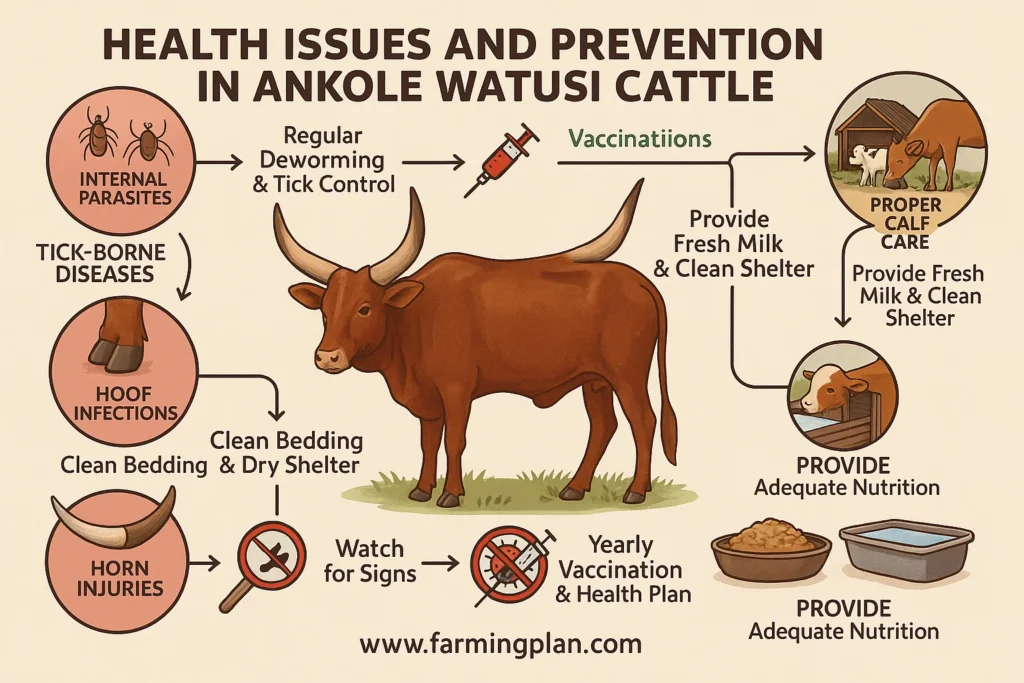
Proper hoof care and dry bedding prevent bacterial foot rot during wet rainy seasons. Make sure your local large-animal veterinarian administers core bovine vaccines for Blackleg, IBR, BVD, and Leptospirosis annually. Keep a close eye on their eyes during summer fly seasons to catch pinkeye early before cloudiness spreads. Installing physical back-rubbers filled with fly dust helps control horn flies naturally in the pasture.
“Raising Ankole Watusi Cattle Brings Unmatched Majesty And Pure Joy To Every Rancher.”
Step-by-Step Farming Guide of Ankole Watusi Cattle
Starting your first herd requires thoughtful planning, sturdy facilities, and daily dedication. This step-by-step section outlines everything you need to set up a thriving farm operation from day one. Ankole Watusi Cattle captivate everyone who visits my ranch because their dramatic appearance instantly commands attention, and working with Ankole Watusi Cattle every day brings incredible reward to any livestock specialist. As a lifelong rancher, I love caring for Ankole Watusi Cattle because these legendary animals trace their heritage back thousands of years to the Nile River Valley, where early human civilizations first domesticated them.
Step 1: Designing Secure Ranch Infrastructure and Fencing
Preparing your property requires installing heavy-duty fencing and extra-wide alleyways before bringing any animals home. Because adult horns can span over six feet from tip to tip, standard tight cattle chutes will easily catch or break their precious horns. Build your handling facilities using rounded curves, wide sweep tubs, and custom-width alleyways that measure at least seven feet wide.
Eliminate sharp corners or narrow gate frames where animals might jam together when moving quickly. Install heavy-duty wooden posts spaced securely to withstand accidental bumps from heavy bodies. Ensure all latching mechanisms on gates are animal-proof, as these intelligent creatures quickly learn to open simple hook latches with their horns.
Step 2: Selecting Quality Foundation Breeding Stock
Selecting the right foundation stock determines the overall genetic future and commercial value of your growing herd. Purchase your first animals from reputable breeders registered with established breed societies like the Ankole-Watusi International Registry. Inspect prospective cows and bulls for strong skeletal structure, straight top lines, bright eyes, and calm, easygoing dispositions.
Review official lineage documentation to verify whether candidates are Foundation Pure or crossbred percentage stock based on your goals. Check health certificates for negative Tuberculosis, Brucellosis, and Johne’s disease tests before loading animals onto your trailer. Buying healthy, calm breeding stock saves thousands of dollars in veterinary costs down the line.
Step 3: Establishing Daily Pasture and Water Management
Daily management revolves around providing clean pasture rotation, fresh drinking water, and quality forage access. Divide your land into smaller rotational paddocks using electric fencing to allow grazed pastures time to recover naturally. Moving your cattle to fresh paddocks every few weeks controls intestinal parasite lifecycles and improves soil health across your ranch.
Check stock tanks twice daily to ensure automatic float valves function correctly and water remains clean. In cold winter climates, install tank heaters to prevent water from freezing solid overnight. Provide clean, dry bedding inside three-sided run-in sheds so cows can escape freezing winds and heavy rainfall. Consistently monitor pasture grass height, removing animals before they graze turf down to bare soil.
Step 4: Managing Breeding, Gestation, and Easy Calving
Managing the breeding cycle requires tracking sire performance and maintaining optimal body condition scores on cows. Sires reach reproductive maturity around eighteen months of age and can manage herds of twenty to thirty cows efficiently. The gestation period lasts approximately 280 to 290 days, similar to standard domestic cattle.
Because newborn calves weigh only 30 to 50 pounds, calving problems rarely occur on properly managed ranches. Mother cows typically isolate themselves in high grass or brush to deliver their calves smoothly without human assistance. Ensure the newborn stands and suckles vital antibody-rich colostrum milk within its first two hours of life. .
Step 5: Handling Daily Socialization and Herd Maintenance
Daily interaction builds strong bonds of trust between you and your herd, making routine health checks stress-free. Walk through your pastures slowly on foot or on horseback every day so the herd becomes accustomed to your presence. Speak in calm, low tones and offer small handfuls of alfalfa cubes or sweet grain treats to encourage positive behavior. Never rush or corner these long-horned animals in tight quarters, as fear triggers natural self-defense responses.
Use soft body language and wide movements when guiding the herd through pasture gates or into sweep tubs. Keep herd records updated with birth dates, vaccination schedules, weight gains, and lineage details for registry reporting. Routine, gentle handling ensures your animals remain docile, manageable, and safe for your entire family to enjoy.
Read More: Franconian Goose: Complete Care Guide
Expert Tips and Best Practices for Ankole Watusi Cattle
- Always measure gate openings generously to allow broad horns to pass through without scraping or catching.
- Install high-clearance heat lamps or shelter sheds during extreme winter freezes to protect large horn tips from frostbite.
- Never use standard narrow cattle head gates; use specialized wide-opening squeeze chutes designed specifically for longhorns.
- Keep mineral feeders elevated off the wet ground to protect loose trace elements from moisture degradation.
- Handle young calves gently and frequently during their first month to raise exceptionally tame, friendly adults.
- Avoid sudden loud noises or waving arms when working cattle in confined handling facilities.
- Offer free-choice loose salt alongside trace minerals to ensure proper hydration and digestion year-round.
FAQs
How much do Ankole Watusi Cattle cost to purchase?
Prices vary widely based on purity, horn size, age, and genetic lineage. Quality registered breeding stock typically ranges from $2,500 to over $10,000 per head, while exceptional record-setting animals command much higher prices at national auctions.
How heavy do Ankole Watusi Cattle horns actually get?
An adult’s massive horns can weigh up to 100 pounds or more per pair. Despite their massive size and heavy appearance, the internal honeycombed bone structure keeps them surprisingly light and balanced for the animal.
Are Ankole Watusi Cattle aggressive toward human handlers?
They generally possess a gentle, docile, and curious temperament when handled regularly with care. However, because of their protective herd instincts, mother cows with young calves demand extra caution and respect.
What do Ankole Watusi cattle eat on a ranch?
They eat native pasture grasses, rough shrubs, and standard grass hay as natural herbivores. Their highly efficient digestive systems allow them to extract rich nutrients from rough forage that standard cattle cannot process.
Can these African cattle survive cold winter climates?
Yes, they adapt well to freezing temperatures if given dry, wind-free shelters and plenty of quality hay. In extreme cold, ranchers use heat lamps to protect their large, blood-filled horn tips from severe frostbite.
Conclusion
Raising Ankole Watusi Cattle has been one of the most rewarding experiences of my agricultural career. These historic African bovines bring incredible beauty, docility, and hardiness to any ranch or homestead. By providing wide handling facilities, fresh forage, and regular gentle interactions, you will build a safe, thriving, and highly valuable herd. Their remarkable ability to adapt to hot summers and cold winters makes them a outstanding choice for modern livestock producers. Whether you want to preserve ancient heritage genetics, produce lean beef, or enjoy majestic pasture views, these gentle giants deliver unmatched satisfaction. What unique traits excite you most about raising these legendary African longhorns on your ranch?