
Welcome to the incredible world of the British Giant Rabbit! As a farming specialist with years of hands-on experience raising these massive lagomorphs, I want to share my deep passion for these beautiful animals with you. You might immediately wonder about British giant rabbit size or how they compare in a British Giant rabbit vs Flemish Giant debate. Whether you want to find a British Giant rabbit for sale or just want to learn about different British giant rabbit breeds, this guide gives you every necessary detail.
I have you completely covered with practical, real-world advice. We will explore their rich history originating in the United Kingdom, their stunning coat colours like white, black, blue, and opal, and their famously gentle temperament. Families love keeping them as pets because they form deep, lasting rabbit bonds with their human companions. I pour my practical knowledge into this article to help you raise healthy, happy social animals. Grab a warm cup of tea, and let us dive into the wonderful life of these giant pets!
History & Origin of British Giant Rabbit
Tracing the origins of the British Giant Rabbit takes us on a wonderful journey back to the 1940s in the United Kingdom. Breeders wanted a slightly smaller, more refined version of the European Flemish Giant. They took original Flemish Giant stock from the Belgian countryside, specifically near Ghent in Flanders, and began a careful process of selective breeding. These early farmers focused on creating a rabbit that offered both excellent meat and fur while maintaining a manageable size compared to their colossal cousins across the channel.
Development Through Selective Breeding
During this era, English breeders mixed these giant European imports with local breeds to establish the official breed standard. They wanted a rabbit with dense fur and a sturdy body that could thrive in the varied, often chilly British climate. While the original Flemish Giant rabbit originated in Belgium, the British Giant Breed quickly developed its own unique identity across the United Kingdom. Farmers instantly loved them for their robust health, reliable breeding capabilities, and surprisingly calm demeanor in busy agricultural settings.
Establishing A Legacy In The Rabbit World
Today, we recognize this breed as a distinct entity from the Continental Giant or the American Rabbit. When you look at the records from the National Federation of Flemish Giant Rabbit Breeders or the American Rabbit Breeder Association, you see exactly how carefully experts document these historical lineages. My own experience raising them shows how their rich history directly impacts their strong genetics today. They carry the majestic traits of their ancestors while perfectly suiting modern family life and exhibition standards.
Read More: Grey Back Goose Secrets for Amazing Farm Success
Characteristics of British Giant Rabbit
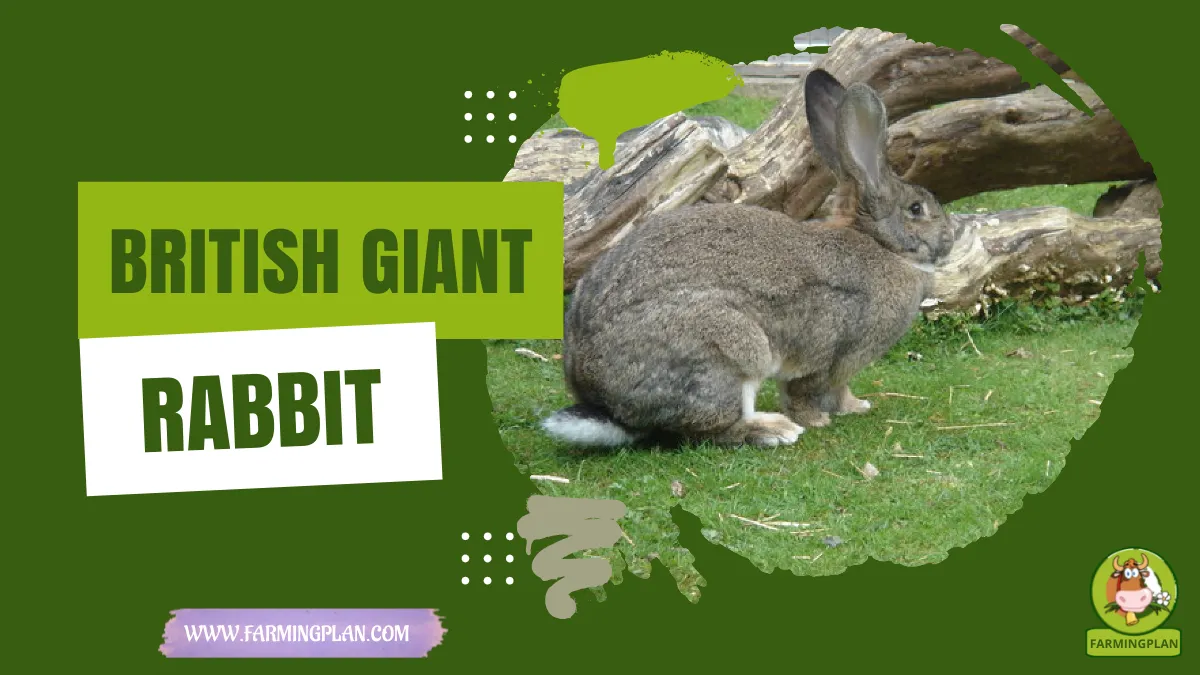
When you first see a British Giant Rabbit, their impressive size immediately captures your attention. These magnificent creatures boast a long body that often reaches lengths of over 80 cm from nose to tail. As a farming specialist, I always marvel at their broad, powerful frames. A healthy adult routinely hits a British Giant rabbit weight of weighing over 6kg, making them true heavyweights of the rabbit world. They possess strong, sturdy legs that support their massive frame, and their thick, medium length ears stand perfectly upright, giving them an alert and intelligent expression.
Exploring Their Beautiful Coat And Colours
Their soft fur remains one of their most attractive features. They feature incredibly dense fur that requires regular attention to keep it looking pristine. Breeders recognize a wide variety of stunning colours in the breed standard. You will commonly find gorgeous shades of white, black, blue, and opal. Many enthusiasts particularly love the traditional steel grey colouring or dark grey steel variations. This lush coat not only makes them beautiful pets but originally served a highly practical purpose for farmers producing meat and fur.
Physical Traits Comparing Different Giant Breeds
Many people ask me about the British Giant rabbit vs Flemish Giant comparison. While both share a similar ancestry, the British variant typically has a slightly more compact, rounded appearance compared to the massive, flat back of the European Flemish Giant. They lack the extreme length of the Checkered Giants or the massive wool output of the Giant Angora, but they offer a perfectly balanced, muscular physique. Their physical traits make them robust, capable animals that handle outdoor areas exceptionally well.
Nature & Temperament of British Giant Rabbit
Do not let the massive size of the British Giant Rabbit intimidate you, because they possess an incredibly gentle temperament. I often call them the gentle giants of the animal kingdom. They make phenomenal pets for families because they tolerate handling much better than many smaller, more skittish rabbit breeds. These rabbits act very much like small dogs. They love lounging around the house, seeking out affection, and resting their heavy heads on your lap for a good scratch behind the ears.
Building Strong Rabbit Bonds With Your Pet
Because they are naturally social animals, they thrive on companionship and daily interaction. I strongly recommend keeping them in pairs to prevent intense loneliness and behavioral issues. A neutered male and a neutered female usually create the most stable and loving rabbit bonds. They enjoy socializing with their human caregivers and will often enthusiastically follow you around the garden or living room. You must spend time sitting on the floor with them to build trust, as their large size means they feel much safer with all four paws resting securely on the ground.
Behavioral Traits Around Large Groups
If you introduce them correctly, these giants adapt wonderfully to large groups and busy households. They generally remain calm even when surrounded by the typical noise of family life. Unlike the highly energetic Belgian Hare or the sometimes aloof Silver Fox, the British Giant actively wants to participate in daily activities. My years of farming have taught me that a well-socialized giant rabbit brings a unique, peaceful energy to any environment, provided you treat them with the respect their impressive stature demands.
Food & Diet of British Giant Rabbit
Feeding a British Giant Rabbit correctly requires a solid understanding of their diet & natural habitat. Because they grow incredibly fast and maintain a huge body mass, they need a carefully balanced, specialised diet to stay healthy. I always emphasize that fresh, high-quality grass hay must make up at least 80 percent of their daily food intake. They consume a literal mountain of hay every single day, which provides essential fiber for their complex digestive systems and helps wear down their continuously growing teeth.
Balancing Pellets And Leafy Green Vegetables
Alongside their unlimited hay, you must provide a measured portion of high-fiber pellets or premium rabbit nuggets. Avoid cheap muesli mixes, as rabbits tend to pick out the sweet parts and leave the nutritious bits behind. I also feed my giants a generous daily salad of safe, leafy green vegetables. Romaine lettuce, kale, and fresh herbs provide crucial vitamins and keep their diet interesting. Treat foods like carrots or fruit contain high sugar levels, so you must only offer them in very small quantities as occasional rewards during training sessions.
Creating The Perfect Feeding Routine
Water consumption forms another critical part of their daily health needs. These massive lagomorphs drink a surprising amount of water daily. I always use large, heavy ceramic bowls instead of standard drip bottles, because bottles severely restrict their water flow and a thirsty giant easily becomes frustrated. A proper diet actively prevents severe issues like obesity and digestive stasis. By mimicking the wild diet of Oryctolagus cuniculus domesticus while providing modern nutritional support, you ensure your giant companion enjoys a long, vibrant life.
Usage & Purpose of British Giant Rabbit
Historically, farmers developed the British Giant Rabbit primarily for critical utility purposes. During times of rationing in the United Kingdom, people desperately needed reliable sources of sustenance. Breeders focused heavily on producing an animal that offered substantial meat and fur yields. Their large size, robust health, and rapid growth rate made them the perfect agricultural livestock. I always respect this utilitarian background because it perfectly explains why the breed remains so naturally strong and resilient against harsh weather conditions today.
Transitioning To Beloved Family Pets
Over the recent decades, their primary purpose shifted dramatically away from commercial farming. Today, animal lovers eagerly seek a British Giant rabbit for sale to keep them exclusively as beloved house pets. Their calm, affectionate nature makes them highly desirable for families looking for a sturdy companion. They integrate beautifully into domestic life, offering the comforting presence of a larger pet without the demanding daily exercise requirements of a large dog. I have watched countless families form incredibly deep connections with these remarkable creatures.
Shining In The Exhibition And Show Circuit
Beyond serving as loyal companions, they also maintain a very strong presence in the competitive exhibition world. Dedicated fanciers love taking them to agricultural shows to display their perfect breed standard. Judges carefully evaluate their long body, dense fur, and exact steel grey colouring. Whether they compete against a Giant French Lop, a Giant Chinchilla, or a Champagne D’argent, a well-groomed British Giant always draws a massive crowd. Raising a show-quality giant requires immense dedication, but the pride you feel when displaying your majestic rabbit makes every moment worthwhile.
Special Features of British Giant Rabbit
The British Giant Rabbit possesses several special features that instantly distinguish them from other ordinary rabbit breeds. Their sheer skeletal structure stands as an engineering marvel. While they belong to the domestic rabbit family, early historical rumors often incorrectly linked giant rabbits to wild species like the Patagonian cavy (Dolichotis patagonum) or even the tapeti (Sylvilagus brasiliensis). Science proves they purely descend from domestic stock, but their massive, muscular thighs and elongated bone structure strongly resemble those wild, robust animals.
Unique Coat Density And Sensory Capabilities
Another incredible feature lies directly in their powerful sensory adaptations. Their medium length, thick ears operate like massive satellite dishes, giving them exceptional hearing capabilities while also helping them regulate their body temperature in warmer weather. Their dense fur also features a unique dual-layer construction. The soft undercoat provides incredible insulation, while the slightly coarser guard hairs aggressively repel moisture. This special coat allowed the original English Giant Rabbit to survive chilly British winters outdoors without dropping significant body weight.
Exceptional Intelligence And Training Capacity
I constantly find myself amazed by their high level of daily intelligence. These giants solve problems much faster than smaller breeds. You can easily litter train them using something like the BunnyDad BunnyLet Rabbit Litter Box + Hay Feeder System. They quickly learn their names, recognize different human family members, and willingly learn basic tricks for a treat. This cognitive ability makes them highly interactive pets. When you combine their massive size with their sharp minds, you realize you have a truly unique companion that completely bridges the gap between a traditional caged pet and a free-roaming house animal.
I hope this comprehensive farming guide gives you the total confidence to confidently welcome one of these magnificent creatures into your loving family. Please share this article with your fellow rabbit enthusiasts on social media, and drop a comment below telling me about your favorite giant breed experiences! What is your biggest challenge when caring for a giant rabbit?
Health Issues & Prevention
Keeping a massive rabbit healthy requires proactive care and constant daily vigilance. Due to their heavy weight, they frequently suffer from sore hocks, a painful condition where the skin on the bottom of their feet rapidly breaks down. You must provide soft, deep bedding and aggressively avoid keeping them on hard surfaces or bare wire floors. Dental disease also poses a massive, silent threat. Their teeth never stop growing, so without enough coarse hay to grind them down, painful spurs develop that require expensive veterinary surgery.
Preventing Fatal Diseases And Parasites
As a responsible farming specialist, I always emphasize the critical need for regular vaccinations. You must actively protect them against Myxomatosis and Rabbit Viral Haemorrhagic Disease (RVHD). During the warmer months, you must check their hindquarters twice a day to prevent Flystrike, a horrifying and often fatal condition where flies lay eggs on dirty fur. Furthermore, they face serious risks from Encephalitozoon Cuniculi (E. cuniculi), a nasty parasite that attacks their central nervous system. Routine worming and strict daily hygiene form your absolute best defense against these invisible enemies.
Ensuring A Long, Healthy Average Lifespan
The average lifespan of a British Giant ranges between 4 to 6 years, which falls slightly shorter than smaller breeds due to the immense physical strain their bodies endure. Because their health needs demand specialized veterinary care, I strongly recommend investing in comprehensive pet insurance the very first day you bring them home. Regular vet check-ups, a strict specialised diet, and maintaining a clean environment directly impact their longevity. When you commit to aggressive preventative care, you give your giant friend the best possible chance at a long, comfortable life.
Read More: Franconian Goose: Complete Care Guide
Step-by-Step Pet Owner Care Guide for British Giant Rabbit
Welcome to the most critical section of this entire guide. Bringing a huge animal into your home requires massive preparation and detailed, practical knowledge. I have spent years perfecting my husbandry techniques, and I want to share my exact daily protocol directly with you. Raising these magnificent creatures successfully means you simply cannot cut corners. They demand substantial space, expensive premium food, and significant chunks of your daily time. If you ignore their specific housing considerations or slack on their rigorous grooming routine, they will rapidly suffer physically and mentally.
This comprehensive, step-by-step framework takes you from your initial habitat setup all the way through to daily maintenance and bonding. Whether you plan to keep them in large outdoor areas or let them free-roam in your busy living room, these crucial rules apply universally. Follow this guide carefully, and you will quickly build a safe, enriching environment that allows your giant lagomorph to truly thrive. Let us break down exactly what you need to do to become an expert caregiver.
Step 1: Setting Up The Perfect Housing And Environment
Your first massive task involves creating an appropriate, safe living space. A standard pet store cage completely fails to meet their demanding housing considerations. You must build or buy a massive custom enclosure. I highly recommend a setup that provides at least a huge hutch and run combination covering a minimum of 60 square feet. They need enough open room to take three full, consecutive hops and to stand completely upright on their powerful hind legs without their ears touching the ceiling. If they live in outdoor areas, you must aggressively secure the space against nocturnal predators like foxes using heavy-duty, chew-proof wire mesh.
For indoor giants, you must thoroughly rabbit-proof your entire home. They will enthusiastically chew through exposed electrical wires, wooden baseboards, and expensive living room furniture. Protect all essential cables with thick plastic tubing and physically block off dangerous areas. Provide them with heavy, non-slip rugs on slippery hardwood or laminate floors to actively prevent severe spinal injuries and painful sore hocks. Set up a massive litter station, preferably something large and sturdy like the BunnyDad BunnyLet Rabbit Litter Box + Hay Feeder System, to comfortably accommodate their substantial output. Proper housing forms the absolute foundation of their physical and mental health.
Step 2: Implementing The Daily Feeding Protocol
Once you secure their habitat, you must execute a strict, daily feeding schedule. Do not just blindly throw a bowl of food at them. Start your morning by completely emptying and cleaning their heavy ceramic water bowls, refilling them to the brim with fresh water. Next, heavily replenish their massive hay racks. You must use fresh, dust-free Timothy or Meadow hay. I always thoroughly inspect the hay for mold or dampness, because feeding compromised hay instantly triggers severe digestive distress in these sensitive giants. Ensure they have unlimited, easy access to this vital roughage 24/7.
In the early evening, serve their precisely measured portion of high-quality, fiber-rich rabbit nuggets based exactly on their current weight. Never overfeed pellets, as rapid obesity ruins a giant rabbit’s fragile joints. Alongside the daily pellets, prepare a diverse, fresh salad of leafy green vegetables. Wash the greens thoroughly to completely remove any lingering pesticides. I like to scatter their greens randomly around their enclosure to actively encourage natural foraging behaviors. This necessary mental stimulation keeps them active and closely mimics how they would eat out in the wild. Strict consistency in this feeding routine actively prevents deadly gastrointestinal stasis.
Step 3: Mastering The Grooming And Maintenance Routine
You cannot ignore their dense fur. Regular grooming stands as a non-negotiable daily farming task. Because they possess such thick, plush coats, they shed continuously throughout the entire year, with two massive molting periods where they lose fur in huge, messy clumps. I highly recommend using a specialized tool like the Cuddlecomb to gently work through their thick undercoat without scratching their delicate skin. You must brush them for at least ten solid minutes every single day to extract loose hair. If they swallow too much loose fur while grooming themselves, it rapidly forms a fatal blockage in their stomach.
Beyond brushing, you must carefully inspect their thick nails and scent glands. Their sturdy nails grow incredibly fast and require careful clipping every four to six weeks. If you let their nails grow too long, they will violently snag on carpets and potentially rip entirely out of the nail bed, causing immense pain. Check their bottom daily to ensure absolutely no feces stick to their fur, effectively preventing the dreaded Flystrike. You must also gently clean the waxy buildup from their large ears using a damp, soft cloth. A clean giant remains a happy, healthy giant.
Step 4: Socializing And Building Trust With Your Giant
Physical care means nothing if your giant rabbit lives in constant fear. You must actively work on socializing your companion every single day. Start by simply sitting quietly on the floor in their enclosure and completely ignoring them. Read a book or scroll on your phone. This calm approach allows them to cautiously approach you on their own terms. Since they operate as prey animals, reaching down rapidly from above totally terrifies them. Offer them small, healthy treats directly from your flat hand to quickly build positive associations with your daily presence.
Once they trust you, encourage gentle, positive physical contact. Stroke their broad foreheads and gently massage the thick base of their ears—they absolutely love this specific interaction. Never attempt to lift or carry a British Giant unless absolutely necessary for urgent medical reasons. Their incredibly long spines remain extremely fragile, and a sudden panicked kick can easily snap their back. By interacting with them safely on their natural level, you rapidly cement an incredible, lifelong bond. Your patience during this crucial socialization phase magically transforms a shy animal into an outgoing, affectionate family member.
“Every Single British Giant Rabbit Holds A Massive Heart Full Of Pure Unconditional Love.”
Expert Tips & Best Practices for British Giant Rabbit
My Top Success Strategies For Raising Healthy Giants
After dedicating years to raising these magnificent animals, I have compiled a strict list of my most effective best practices. These practical tips will help you completely avoid common mistakes and ensure your heavyweights live their absolute best possible lives.
Secure Massive Pet Insurance Early: Do not wait until they suddenly get sick. Their enormous size means that any surgical procedure, especially regarding anesthesia, costs significantly more than it does for a tiny breed. Secure robust pet insurance the exact moment you bring them home.
Use Thick Memory Foam Mats: To successfully combat the constant threat of sore hocks, place thick memory foam bath mats in their favorite daily resting spots. These soft mats distribute their heavy body weight perfectly and actively prevent painful skin lesions.
Monitor Their Weight Religiously: Buy a large digital baby scale and weigh them exactly once a week. Because their dense fur hides their true body condition, a sudden drop in weight remains your first and absolute best early warning sign of hidden dental disease or severe internal illness.
Provide Giant Chew Toys: Standard rabbit toys break instantly under their immensely powerful jaws. I constantly give my giants untreated apple wood logs and massive cardboard boxes to completely destroy. This effectively saves my furniture and keeps their teeth perfectly trimmed.
Bond Them With A Partner: Never keep a giant completely isolated. They profoundly need the constant, gentle companionship of another rabbit to feel secure, happy, and mentally stimulated throughout the day.
FAQs
How big does a British Giant rabbit get?
A healthy adult easily reaches lengths of over 80 cm from nose to tail. They typically weigh between 5.5 to 7 kilograms, making them one of the largest domestic breeds available today.
How much does a British Giant rabbit for sale cost?
Depending on the breeder and their official pedigree, you can expect to pay anywhere from $60 to $150. Show-quality animals with excellent steel grey colouring usually sit at the higher end of that price range.
What is the main difference in British Giant rabbit vs Flemish Giant?
The British variant remains slightly smaller and possesses a rounder, more compact body shape. Furthermore, the British breed standard recognizes fewer color variations compared to the massive European Flemish Giant.
Do British Giant rabbits make good indoor pets?
They make absolutely fantastic indoor pets because they have a very calm, lazy temperament. Provided you aggressively rabbit-proof your exposed wires and give them a massive litter box, they easily adapt to free-roaming in a busy home.
How long do British Giant rabbits live?
Their average lifespan strictly ranges from 4 to 6 years with excellent proper care. Because their massive bodies endure a lot of daily strain, they generally live slightly shorter lives than smaller, lighter breeds.
Conclusion
Raising a British Giant Rabbit offers an incredibly rewarding experience for truly dedicated animal lovers. We have thoroughly explored their fascinating history tracing back to the Belgian countryside, their massive size, and their famously gentle, dog-like temperament. Understanding their strict dietary requirements, like providing unlimited fresh hay and leafy greens, ensures they easily avoid dangerous health pitfalls like severe dental disease.By strictly following my detailed housing and grooming protocols, you guarantee your giant companion lives a comfortable, deeply enriched life. They definitely demand significant physical space, daily time, and financial commitment, but the immense love and loyalty they provide make every single effort completely worthwhile.


