Argentine Criollo cattle hold a legendary status in the world of livestock farming, offering unmatched hardiness and a fascinating past. My journey with this extraordinary breed began years ago on the open range. I was searching for an animal that could thrive on rough pastures without breaking my budget. These animals arrived in the New World over five centuries ago, descending directly from cattle brought by Spanish explorers like Christopher Columbus, Pedro de Mendoza, and Juan de Garay.
They adapted across diverse environments, from the dry Sierras Chicas to the vast pampas. Today, farmers look for Criollo cattle for sale because these animals thrive on tough forage and produce grass-fed certified Criollo beef with incredible flavor. Whether you are looking at Criollo cattle breeds, studying Raramuri Criollo cattle, or evaluating a Criollo bull for crossbreeding, understanding their unique DNA markers and history will transform your approach to animal husbandry.
History & Origin of Argentine Criollo Cattle
The story of Argentine Criollo cattle began in Andalusia, Spain. Spanish conquistadors loaded these tough bovines onto wooden ships during the late 15th century. Christopher Columbus carried their ancestors to the Caribbean on his second voyage in 1493. Decades later, explorers Pedro de Mendoza and Juan de Garay brought these animals into the heart of South America. They released the cattle into the wild across northern and central Argentina. The animals quickly adapted to the rugged terrain, extreme heat, and seasonal droughts of the pampas and the Sierras Chicas. Over hundreds of years, natural selection refined these South American cattle breeds into surviving powerhouses.
Local herds lived as semi-wild stock before gauchos domesticated them for traditional estancia life. Gauchos relied heavily on the cattle’s stamina for cattle herding, relying on Criollo horses with incredible cutting skills and tight saddle work to manage the wild stock. By the late 19th century, British beef breeds like Angus and Hereford pushed native herds into remote mountain zones. Today, organizations like Slow Food and the Ark of Taste recognize the breed’s historic value. Institutions in Pollenzo celebrate these genetics, and DNA testing confirms their rich genetic variability and deep lineage.
Read More: Chengde Polled Goat Breeding Guide: Discover Amazing Profits!
Characteristics of Argentine Criollo Cattle
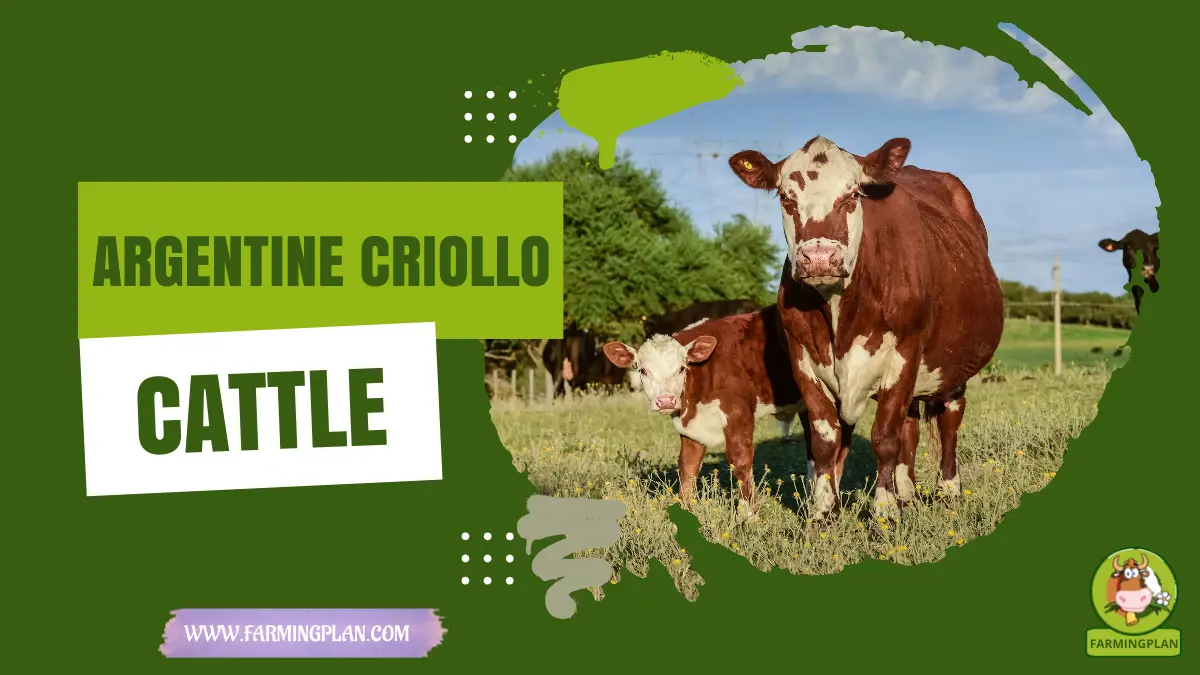
Argentine Criollo cattle display a broad variety of physical traits because of their deep genetic variability. Unlike modern commercial herds that look identical, these animals show a range of coat colors. You will see solid red, black, dun, white, piebald, striped, and speckled hides across a single herd. They possess an angular frame with a high tailhead that gives them exceptional calving ease. Their classic lyre-shaped horns give them a striking, majestic appearance on open range pastures.
Adult cows weigh around 400 to 440 kg, while a mature Criollo bull reaches between 600 and 800 kg. Their lighter frame reduces pressure on delicate pasture soil, preventing severe erosion compared to heavy European breeds. DNA markers show their high biodiversity and natural health. They produce lean meat with natural marbling, making them a great option for high-quality beef production. They also yield high weaning weights, often weaning calves that weigh up to half of the mother cow’s body weight!
Nature/Temperament of Argentine Criollo Cattle
Working with Argentine Criollo cattle is a refreshing experience for any rancher or breeder. They carry a reputation for incredible docility and gentleness despite their semi-wild origins. Their calm nature makes them easy to manage in rough terrain or high-altitude mountain pastures. They handle routine farm movements with minimal fuss, whether you drive them on horseback or guide them on foot. Their calm behavior reduces stress for both the handler and the herd.
These cows show strong herd instincts and social cooperation. Mother cows remain vigilant and protective against natural predators like coyotes or wild dogs. Their gentle disposition makes them an excellent match for beginner farmers, seasoned breeders, and hobbyists. When you treat them with patience, they quickly adapt to your routine, respect electric fences, and trust your presence during pasture checks.
Food & Diet of Argentine Criollo Cattle
Argentine Criollo cattle excel at converting low-quality vegetation into high-quality protein. Unlike heavy commercial bovines that require corn-heavy feed rations, these cattle eat a wide range of native grasses, weeds, and brush. They travel long distances across pastures to forage evenly, browsing like wild deer or bison instead of overgrazing a single patch of pasture.
Their efficient digestion allows them to thrive on minimal inputs, keeping feed costs low for ranchers. They need far less water and supplemental grain than standard commercial cattle. However, you should still provide them with fresh water and essential minerals year-round.
- Do: Provide access to natural mineral salt blocks and diverse native pastures.
- Do: Allow them ample room to range and forage naturally across diverse terrain.
- Don’t: Overfeed them high-energy grain feeds that disrupt their natural digestive balance.
- Don’t: Confine them to muddy feedlots without room to move and browse.
Usage/Purpose of Argentine Criollo Cattle
The Argentine Criollo serves multiple practical purposes on modern livestock operations. Historically, settlers used them for milk production, leather, meat, and draft work. Today, ranchers value them primarily for high-grade grass-fed beef production. Their meat offers exceptional tenderness, natural marbling, and a rich, lean flavor profile that health-conscious consumers love.
These cows also deliver good daily milk production, producing around 4 to 6 liters per day under harsh environmental conditions. This dual-purpose ability makes them valuable for family farms or remote regions where specialized dairy breeds cannot survive. Commercial ranchers frequently buy a Criollo bull for crossbreeding with European beef breeds. This cross produces F1 calves with impressive hybrid vigor, rapid growth rates, outstanding disease resistance, and legendary hardiness.
Special Features of Argentine Criollo Cattle
- Extreme Weather Tolerance: They adapt smoothly to scorching heat, freezing cold, and acute lack of water.
- Unmatched Fertility: Heifers reach early puberty, achieve fast conception rates, and maintain high fertility into old age.
- Superior Calving Ease: Their pelvic structure eliminates dystocia, resulting in effortless, unassisted births on range pastures.
- Low Environmental Impact: Their lighter weight and smaller hooves minimize soil compaction and prevent erosion.
- Natural Disease Resistance: DNA markers give them strong natural resistance to internal parasites, tick-borne illnesses, and common bovine diseases.
Health Issues & Prevention of Argentine Criollo Cattle
Argentine Criollo cattle rank among the healthiest bovine breeds in the world. Their 500-year history of natural selection gave them robust immune systems that ward off common ailments. They suffer far less from foot rot, pinkeye, or breathing issues than high-maintenance commercial stock. Their tough skin and short hair coats help repel external parasites like ticks and flies.
Preventive care remains simple for this hardy breed. Keep a clean water source available and set up a routine pasture rotation to control internal parasite loads naturally. Schedule annual checkups with your veterinarian to complete basic vaccinations required in your area. Providing clean forage and simple mineral supplements will keep your herd healthy without expensive medical treatments.
Choose Argentine Criollo Cattle That Fit Your Land, Not Just Your Market. A Hardy Breed Can Save Feed, Labor, And Headaches.
Step-by-Step Farming Guide of Argentine Criollo Cattle
Raising Argentine Criollo cattle provides a rewarding, low-stress experience for farmers and homesteaders. This actionable step-by-step care guide covers everything you need to build a prosperous herd on your land.
Step 1: Prepare Your Ranch Infrastructure and Fencing
Before bringing your new cattle home, inspect and upgrade your ranch infrastructure. Build sturdy perimeter fences using standard barbed wire or woven wire, and add an internal high-tensile electric wire for easy pasture rotation. Set up clean water troughs fed by well water or natural streams. Construct simple three-sided run-in sheds to give animals shade during hot summers and wind protection during harsh winter storms.
Prepare clean handling alleys and a squeeze chute to process your stock safely during seasonal vaccinations. Ensure your loading ramps handle trailer movement easily. Clear away dangerous debris, wire, or toxic plants from grazing areas before turn-out. Setting up your facilities correctly saves time, prevents injuries, and creates a stress-free environment for both you and your livestock.
Step 2: Establish a Rotational Grazing System
Set up a rotational grazing plan that allows your Criollo cattle to use their natural browsing instincts. Divide your pastures into small paddocks using lightweight electric fencing. Move your herd to a new paddock every few days to allow grazed forage to regrow fully. This rotation breaks parasite life cycles, aerates the soil, and prevents overgrazing near water sources.
Criollo cattle travel further and graze more varied brush than standard beef breeds, helping to clean up thick weeds and underbrush across your acreage. Monitor pasture height consistently, moving stock when plants are grazed down to three or four inches. Proper pasture rotation increases your land’s carrying capacity, lowers feed costs, and maintains healthy pasture ecosystems without chemical treatments.
Step 3: Manage Year-Round Nutrition and Water Requirements
Maintain a simple, balanced feeding program focused on natural forage. Offer high-quality standing grass during spring, summer, and autumn months. Provide clean, well-cured grass hay during winter or dry droughts when fresh pasture growth slows. Keep clean, fresh water accessible in every active paddock, as dehydration causes quick stress and health loss.
Place weather-resistant mineral boxes containing trace mineralized salt near water stations year-round. These mineral supplements supply copper, zinc, selenium, and essential nutrients missing from local pasture soils. Avoid high-starch grain mixes, which can upset their digestive tract and cause bloat. Simple grass and natural minerals keep these animals energetic, productive, and healthy.
Step 4: Implement Breeding and Calving Strategies
Plan your breeding program to take advantage of the breed’s high fertility and easy calving. Introduce a purebred Criollo bull to your cows in late spring or early summer to line up spring calving with peak pasture growth. A mature Criollo bull covers 50 to 75 cows during a 90-day breeding season with high conception rates.
Cows calve easily without human intervention due to their high tailhead and wide pelvic structure. Birth weights stay light, ranging between 25 and 45 pounds, preventing calving complications. Keep a clean, quiet pasture ready for calving mothers. Mother cows display strong maternal instincts, nursing their newborn calves within minutes and aggressively protecting them from predators.
Step 5: Execute Routine Herd Health and Daily Maintenance
Establish a quick, simple daily maintenance routine to monitor your herd’s health and performance. Walk through your pasture every morning to observe herd behavior, check eye clarity, inspect hoof condition, and count your stock. Confirm that water automatic float valves function properly and mineral feeders remain filled.
Maintain simple health records tracking calving dates, weaning weights, ear tag numbers, and vaccination records. Administer core vaccines once a year based on local veterinarian recommendations for your region. Apply natural fly control or dust bags during peak insect months to keep your animals comfortable. Simple daily observation and organized records ensure long-term success for your farming operation.
Read More: Champagne d’Argent Rabbit Care Guide Secrets
Expert Tips & Best Practices of Argentine Criollo Cattle
- Use low-stress livestock handling techniques to maintain the herd’s calm and workable nature.
- Rotate pastures frequently to break parasite lifecycles and encourage balanced forage growth.
- Crossbreed a Criollo bull with commercial cows to produce hardy F1 calves with exceptional hybrid vigor.
- Provide clean, trace-mineralized salt blocks year-round to balance pasture nutrient gaps.
- Reserve top pastures for winter stockpile grazing to cut hay costs in cold months.
- Maintain complete breeding records to track maternal performance and weaning weight ratios.
FAQs
What makes Argentine Criollo cattle unique compared to European breeds?
They offer exceptional hardiness, high natural disease resistance, and superior feed efficiency on rough pastures. They also feature incredible coat color diversity, easy calving, and long reproductive lifespans.
How much daily milk do Argentine Criollo Cattles produce?
An Argentine Criollo cow produces an average of 4 to 6 liters of milk per day under low-input pasture conditions. This reliable milk supply supports fast calf growth and offers dual-purpose value for small homesteads.
Are Criollo bulls effective for crossbreeding operations?
Yes, a Criollo bull covers 50 to 75 cows during a breeding season with exceptional conception rates. Crossbreeding them with European cows creates F1 calves with low birth weights, high survival rates, and strong hybrid vigor.
What type of diet do Argentine Criollo cattle require to thrive?
They thrive on a 100% forage diet consisting of native grasses, brush, and high-quality grass hay. They process low-quality pasture efficiently without needing heavy grain supplementation or complex feed rations.
How big do adult Argentine Criollo cattle get at maturity?
Mature cows weigh between 400 and 440 kg, making them easy on soft pasture soils. Adult bulls reach weights between 600 and 800 kg, providing solid beef production yields while maintaining agile movement.
Conclusion
Argentine Criollo cattle offer a proven, sustainable solution for modern ranchers seeking low-maintenance livestock that thrive in tough conditions. Their rich heritage, incredible genetic diversity, and exceptional feed efficiency make them a practical choice for both smallholders and commercial operations. By incorporating these hardy animals into your management system, you can cut feed expenses, lower veterinary costs, and produce high-quality, grass-fed beef. I invite you to share your experiences with native cattle breeds in the comments section below, and pass this guide along to fellow farmers who want to build resilient pastures!