Arado Cattle are one of the important indigenous cattle breeds found in northern Ethiopia. As a farming specialist who has worked with different Ethiopian cattle breeds, I have always admired this breed for its adaptability, drought tolerance, and value in traditional livestock production systems. Many farmers rely on Arado cattle for milk, meat, draught power, and household income. Their ability to survive under harsh environmental conditions makes them especially valuable in areas where feed and water shortages often occur.
In this article, I will explain Arado cattle characteristics, Arado cattle weight, production performance, feeding practices, breeding strategies, health management, and farming techniques. I will also compare them with other Ethiopian cattle breeds such as Raya cattle, Afar cattle, Fogera cattle, Abergele cattle, Begait cattle, Boran cattle, and Barka cattle. Whether you are a livestock keeper, breeder, researcher, or smallholder farmer, this guide will provide practical information to help you better understand the Arado cattle breed.
History & Origin
Arado cattle originated in the northern highlands of Ethiopia, particularly in Northern Tigray. The breed developed through centuries of adaptation to rugged terrain, seasonal drought conditions, and traditional grazing systems. Local communities relied heavily on these animals for survival, selecting individuals that could withstand harsh climates and limited feed resources.
Researchers believe that Arado cattle belong to the Zenga (Zebu-Sanga) cattle group. Their genetic makeup reflects historical migrations involving Arabian zebus, Indian zebu cattle, and indigenous African cattle populations. Genetic characterization studies have identified relationships between Arado cattle and other Sanga cattle populations found throughout East Africa.
Geographic Distribution And Population
Today, farmers mainly raise Arado cattle around Adwa, Humera, Medenes, Mykadra, Bereket, and neighboring areas. The breed occupies grazing lands in North West Ethiopia and Northern Tigray. Traditional livestock production systems dominate these regions, with cattle moving seasonally between grazing grounds.
The Ethiopian Biodiversity Institute and the Animal Biodiversity Directorate have conducted various conservation programs to preserve valuable indigenous breeds. Researchers from the Mekelle Biodiversity Center and animal science experts continue documenting genetic diversity, morphometric traits, and livestock keeper perceptions to support future genetic improvement strategies.
Cultural Importance In Rural Communities
For generations, Arado cattle have played a central role in Ethiopian farming communities. Families often measure wealth by herd size, and cattle serve as a source of food security, social status, and agricultural labor. Farmers appreciate the breed’s resilience and ability to contribute to mixed crop-livestock systems.
Read More: Bee Colony Secrets: Amazing Facts Every Beekeeper Should Know
Characteristics
Arado cattle display several unique phenotypic traits. Most animals possess medium-sized humps, prominent dewlaps, visible naval flaps, and strong body frames. The breed is naturally horned, although horn length varies among individuals. Body color ranges from red, brown, black, gray, and mixed color patterns. Farmers often identify animals based on specific coat patterns inherited across generations.
Morphometric Characteristics And Measurements
Studies on morphometric measurements reveal that Arado cattle possess moderate body size compared to some larger Ethiopian breeds. Important body measurements include:
- Body length
- Heart girth
- Horn length
- Height at withers
- Chest depth
- Pelvic width
Researchers commonly use multivariate analysis, canonical discriminant analysis, and general linear model techniques through Statistical Analysis Software to evaluate breed differences.
Average mature weights include:
- Adult cows: 250–350 kg
- Adult bulls: 350–500 kg
Actual Arado cattle weight depends on nutrition, management, age, and environmental conditions.
Genetic And Phenotypic Diversity
Y-chromosome analysis and genetic characterization studies suggest that Arado cattle possess valuable genetic diversity. Their ancestry shows contributions from Bos (primigenius) indicus, Near-Eastern taurine cattle, and Sanga cattle populations. This diversity supports adaptation to drought, disease challenges, and varying production environments.
Nature & Temperament
In my experience, Arado cattle generally display calm and manageable temperaments. Farmers can easily handle them during grazing, milking, breeding, and veterinary procedures. Bulls show strong working ability when used for draught power. Their steady nature makes them suitable for plowing fields and transporting agricultural materials.
Adaptability To Harsh Conditions
One characteristic that stands out is their adaptability. These animals tolerate high temperatures, poor grazing conditions, and seasonal feed shortages better than many imported breeds. Their strong survival instincts help them thrive in extensive systems and semi-intensive production systems. Smallholder farmers value this reliability because management resources often remain limited.
Suitability For Different Farmers
Arado cattle suit:
- Smallholder farmers
- Mixed crop-livestock producers
- Meat producers
- Breeding operations
- Low-input farming systems
Their versatility makes them attractive for both traditional and modern farming enterprises.
Food & Diet
Natural Feeding Habits
Most Arado cattle depend on natural grazing lands and rangelands. Farmers often use common access grazing systems where animals feed on native grasses and shrubs.
During favorable seasons, cattle consume:
- Native grasses
- Legumes
- Browse plants
- Crop residues
Nutritional Requirements For Growth
Proper nutrition directly affects milk yield, body size, reproductive performance, and meat production.
I recommend providing:
- Quality forage
- Hay during dry seasons
- Crop residues
- Mineral supplements
- Clean water
Protein-rich feeds support young calves and breeding animals.
Feeding Dos And Don’ts
Do
- Rotate grazing areas.
- Supply clean drinking water.
- Provide mineral blocks.
- Store hay for drought periods.
Don’t
- Overstock grazing lands.
- Allow severe overgrazing.
- Depend only on poor-quality residues.
- Ignore seasonal forage shortages.
Many successful farmers also integrate drought resistant seeds, crop rotation, and forage development programs to improve feed availability.
Usage & Purpose
Although Arado cattle are not specialized dairy animals, they contribute valuable milk for rural households. Milk yield varies according to feeding level, management, and genetics.
Families commonly use milk for:
- Household consumption
- Butter production
- Traditional dairy products
- Local market sales
Meat Production Potential
The breed contributes significantly to beef production. Farmers appreciate the acceptable dressing percentage and carcass quality achieved under local conditions. Export abattoirs increasingly recognize the value of indigenous cattle because they produce desirable meat cuts such as:
- Topside
- Silverside
- Knuckle
- Round cuts
Meat yield improves significantly when farmers provide supplemental feeding before slaughter.
Draught Power And Farm Work
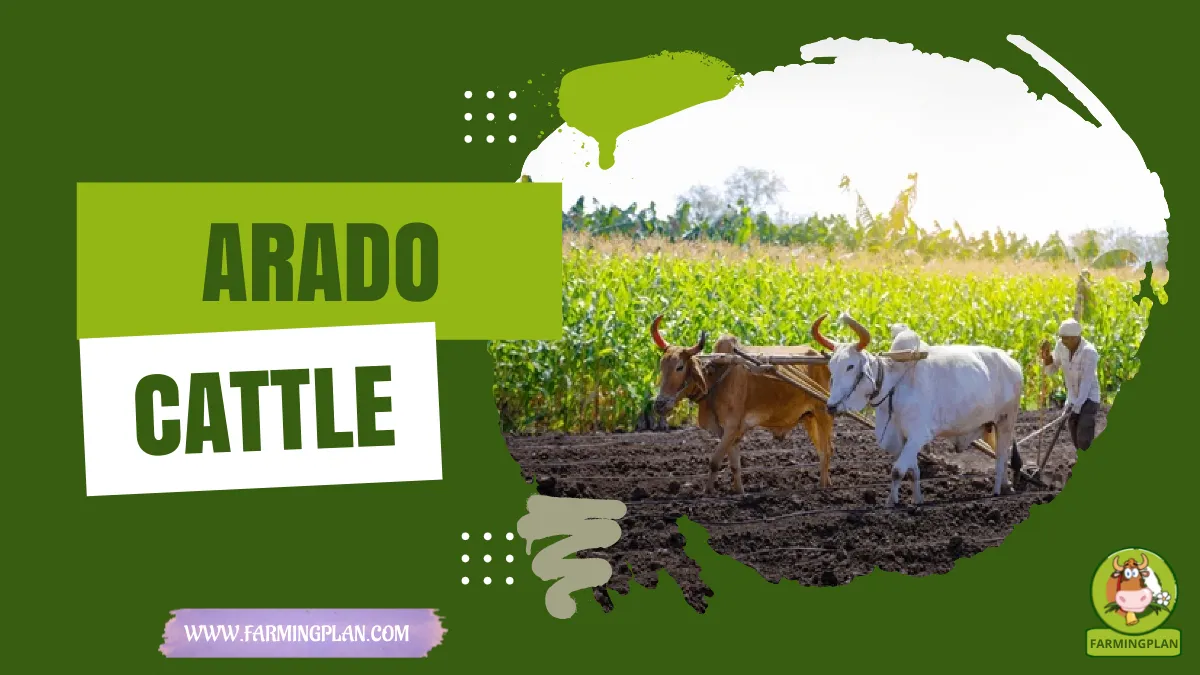
Arado cattle play an important role in crop cultivation. Bulls provide drought power for plowing, transportation, and land preparation. This function remains vital for many Ethiopian farming households.
Special Features
One of the strongest features of the Arado breed is drought resistance. These cattle survive periods of limited feed and water better than many exotic breeds. Indigenous breeds often develop natural adaptation to local disease pressures. This trait reduces management costs and improves herd sustainability. The breed represents an important component of Ethiopia’s animal genetic resources. Conservation programs aim to protect this valuable biodiversity for future generations. Arado cattle convert locally available feeds into milk, meat, and labor. Their efficiency under low-input conditions gives farmers an economic advantage.
Health Issues & Prevention
Like all livestock, Arado cattle face several health challenges:
- Brucellosis
- Internal parasites
- External parasites
- Respiratory infections
- Foot problems
- Nutritional deficiencies
Brucellosis Risk And Testing
Researchers have studied brucellosis seroprevalence in Ethiopian cattle populations. Veterinarians commonly use:
- Rose Bengal Plate Test
- Complement Fixation Test
- Screening tests
- Farm visit investigations
- Questionnaire survey methods
Early detection helps prevent herd-wide infections.
Prevention Strategies
I recommend:
- Regular vaccination programs
- Parasite control schedules
- Quarantine for new animals
- Clean water supplies
- Proper nutrition
- Veterinary consultation
Good management practices significantly reduce disease risks.
Step-By-Step Farming Guide
As a farming specialist, I always tell new livestock keepers that successful cattle farming begins with proper planning. Arado cattle can thrive under both traditional and improved management systems, but farmers must focus on housing, feeding, breeding, health care, and record keeping. A well-managed herd grows faster, produces more milk, delivers better meat yield, and remains productive for many years.
Complete Practical Farming System
The following step-by-step system reflects practical field experience and proven livestock management practices used throughout Ethiopia. These steps help maximize herd performance while protecting valuable genetic resources.
Step 1 – Select Quality Breeding Stock
Start by choosing healthy animals with strong body size, good heart girth, proper body length, sound legs, and desirable phenotypic characteristics. Avoid purchasing animals that show signs of disease, poor growth, or reproductive problems. Select breeding animals from reputable farmers whenever possible.
Step 2 – Prepare Suitable Housing
Construct simple but durable shelters that protect animals from rain, wind, and extreme sunlight.
Provide:
- Dry flooring
- Good ventilation
- Adequate space
- Clean water access
- Secure fencing
Regular cleaning reduces disease risks and improves animal comfort.
Step 3 – Develop A Reliable Feeding Program
Feed availability determines productivity. Establish forage plots and store hay during the rainy season.
Provide:
- Natural grazing
- Improved forage
- Crop residues
- Mineral supplements
- Fresh water daily
Monitor body condition throughout the year.
Step 4 – Implement Controlled Breeding
Many rural areas still rely on uncontrolled natural mating. I encourage farmers to adopt planned breeding strategies.
Keep breeding records that include:
- Birth dates
- Parent identification
- Calving interval
- Growth performance
Careful selection improves herd genetics over time.
Step 5 – Establish Preventive Health Care
Schedule vaccinations and parasite treatments according to local veterinary recommendations.
Monitor animals regularly for:
- Weight loss
- Fever
- Coughing
- Lameness
- Reproductive disorders
Early intervention saves money and reduces losses.
Step 6 – Improve Marketing And Record Keeping
Track:
- Live weight
- Milk production
- Carcass weight
- Meat yield
- Breeding performance
Accurate records help identify profitable animals and support future genetic improvement strategies.
Read More: Chinchilla Rabbit – The Ultimate Gentle Giant Breed
Expert Tips & Best Practices For Maximum Success
Professional Recommendations From Field Experience
Based on my practical experience, these strategies consistently improve results:
- Maintain moderate stocking rates.
- Prevent overstocking on grazing lands.
- Rotate grazing areas regularly.
- Introduce forage production programs.
- Use quality breeding bulls.
- Monitor calving interval carefully.
- Keep detailed herd records.
- Control parasites year-round.
- Protect local genetic diversity.
- Participate in conservation programs.
- Avoid excessive cross-breeding.
- Evaluate body measurements annually.
- Work with animal science experts.
- Improve water availability during dry seasons.
- Support community breeding initiatives.
“The Best Farmers Don’t Wait For Problems To Appear. They Prevent Problems Before They Start.”
FAQs
What are Arado cattle?
Arado cattle are indigenous Ethiopian cattle breeds found mainly in Northern Tigray. Farmers use them for milk production, meat production, and draught power.
How much do Arado cattle weigh?
Adult cows generally weigh between 250 and 350 kg, while mature bulls often weigh 350 to 500 kg. Nutrition and management influence final body weight.
Are Arado cattle drought resistant?
Yes. Farmers recognize Arado cattle for their strong adaptation to drought conditions and limited feed availability.
How do Arado cattle compare with Raya cattle and Fogera cattle?
Arado cattle generally show stronger adaptation to dry northern environments. Fogera cattle often receive more attention for dairy potential, while Raya cattle share some regional adaptation traits.
Why are conservation programs important for Arado cattle?
Conservation programs protect valuable genetic diversity and indigenous livestock resources. They help maintain traits such as disease resistance, environmental adaptation, and production efficiency.
Conclusion
Arado cattle remain one of Ethiopia’s most valuable indigenous breeds because they combine drought tolerance, adaptability, meat production, milk production, and draught power into a single practical package. Their strong genetic diversity, useful morphometric characteristics, and ability to thrive under challenging conditions make them especially important for smallholder farmers and livestock keepers across northern Ethiopia. Through proper feeding, breeding, health management, and conservation efforts, farmers can improve productivity while preserving this remarkable animal genetic resource for future generations. If you have experience raising Arado cattle or other Ethiopian cattle breeds, share your thoughts, leave a comment, and help others learn from your farming journey.