The Sicilian honey bee (Apis mellifera siciliana) is an extraordinary subspecies that transformed my journey as an apiarist. Many enthusiasts compare this subspecies to the Italian honey bee (Apis mellifera ligustica), the Carniolan honey bee, the African subspecies Apis mellifera intermissa, and even the Western honey bee (Apis mellifera carnica relative) or Eastern honey bee.
Native to the sunny island of Sicily, this dark Mediterranean bee group member survived near extinction thanks to dedicated conservation work. However, this unique insect offers unmatched heat tolerance, gentle temperament, and high productivity. In this guide, I will share my hands-on experiences with Sicilian honey bee size, management techniques, and sting behavior to help you build a thriving apiary.
History & Origin of Sicilian Honey Bee
The history of the Sicilian bee connects deeply to the rich cultural landscape of Sicily. Centuries ago, local beekeepers raised these bees in traditional rectangular beehives crafted from fennel stalks. These ancient hives lined farms near the Madonie Mountains, the slopes of Mount Etna, and the coastal fields of the Trapani Provinces and Termini Imerese. The bees thrived through periods of Arab domination, the arrival of the Normans, and the growth of historic cities like Palermo. Their presence mirrored the architectural evolution of the region, from early Christian basilica sites and mosques to Gothic, Baroque, and neo-classical landmarks such as the Cathedral of Palermo.
As modern apiculture shifted toward commercial Italian stock in the mid-twentieth century, the native black bee faced sudden decline. Commercial breeders abandoned traditional methods, leading to widespread hybridization. By the late 1970s, researchers like Mariano Alber and Fritz Baumgarten documented a severe threat to their pure genetics. Renowned breeder Apicoltura Carlo Amodeo stepped in to save the subspecies. He located isolated pure colonies on small offshore islands away from the Strait of Messina. His dedicated conservation efforts preserved the genetics of this remarkable insect. Today, the bee holds protection under a Slow Food Praesidium, safeguarding its role in agricultural biodiversity and local ecosystem health.
Read More: Han Tah Pra Goose Guide: Master Raising This Amazing Bird
Characteristics of Sicilian Honey Bee
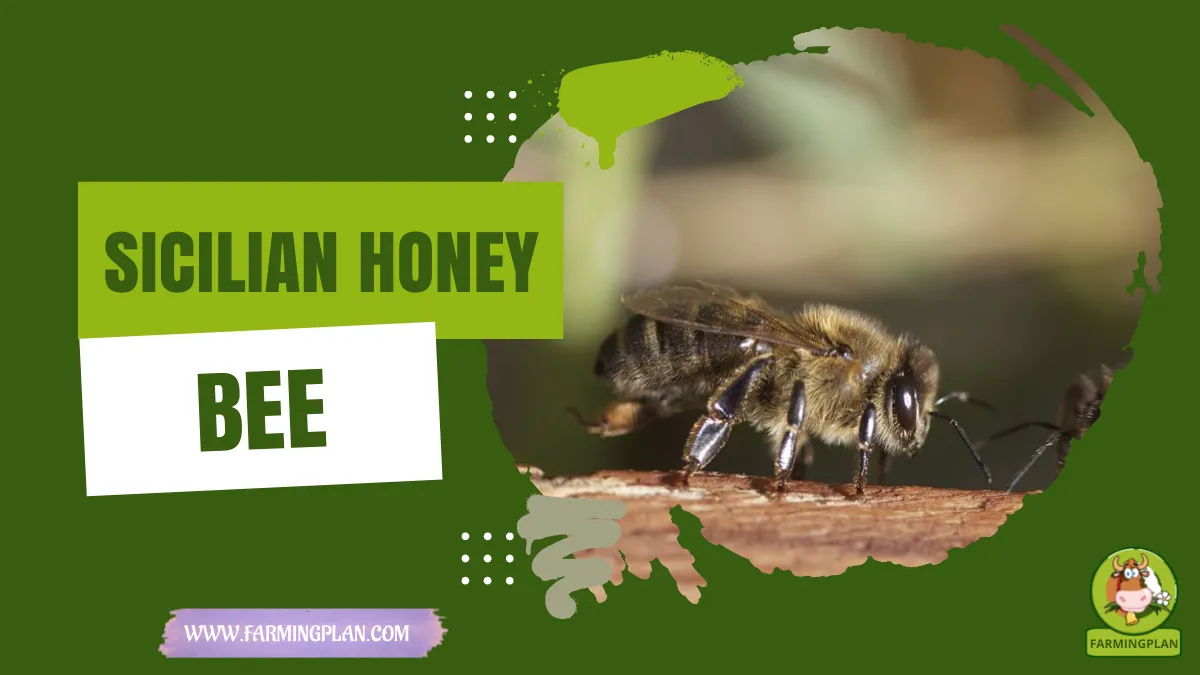
The Sicilian black bee stands out visually from common European strains. Worker bees sport a dark, almost charcoal-colored abdomen with short, dense hairs rather than bright yellow stripes. Their wings present a distinct venation pattern that entomologists use to verify pure genetics. In terms of physical scale, the Sicilian honey bee size is slightly smaller than the standard Western honey bee, yet their body structure is compact and remarkably muscular. Queens display a long, dark torso and exhibit high egg-laying capacities when environmental conditions align.
These physical adaptations allow the subspecies to excel in challenging Mediterranean climates. Their dark coloration helps them absorb radiant heat rapidly during early morning hours, enabling early foraging activity. Furthermore, their wing muscle efficiency permits flight in gusty coastal winds where other species remain trapped inside the hive. When you inspect a brood frame, you will notice clean, tight capping patterns across worker cells. Their unique grooming behavior also helps them defend against pests naturally, keeping the colony healthy and resilient throughout the active season.
Nature and Temperament of Sicilian Honey Bee
Working with these dark bees is a true pleasure for any beekeeper. Many beginners worry about the intensity of a Sicilian honey bee sting, but these insects are surprisingly calm on the comb. When I open a hive during routine maintenance, the workers stay settled on the frames instead of boiling over the top edges. They demonstrate minimal defensiveness unless you crush a bee or work during bad weather. Their docile nature makes them an outstanding choice for suburban apiaries, educational farms, and beginner hobbyists.
In addition to their gentle disposition, their behavioral activity adjusts quickly to changing seasonal conditions. During intense summer heat waves, workers maintain precise climate control within the brood nest by fanning air efficient across wet propolis walls. They conserve honey stores intelligently during drought periods by adjusting their brood rearing rates. Their strong hygienic instinct drives workers to groom one another constantly, which physically dislodges pests and maintains a clean interior environment without aggressive stinging tendencies.
Food, Diet, and Foraging Efficiency of Sicilian Honey Bee
A healthy colony requires diverse floral resources to produce legendary Sicilian Black Bee honey. These foragers visit a wide range of Mediterranean flora, collecting nectar from citrus blossoms, wild fennel, Achillea, and blooming chestnut trees. In late summer, they gather sweet secretions to produce rich wood honeydew honey. Their foraging radius covers long distances across coastal plains and mountain valleys, bringing back rich stores of pollen and nectar to fuel colony expansion.
- Essential Nectar Sources: Ensure access to citrus groves, wildflowers, thyme, and clover throughout spring.
- Pollen Variety: Provide plants that bloom at different times to maintain continuous protein input for brood production.
- Clean Water Access: Set up shallow water stations with landing floats near your apiary to support evaporative cooling.
- Supplemental Feeding Dos: Feed clean 1:1 sugar syrup during early spring shortages to stimulate queen laying.
- Supplemental Feeding Don’ts: Never feed low-quality refined sugars or leave open syrup feeders that trigger honey robbing.
During seasonal lulls, these bees manage their food reserves far better than high-consumption commercial strains. They stop excess brood production when nectar flows drop, preserving honey stores for winter survival. This natural restraint lowers your overall management costs and reduces the need for heavy winter syrup feeding.
Usage and Purpose of Sicilian Honey Bee
Farmers and apiarists keep these resilient bees for multiple agricultural purposes. Their primary role centers on crop pollination, as workers begin foraging at lower temperatures than most standard varieties. They pollinate orchard crops, berries, and native wildflowers efficiently, boosting farm fruit set and seed production. Their strong foraging drive helps maintain wild plant diversity across complex ecosystems.
Beyond crop pollination, these bees generate exceptional hive products that command premium prices in specialty markets. Apiaries harvest distinctive single-origin honeys, including summer blossoms honey and dark winter honeys loaded with volatile organic compounds (VOCs). Artisans use their rich wax and propolis to craft Honey & Propolis artisan candies, handmade soaps, and specialized herbal infusions. The unique botanical profile of their honey complements artisanal cheeses, local street delicacies like arancine or kebab, and regional culinary traditions.
Special Features of Sicilian Honey Bee
The most remarkable feature of this native strain is its natural heat tolerance. While standard European bees reduce foraging when ambient temperatures spike, these dark workers continue collecting resources efficiently. They perform exceptionally well in arid environments, making them ideal for regions experiencing warmer summers and unpredictable weather patterns.
- Pest Defense: Strong grooming habits allow workers to dislodge and kill Varroa mite parasites naturally.
- Low Swarming Drive: Colonies maintain manageable populations without triggering excessive spring swarming impulses.
- Propolis Production: Workers gather thick coatings of antimicrobial propolis to seal hive cracks and prevent disease.
- Resource Conservation: The queen throttles egg production during droughts to protect existing honey stores.
Furthermore, scientists at research centers and the U.S. National Library of Medicine study their genetic traits to understand pest resistance mechanisms. Their ability to thrive without heavy chemical treatments makes them a valuable asset for sustainable, organic apiculture operations.
Health Issues and Preventive Care of Sicilian Honey Bee
Maintaining strong colony health requires proactive management and regular observation. While these bees show natural resistance to common hive pests, they can still face challenges from Varroa mites, American Foulbrood, and Nosema fungal infections. High pest populations weaken worker immune systems, leaving the colony vulnerable to secondary viral infections.
To protect your apiary, monitor mite counts monthly using alcohol washes or powdered sugar rolls. Maintain high hive ventilation during humid months to prevent fungal growth within brood frames. Replace old brood combs every two to three years to eliminate pathogen buildup in the wax. Keep hive stands elevated off the ground to deter small hive beetles and ants from invading weak entrance points.
“Empower Your Apiary Today By Embracing The Resilient Sicilian Honey Bee For Unmatched Honey Yields!”
Step-by-Step Farming Guide for Apiarists of Sicilian Honey Bee
Setting up an apiary for this native Mediterranean subspecies requires proper planning, equipment assembly, and ongoing management. Follow these detailed steps to establish and maintain a productive colony year-round.
Step 1: Hive Site Preparation and Equipment Setup
Select an ideal location for your apiary before ordering your live honey bee colonies. Place your hive stands on level ground with the hive entrance facing south or southeast to catch early morning sunlight. Ensure the site features direct wind protection along the northern perimeter, such as a wooden fence or dense hedge line. Position hives at least eighteen inches off the ground using concrete blocks or heavy-duty wooden stands to block ground moisture and pests.
Assemble clean wooden Langstroth hive bodies or traditional top-bar hives using stainless steel fasteners. Paint the exterior surfaces of your hive boxes with non-toxic, light-colored latex paint to reflect excess summer heat. Install screened bottom boards to improve airflow and allow fallen Varroa mites to drop clear of the colony. Place an entrance reducer on the lowest setting to help young colonies defend their new home against yellowjackets and robber bees.
Step 2: Colony Installation and Initial Feeding
Install your nuc or package colony during a warm, calm morning when ambient temperatures exceed 60°F. Carefully transfer the brood frames into your prepared deep hive body, placing the queen cage in the center between two central frames. Ensure the candy plug on the queen cage faces upward so worker bees can chew through it without smothering the queen. Fill any remaining frame positions with drawn comb or clean wax foundation sheets.
Place a top feeder directly over the inner cover and supply two gallons of 1:1 sugar syrup to help the colony build new wax comb rapidly. Add a balanced pollen patty over the top frames to provide essential amino acids for nurse bees. Close the hive cover gently and leave the colony undisturbed for five days to allow the queen to integrate smoothly with her new workers.
Step 3: Spring Management and Brood Expansion
Inspect your colony every ten to fourteen days during early spring as ambient temperatures rise and local flora begins to bloom. Check the central frames for a healthy egg-laying pattern, looking for uncapped larvae and dense, uniform capped brood areas. Verify that workers store pollen and honey along the upper arches of each brood frame. Add a second deep hive body once the workers fill eight of the ten frames in your bottom box.
Perform routine frame manipulations to prevent congestion near the center of the brood nest. Move outer frames of drawn comb inward and slide foundation frames toward the edges to encourage steady comb construction. Keep a detailed logbook recording queen performance, frame coverage, and overall temper during each inspection. Apply clean spring feeding measures if late frosts interrupt natural nectar flows.
Step 4: Summer Honey Harvest and Drought Care
Add honey supers separated by a queen excluder as soon as the main spring nectar flow starts. Monitor super weight weekly to ensure the workers have adequate space to store incoming nectar. Harvest fully capped honey frames using clean extraction tools, leaving at least 40 pounds of honey in the lower hive boxes for the colony’s own consumption. Process your harvest in a sanitary room to maintain the raw honey quality and preserve delicate aromas.
Provide continuous shade and fresh water during hot summer months to prevent comb collapse inside the hive. Reduce entrance sizes slightly if summer droughts limit natural nectar supplies, as hungry foreign bees may attempt to rob weaker colonies. Avoid open feeding practices near the apiary to stop the spread of competitive pests and diseases between neighboring hives.
Step 5: Autumn Pest Treatment and Winter Preparation
Assess Varroa mite infestation levels in early autumn using standard sampling methods. Apply organic acid treatments or essential oil pads if mite counts exceed two mites per hundred bees. Ensure all chemical or organic treatments follow precise temperature guidelines to protect worker health. Feed heavy 2:2 sugar syrup during late autumn to help the colony build dense winter food stores.
Prepare the hive exterior for cold winter winds by installing a solid entrance reducer equipped with a mouse guard. Secure the outer telescoping cover with a heavy strap or concrete block to prevent wind damage during severe winter storms. Ensure upper ventilation notches remain clear so internal moisture escapes efficiently, preventing condensation from dripping onto the winter cluster.
Read More: Anatolian Honey Bee: Outstanding Heritage Breed
Expert Tips & Best Practices for Apiarists
- Inspect your colonies during sunny, calm mornings when most older field bees are out foraging.
- Use light white pine shavings or dry burlap in your smoker to produce cool, white smoke during inspections.
- Keep extra drawn comb in cold storage to give expanding colonies instant storage space during sudden nectar flows.
- Position shallow landing pans filled with smooth river stones near your hives to supply safe drinking water.
- Plant diverse native flowers around your apiary border to offer continuous nectar from early spring through autumn.
- Keep detailed apiary records on your phone or notebook to track queen age, temperament, and honey yields over time.
- Requeen your colonies every two years with certified pure stock to maintain strong hygienic traits and gentle behavior.
FAQs
What makes the Sicilian honey bee different from other Western honey bees?
This subspecies features a dark, almost black body, exceptional heat tolerance, and strong natural hygienic instincts. It survives hot Mediterranean summers efficiently while conserving honey stores far better than standard European commercial breeds.
Is the Sicilian honey bee aggressive toward beekeepers?
No, this strain displays a calm and docile temperament on the comb during regular frame inspections. Workers remain settled on the hive frames, making them safe and easy to manage for beginner and commercial apiarists alike.
How does the Sicilian honey bee handle common hive pests like Varroa mites?
Workers exhibit intense grooming and hygienic behaviors that physically dislodge parasites from adult bees and brood cells. This natural defense reduces total pest pressure and allows colonies to thrive with minimal chemical treatments.
What kind of honey does the Sicilian honey bee produce?
They yield high-quality raw honeys derived from citrus, wild fennel, chestnut blossoms, and mountain wood honeydew. These rare honeys feature rich flavor profiles, high vitamin content, and abundant volatile organic compounds.
Can the Sicilian honey bee survive cold winter climates?
Yes, when provided with adequate winter stores and proper hive insulation, these bees cluster tightly to maintain hive warmth. They consume minimal honey during cold spells, making them surprisingly efficient winter survivors.
Conclusion
The Sicilian honey bee offers beekeepers an incredible combination of docility, heat tolerance, pest resistance, and rich honey production. My personal journey with this dark Mediterranean bee transformed my apiary into a low-maintenance, highly productive farm. By adopting proper management techniques, supporting conservation efforts, and maintaining healthy hive environments, you can experience the unmatched benefits of raising this ancient insect. Join the growing community of passionate apiarists protecting native bee biodiversity today! Share your thoughts in the comments below, pass this guide along to your local beekeeping association, and start building your resilient apiary right now!