As a lifelong farming specialist, I love sharing my hands-on experience with rare livestock. The Armorican cattle breed, also known as the Armoricaine breed (or Race Bovine Armoricaine), is a dual-purpose animal from Brittany, France. These cows offer impressive meat-producing qualities while yielding rich milk for domestic use. In this comprehensive guide, I will share practical insights about Armorican cattle characteristics, their gentle temperament, and how to manage their housing, feeding, and breeding program.
By the late 1970s, agricultural surveys revealed a critical status: fewer than forty breeding cows remained across Brittany. Recognizing this loss of genetic resources and heritage, dedicated conservationists gathered the remaining purebred cows and preserved frozen semen. Today, through targeted restoration projects, local farmers maintain a stable population across traditional meadows in western France.
History & Origin of Armorican Cattle
The history of Armorican cattle traces back to 19th-century Brittany, France. Local farmers created this dual-purpose red breed by crossing native Breton cattle—specifically the red-and-white Pie Rouge de Carhaix—with imported Shorthorn cattle (historically called Durham cattle) from the United Kingdom. Later, crosses with the Froment du Léon further refined their milk yield and draft capabilities, establishing an official herd-book in 1919.
During the mid-20th century, European agriculture prioritized industrial milk output over local resilience. The aggressive push for specialized French dairy cattle breeds led to heavy cross-breeding with French Charolais beef lines and red Holstein blood. Consequently, standard commercial operations phased out the pure Armoricaine breed in favor of high-yield options like Pie Rouge des Plaines.
Read More: Laplaigne Duck Mastery: Rare Belgian Duck Breeds Guide
Characteristics of Armorican Cattle
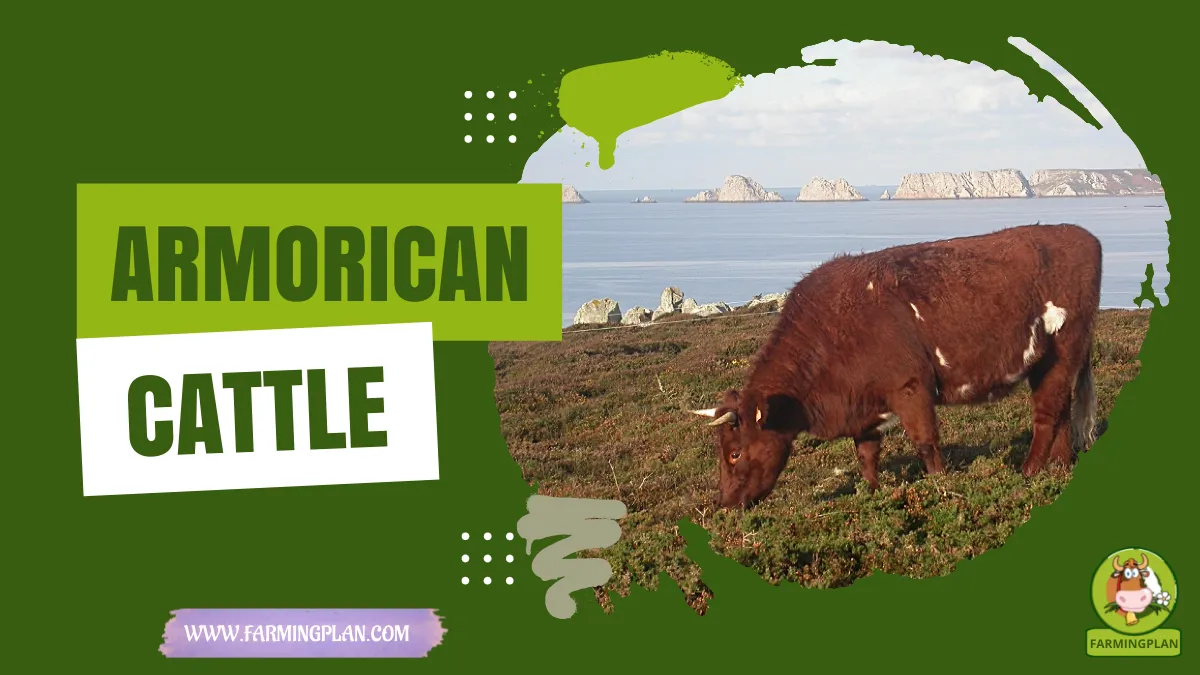
Armorican cattle possess a deep red coat, often accented with white patches on the lower belly, tail switch, and lower legs. Their physical framework reflects strong draft ancestors, featuring broad shoulders, a deep chest, and sturdy bone structure suited for rough terrain.
| Trait | Adult Cows | Adult Bulls |
| Average Weight | 650 – 750 kg | 900 – 1,000 kg |
| Height at Withers | 135 – 140 cm | 145 – 150 cm |
| Primary Coat Color | Deep red with white abdominal markings | Dark red to deep roan |
| Horn Shape | Forward-curving, medium length | Short, thick, lateral curve |
Their skin is thick with well-pigmented mucosa that resists sunburn and insect bites. Unlike modern single-purpose French beef cattle breeds, these animals feature strong limbs and tough hooves, allowing them to graze efficiently in wetlands and rocky pastures alike.
Temperament and Handling Requirements of Armorican Cattle
Armorican cattle are famous for their calm, adaptable disposition. Because original Breton smallholders kept them as multi-purpose draft, milk, and beef animals, centuries of close handling bred out aggressive tendencies. I find working with Armoricaine cows in the chute straightforward. They adjust quickly to routine electric fencing and respond well to gentle herd management. Their quiet nature minimizes stress levels during routine health checks, ear-tagging, or artificial insemination procedures.
Feeding, Grazing, and Nutrition Guidelines of Armorican Cattle
To maintain healthy breeding cows and grow top-quality beef parcels, you must provide a balanced feeding regimen adjusted for seasonal availability. Armorican cattle excel at converting low-quality forage into dense muscle mass and butterfat-rich milk.
- Pasture Management: Utilize rotational grazing across diverse pastures. These cattle eat varied grasses, clover, brush, and high-fiber herbs that standard dairy breeds reject.
- Winter Feed Requirements: Offer high-quality grass silage alongside free-choice dry hay during winter housing. Limit rich corn silage to prevent cows from gaining excess fat prior to calving.
- Mineral Supplementation: Keep weather-resistant mineral blocks accessible year-round to support immune health and prevent metabolic issues like milk fever.
- Water Access: Ensure continuous access to clean, fresh water. A nursing cow requires 20 to 30 gallons of fresh water daily.
Agricultural Purpose and Production Output of Armorican Cattle
The Armorican breed serves homesteaders and smallholders who need dual-purpose utility without intense commercial overhead.
- High-Quality Meat Production: Farmers raise grass-fed steers for direct-to-consumer sales, producing well-marbled beef parcels with outstanding flavor and juicy texture.
- Moderate Milk Yield: Cows produce between 3,000 to 4,500 liters of rich milk per lactation cycle, ideal for farmstead cheese, butter, and calf nursing.
- Conservation Grazing: Nature reserves employ these cattle for habitat management because their grazing habits clear scrub without destroying delicate ground cover.
Special Traits and Conservation Status of Armorican Cattle
The Armoricaine breed remains a rare heritage line listed on the Slow Food Ark of Taste. Their genetic value lies in their natural disease resistance, longevity, and high fertility rates. These cows calve easily without veterinary assistance, displaying strong maternal instincts and high-quality colostrum production. Preserving this rare breed protects essential genetic diversity against overly specialized industrial livestock lines.
“Raising The Armorican Breed Restores True Biodiversity To Our Modern Pastures and Homesteads.”
Health Issues, Prevention, and Care of Armorican Cattle
Armorican cattle possess strong natural immunity, but basic herd health protocols ensure maximum productivity and longevity.
- Mastitis Control: Clean and dry teats prior to milking. Promptly treat warm or swollen quarters with target udder ointments to protect milk quality.
- Parasite Management: Run regular fecal examinations before rotational moves to target internal worms effectively with targeted dewormers.
- Hoof Care: Inspect feet twice yearly. While their hooves are naturally tough, regular trimming prevents lameness on hard soils.
- Vaccination Schedule: Administer annual core vaccines for respiratory pathogens and reproductive diseases like BVD before turn-out season.
Step-by-Step Farming Guide of Armorican Cattle
Successfully raising this heritage breed requires careful planning across facility setup, calf arrival, and long-term herd growth.
Phase 1: Facility and Pasture Setup
Prepare adequate shelter and perimeter fencing before acquiring your cattle. Build sturdy multi-strand electric fencing or woven wire enclosures. Ensure every pasture contains shaded areas and well-drained standing grounds around water troughs.
Phase 2: Foundation Stock Selection
Acquire healthy breeding stock registered within the official herd-book. Select animals with broad frames, sound feet, and calm dispositions. Verify health certificates and maternal milk records before finalizing your purchase.
Phase 3: Calving and Nursery Management
Provide clean, dry, bedded pens for calving cows. Check cows frequently during early labor, though intervention is rarely needed. Ensure newborn calves consume warm colostrum within four hours of birth to establish passive immunity.
Phase 4: Daily Operation and Maintenance
Establish consistent daily feeding, cleaning, and health checks. Keep structured logs tracking individual milk yields, breeding dates, weights, and veterinary treatments to maintain herd traceability.
Read More: Mandarin Duck Wonders: Marvelous Care Guide
Expert Tips for Armorican Cattle Breeding
- Preserve Pure Genetics: Utilize official breeding registries to avoid unintentional cross-breeding with modern commercial strains.
- Practice Rotational Grazing: Move herds every 3 to 5 days to maximize forage recovery and break parasite lifecycles naturally.
- Direct Market Your Output: Package vacuum-packed beef parcels directly for local consumer markets to capture premium prices for heritage meat.
- Maintain Clean Barns: Deep-bed winter housing with clean straw to minimize environmental mastitis risk during cold weather.
- Support Local Initiatives: Join rare breed conservation groups to exchange breeding stock, semen straws, and management insights.
FAQs
What makes Armorican cattle different from standard dairy breeds?
Armorican cattle are a traditional dual-purpose breed, providing balanced milk and high-quality meat. Unlike high-yield dairy breeds, they thrive on lower-quality forage while maintaining strong disease resistance and longevity.
Are Armorican cattle suitable for beginner homesteaders?
Yes, their calm, docile temperament makes them an ideal choice for beginners. They handle easily in small facilities and require minimal complex veterinary interventions during calving.
How much milk does an Armorican cow produce daily?
An Armorican cow produces roughly 10 to 15 liters of milk per day. This yield is rich in butterfat, making it suitable for homestead consumption, cheesemaking, and nursing strong calves.
What is the current conservation status of this breed?
The Armorican breed remains critically endangered, with a small global population monitored by French conservation groups. Targeted breeding programs continue to restore their numbers across native regions.
Can Armorican cattle handle cold or wet winter climates?
Their thick skin, dense coat, and sturdy hooves adapt exceptionally well to damp, cold winter weather. Providing dry shelter and proper winter forage keeps them healthy through challenging seasons.
Conclusion
Raising Armorican cattle offers homesteaders and small-scale farmers a rewarding opportunity to preserve vital agricultural history while producing rich milk and prime grass-fed beef. These hardy dual-purpose animals adapt effortlessly to diverse grazing environments while maintaining low veterinary requirements and exceptional temperaments. By establishing sustainable management practices and supporting purebred breeding initiatives, you help secure valuable genetic diversity for future generations of livestock producers. Share your experiences with rare breeds in the comments below, join your local heritage livestock association, and pass this guide along to fellow cattle enthusiasts today!