I love working with rare Italian poultry breeds, and the Bianca di Saluzzo chicken stands out as a true heritage gem from the Piemonte region of northwestern Italy. Also known as the Saluzzo White, Bianca di Cavour, or Cavour White, this dual-purpose breed from the historic Marquisate of Saluzzo offers outstanding meat quality and steady egg laying while supporting biodiversity preservation as an official Slow Food Presidium breed. Unlike fast-growing commercial hybrids, this slow-growing chicken thrives in free-range systems, showing high exploratory behavior and great foraging skills on farms near Villafranca Garzigliana, Verzuolo, and Cavour.
Throughout my farming career, I have worked with various native poultry breeds like the Bionda Piemontese, Polverara chicken, Romagnola chicken, Pepoi chicken, Mugellese chicken, Valdarno chicken, Lagoon chicken, and even rare ornamental birds like the Ohiki chicken. However, the Bianca di Saluzzo chicken holds a special place in my heart because of its rich history, gentle nature, and excellent survival instincts. In this article, I will share my hands-on experiences, behavioral insights, feeding routines, and practical flock management steps so you can raise these magnificent birds with complete confidence and long-term success.
History & Origin of the Bianca di Saluzzo Chicken
The history of the Bianca di Saluzzo chicken connects deeply with the agricultural traditions of Piedmontese farming communities. Centuries ago, local farmers in towns like Verzuolo and Cavour selected hardy white chickens that could handle variable weather while providing high-quality meat and seasonal eggs for local markets. Historical archives show that these birds descended from ancient descendants of Gallus gallus domesticus mixed with regional landrace flocks. For generations, local smallholders raised them as typical animali da cortile (courtyard animals) alongside crops and livestock, making them an essential part of northern Italian rural culture.
During the mid-twentieth century, the rise of intensive industrial poultry farming and rapid-growth commercial hybrids pushed this traditional breed close to extinction. Fortunately, dedicated regional breeders, local agricultural schools like the Istituto Professionale per l’Aquacoltura e l’Ambiente at the Institute of Verzuolo, and conservation bodies intervened to protect the remaining genetic resources. Their efforts established a formal genetic recovery program that helped restore pure breeding lines. Today, the Slow Food Presidium actively protects this rare dual-purpose breed, celebrating its cultural legacy and promoting sustainable farming practices across local Italian regions.
Read More: American Flying Bald-Head Pigeon: Great Guide
Characteristics of Bianca di Saluzzo Chicken
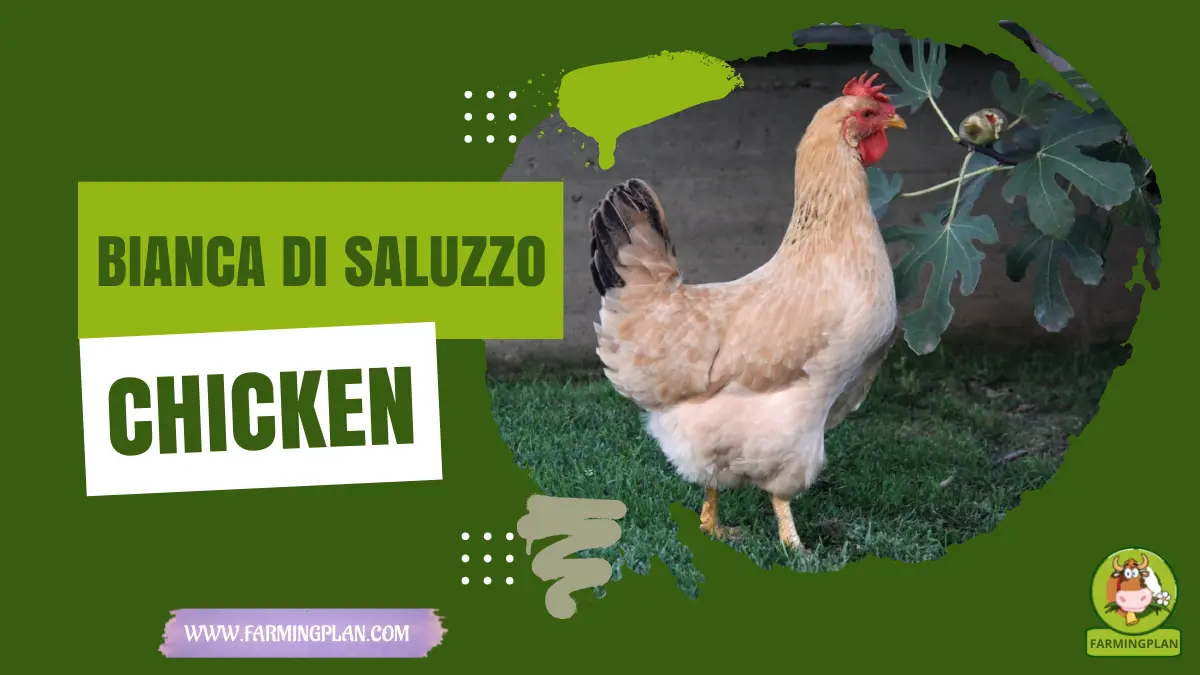
Recognizing a purebred Bianca di Saluzzo chicken is easy once you know what physical traits to look for in your coop. These birds carry a medium-sized body with a well-proportioned frame, strong legs, and pure white plumage that looks stunning against green pastures. The head features a vivid red single comb, matching wattles, and bright red earlobes that contrast sharply with their snow-white feathers. Adult cocks display impressive upright carriage with broad chests, strong tails, and vibrant orange-yellow legs, while mature pullets present a softer, well-rounded profile built for consistent egg laying.
| Characteristic Trait | Cock (Rooster) Standard | Hen (Pullet) Standard |
| Average Weight | $2.5 – 2.8\text{ kg}$ ($5.5 – 6.2\text{ lbs}$) | $2.0 – 2.3\text{ kg}$ ($4.4 – 5.0\text{ lbs}$) |
| Plumage Color | Pure snow white | Pure snow white |
| Comb Type | Large single red comb (5-6 points) | Medium single red comb |
| Shank & Skin Color | Deep yellow shanks, white skin | Deep yellow shanks, white skin |
| Egg Shell Color | N/A | Creamy white to tinted light pink |
Unlike commercial broilers, these slow-growing birds develop sturdy muscle structures over sixteen to twenty weeks. Their breast meat and leg muscles develop rich texture and firm consistency through natural exercise and free-range grazing. In my daily flock inspections, I always admire their clean feathering, solid footpads, and sharp, alert yellow eyes. Their distinct genetic profile gives them resilience against harsh outdoor conditions while maintaining classic heritage chicken beauty.
Nature & Temperament of Bianca di Saluzzo Chicken
Understanding flock temperament makes daily care enjoyable and stress-free for both farmers and birds. The Bianca di Saluzzo chicken possesses an active yet calm personality that fits perfectly into small homesteads and pasture-based production farms. They show curious exploratory behavior, spending hours foraging through grass, chasing insects, and scratching through soil. In my experience, they show lower fearfulness compared to flighty Mediterranean breeds, making them easy to handle during routine physical assessments and health checkups.
Their social structure within the coop stays balanced when you provide adequate space and perching areas. Cocks protect their flock attentively without showing excessive aggressive interactions toward human caretakers or younger pullets. During my years of observing chicken behavior, I have noticed that these birds form strong bonds with regular caretakers, reducing their avoidance distance test scores over time. They handle low-stress handling well, rarely showing prolonged tonic immobility duration during routine welfare assessments.
Food & Diet of Bianca di Saluzzo Chicken
Feeding your flock a clean, balanced diet ensures strong immunity, vibrant plumage condition, and optimal egg production. Because these birds naturally forage, they derive significant nutritional value from pasture plants, seeds, and soil organisms. However, you must supplement their natural foraging with high-quality grain feeds that match their growth stages. During early growth, chicks require a $20\%$ crude protein starter feed to build strong bones, healthy organs, and dense initial feathering.
As the birds mature into pullets and cocks, transition them to a balanced $16\%$ protein grower and layer feed. I love boosting their digestive gut health by offering live or dehydrated black soldier fly larvae as an environmental enrichment supplement. Black soldier fly larvae provide excellent protein, essential lipids, and naturally stimulate chitinolytic enzyme activity in the digestive tract. Always provide clean fresh water, insoluble granite grit for gizzard grinding, and crushed oyster shells to supply essential calcium for strong eggshell formation.
Usage and Heritage Farming Purpose of Bianca di Saluzzo Chicken
The Bianca di Saluzzo chicken serves as a traditional dual-purpose breed, offering valuable contributions for both meat and high-quality egg production. Hens produce around $180$ to $200$ medium-sized cream-colored eggs per year under proper seasonal light management. Their eggs carry rich, deep yellow yolks that local bakers and home cooks love for traditional Italian egg pasta recipes. The consistent egg production makes them a reliable staple for small farm stands and backyard egg collectors.
On the culinary side, cocks and mature hens yield exceptional meat characteristics celebrated across traditional Piedmontese gastronomy. Farmers traditionally raise slow-growing male chickens into premium capons or young roasters for holiday feasts. Their meat features low intramuscular fat, superior water holding capacity, and firm muscle fiber structure. When cooked slowly in traditional regional dishes like pollo alla cacciatora, tonno di gallina, or historically stewed finanziera, the meat delivers deep flavor and juicy texture that modern fast-growing broilers simply cannot match.
Special Features of Bianca di Saluzzo Chicken
One remarkable strength of this heritage bird is its high environmental adaptability and resilience to climate variations. Having evolved in the foothills of the Italian Alps, these chickens withstand cold winter winds and summer heat exceptionally well when given proper shelter. Their strong legs and clean footpads keep them free from footpad dermatitis and contact dermatitis when maintained on dry pasture bedding. Their active foraging behavior also significantly reduces grain feed costs throughout spring and summer months.
Another special feature is their exceptional status within global genetic diversity preservation programs. Recognized under the official Italian poultry association (Federazione Italiana Associazioni Avicole), this breed preserves critical genetic traits lost in industrial lines. Their natural resistance to common flock stressors keeps their heterophil-to-lymphocyte ratio stable during minor environmental shifts. Raising these birds actively protects rare domestic livestock heritage while rewarding you with high-quality eggs and flavorful meat.
Health Issues, Prevention, and Welfare Care of Bianca di Saluzzo Chicken
Keeping your flock healthy requires proactive flock management, proper coop sanitation, and routine welfare assessments. Like all poultry species, these birds can face health challenges if coops become damp, crowded, or poorly ventilated. Respiratory infections, internal parasites, and external mites represent the most common threats to flock vitality. Maintaining clean pine wood shavings on coop floors helps control moisture, preventing harmful ammonia gas buildup that stresses delicate lung tissue.
| Common Health Condition | Visible Symptoms | Preventive Action & Care |
| Internal Parasites (Worms) | Reduced egg laying, pale comb, weight loss | Routine fecal testing, herbal or veterinary deworming |
| Footpad Dermatitis | Dark lesions on foot soles, limping | Keep bedding dry, improve ventilation, clean roosts |
| External Mites / Lice | Feather loss, red skin, restless perching | Provide dust bath areas with wood ash & diatomaceous earth |
| Coccidiosis | Lethargy, ruffled feathers, bloody droppings | Clean brooders, maintain dry bedding, use chick starter |
I recommend following standard Welfare Quality® Assessment Protocols to monitor bird health continuously. Check comb color, plumage condition, and gait regularly during morning feeding sessions. Monitoring stress markers like blood chemistry or excreta corticosterone metabolites shows that keeping low stocking densities keeps stress levels minimal. Provide proper perches, environmental enrichment like hanging cabbage heads, and clean dusting boxes to keep your birds active, clean, and completely parasite-free.
Raising Strong Local Heritage Birds Brings Unmatched Pure Joy To Your Backyard Farm.
Step-by-Step Farming Guide of Bianca di Saluzzo Chicken
Starting your journey with heritage poultry requires clear planning, proper equipment setups, and daily care routines. Building a dedicated management system ensures your birds thrive from their first day in the brooder through their productive adult years. Follow this detailed step-by-step guide to establish a clean, safe, and highly productive poultry operation on your property.
Step 1: Setting Up Brooder Housing and Climate Controls
Preparing a clean brooder space is your first step when bringing home young chicks or hatching eggs. Thoroughly scrub your brooding area with animal-safe disinfectants and line the floor with three inches of clean dry wood shavings. Hang an adjustable radiant heater or heat lamp centered above the floor to create a warm cozy zone of $95^\circ\text{F}$ ($35^\circ\text{C}$) during their first week of life. Lower the temperature by five degrees each week as the chicks grow their protective adult feathers.
Ensure the brooder setup includes proper air exchange without creating cold floor drafts that chill delicate young chicks. Place chick feeders and shallow gravity waterers along the warm perimeter so every bird accesses food and fresh water easily. Observe chick behavior constantly; if chicks huddle tightly under the heat lamp, increase the heat output, but if they scatter far away gasping, lower the temperature immediately.
Step 2: Implementing Nutrition and Growth Diets
Providing correct nutritional formulas supports optimal bone development, muscle growth, and organ health through every life stage. Feed your young chicks a complete $20\%$ crude protein starter crumble for their first six weeks to support fast feathering and strong immune defenses. Keep feeders filled continuously so young birds eat whenever hungry, ensuring balanced growth rates across the flock.
At week seven, transition your growing birds to a $16\%$ to $18\%$ protein grower mash, introducing small amounts of grit to aid gizzard digestion. Offer fresh greens, clean garden scraps, and dehydrated black soldier fly larvae in moderation to encourage natural pecking instincts. Always ensure fresh, cool water remains available continuously, as water restriction halts chick growth and lowers digestive health rapidly.
Step 3: Transitioning to Free-Range Pasture and Coops
Moving your growing pullets and cocks into their permanent outdoor coop requires secure fencing, spacious housing, and comfortable roosting bars. Plan for at least four square feet of coop interior space per bird, alongside ten square feet of secure outdoor run space. Install sturdy wooden perches located eighteen to twenty-four inches above the floor, providing ten inches of perch length per bird for comfortable night roosting.
Provide safe free-range pasture access during daylight hours so your birds forage naturally for seeds, grass, and beneficial soil insects. Erect predator-proof fencing using heavy-gauge hardware cloth buried six inches into the ground to deter digging predators like foxes or raccoons. Secure coop access doors every evening at sunset to protect your resting flock from nocturnal predators.
Step 4: Establishing Daily Care and Sanitation Routines
Consistent daily coop maintenance keeps infectious diseases away and maintains high flock welfare standards throughout the year. Every morning, open coop doors, inspect water containers for cleanliness, and fill grain troughs with fresh feed balanced for adult birds. Collect fresh eggs twice daily to prevent egg breakage, egg eating habits, or solar heat damage during hot summer afternoons.
Scrape roosting boards and replace soiled bedding under perches weekly to keep moisture levels down and eliminate bad smells. Perform thorough deep-cleaning coop overhauls twice a year by removing all old bedding, scrubbing walls with biological cleaners, and spreading fresh pine shavings across floor surfaces. Regular sanitation prevents parasite infestations and protects delicate footpads from painful skin infections.
Step 5: Managing Flock Reproduction and Selective Breeding
Maintaining true breed characteristics requires careful selection of top-performing breeding roosters and healthy egg-laying hens. Choose breeding cocks that display strong chest muscles, bright yellow shanks, clear white plumage, and friendly alert temperaments. Select mature hens that lay smooth, well-shaped cream eggs consistently while showing robust overall health and active outdoor foraging traits.
Collect clean, unwashed fertilized eggs daily from your best breeding groups and store them at $55^\circ\text{F}$ to $60^\circ\text{F}$ ($13^\circ\text{C}$ to $15^\circ\text{C}$) with $70\%$ relative humidity. Turn stored hatching eggs twice daily for up to seven days before placing them into your automated incubator set to $99.5^\circ\text{F}$ ($37.5^\circ\text{C}$). Maintain correct incubator moisture levels through day eighteen before increasing humidity for final hatching, securing the next generation of pure heritage birds.
Read More: American Flying Flight Pigeon: Unique Care Secrets
Expert Tips and Best Practices for Bianca di Saluzzo Chicken
- Install deep dust bathing boxes filled with equal parts clean sand, dry soil, and untreated wood ash to eliminate lice naturally.
- Offer live black soldier fly larvae in scatter feeders to reduce feather pecking and encourage energetic foraging behavior.
- Add one tablespoon of organic unpasteurized apple cider vinegar per gallon of fresh drinking water to support healthy gut microflora.
- Hang fresh cabbage heads or bunches of leafy greens at bird eye level during winter months to relieve coop boredom.
- Keep clean dry pine shavings on brooder floors rather than cedar shavings, which release volatile oils that irritate chick lungs.
- Provide free-choice coarse granite grit and crushed oyster shells in separate containers so birds consume exact minerals as needed.
- Monitor comb conditions during extreme sub-zero winter weather by applying clear petroleum jelly to prevent painful frostbite damage.
- Inspect footpads monthly during flock checkups to spot early signs of bumblefoot or contact dermatitis before lameness occurs.
FAQs
What makes the Bianca di Saluzzo chicken different from common commercial chickens?
The Bianca di Saluzzo is a slow-growing Italian dual-purpose heritage breed protected by the Slow Food Presidium for its exceptional meat quality and steady egg laying. Unlike fast-growing commercial broilers, this bird thrives on open pasture, showing superior foraging instincts, strong immunity, and rich flavor traits.
How many eggs does a Bianca di Saluzzo hen lay annually?
A healthy Bianca di Saluzzo typically lays between 180 and 200 medium-sized eggs per year under good management. Her eggs feature smooth cream-colored to light pink shells with rich, high-quality yolks prized for artisanal cooking.
What is the best diet for feeding heritage Saluzzo chickens?
A balanced diet consists of a high-quality 16% protein layer feed supplemented with fresh pasture greens, coarse grit, and calcium sources like crushed oyster shell. Offering black soldier fly larvae supplies beneficial natural protein while supporting healthy digestive gut function.
Can Bianca di Saluzzo roosters and hens handle cold winter weather?
Yes, this breed evolved in the Piedmont region near the Italian Alps and tolerates cold winter conditions very well. As long as you provide a dry, draft-free coop with deep bedding and clean water, they stay healthy throughout freezing months.
Where can I buy purebred Bianca di Saluzzo hatching eggs or chicks?
You can source pure stock through specialized heritage poultry breeders, local Italian agricultural preservation groups, or certified farms registered with the Federazione Italiana Associazioni Avicole. Always verify breeder credentials to ensure authentic genetic lines.
Conclusion
Raising the Bianca di Saluzzo chicken allows you to connect with centuries of Italian agricultural history while enjoying delicious farm-fresh eggs and premium heritage meat. These hardy, gentle white birds adapt wonderfully to backyard coops and commercial pasture farms alike, bringing beauty, activity, and self-sufficiency to your daily life. By following proper nutritional guidelines, maintaining clean coop setups, and monitoring flock welfare, you can establish a thriving heritage flock that flourishes for years to come. I encourage you to share your thoughts, post your chicken questions in the comments below, and join our growing community of heritage poultry enthusiasts today!