

⚡ Finnish Landrace Pig at a Glance: Key Specifications & Benchmarks
| Native Breed Designation | Suomen maatiassika (Finnish Landrace pig / Finsk Lantras) |
| Primary Agricultural Purpose | High-efficiency commercial bacon production, maternal foundation line, purebred seedstock |
| Mature Boar Weight Range | 580 – 720 lbs (263 – 327 kg) with deep muscular loins and long skeletal frame |
| Mature Sow Weight Range | 460 – 580 lbs (209 – 263 kg) with straight topline and spacious pelvic structure |
| Defining Ear Conformation | Large, thin pendulous lop ears carried forward horizontally over the snout |
| National Health Status | World-leading health status: historically free from PRRS, Aujeszky’s, and dysentery |
| Average Litter Size | 12 to 15 vigorous piglets per kindle; deep sustained lactation and calm mothering |
| Feed Conversion Ratio | High efficiency: 2.5:1 to 2.8:1 during standard grow-finish production stages |
| Market Harvest Age & Weight | 240 – 250 lbs (109 – 113 kg) attained in 5.4 to 6.0 months under managed feeding |
| Carcass Composition | High lean meat yield (60% to 63%), exceptionally long belly plate for uniform bacon slices |
The Finnish Landrace pig (Suomen maatiassika) represents the pinnacle of Nordic swine breeding: uniting extraordinary maternal prolificacy and lean carcass quality with the highest disease-free herd health status in the world. Engineered through decades of disciplined performance recording across Finland’s demanding sub-arctic climate, this long-bodied, white lop-eared breed serves as an elite foundation dam across European and global hybrid swine programs. Matching forage or ration quality to life stage optimizes finnish landrace pig growth.
What sets Finnish Landrace genetics apart globally is their unmatched sanitary heritage. Due to strict national biosecurity and isolated Nordic geography, the Finnish swine population remains completely free from economically devastating diseases such as Porcine Reproductive and Respiratory Syndrome (PRRS), Aujeszky’s disease, and swine dysentery. Producers establishing high-health facilities can review our commercial swine production management guide for biosecure barn design. Gradual dietary transitions protect digestive stability in finnish landrace pig.
In production performance, the Finnish Landrace excels in feed conversion efficiency and maternal calm. Sows farrow large, uniform litters and nourish them with heavy daily milk yields, demonstrating superior maternal longevity across multiple parities. Comparing maternal lines with our profile on the Danish Landrace pig illustrates the subtle conformational refinements that distinguish Nordic genetics. Selecting healthy foundation stock is the cornerstone of successful finnish landrace pig management.
Commercial producers utilizing Finnish Landrace dams benefit from outstanding maternal heterosis when crossed with terminal meat boars. The resulting three-way commercial cross slaughter pigs display accelerated daily gain, thin subcutaneous backfat, and expansive loin eye depth, delivering top-tier grading returns at meat packing plants worldwide. Good predator-proofing and dry bedding safeguard finnish landrace pig comfort in harsh weather.
Origins in Finland & Decades of Scientific Progeny Testing
The development of the Finnish Landrace dates back to the early twentieth century when Finnish agricultural cooperatives sought to replace primitive indigenous forest swine with a standardized animal capable of producing premium export bacon. Breeders systematically crossed native Finnish landrace sows with carefully selected Swedish and Danish Landrace boars, founding the official Finnish Pig Breeders Association in 1908. Monitoring water quality and mineral balance directly benefits finnish landrace pig vitality.
By the 1920s, Finland established centralized progeny testing stations where sibling groups were raised under identical nutritional and environmental conditions. Researchers measured daily weight gain, feed intake, and ultrasonic backfat thickness with extreme precision. This rigorous statistical selection rapidly fixed desirable carcass length and eliminated genetic stress susceptibility (halothane sensitivity), establishing a remarkably robust breed. Practical hands-on husbandry ensures consistent results when raising finnish landrace pig.
In subsequent decades, Finland’s proactive veterinary legislation banned the preventative use of sub-therapeutic antibiotics in animal feed decades before European Union mandates. Consequently, Finnish Landrace breeders selected rigorously for natural immune resilience, robust respiratory health, and strong sound feet, creating an animal that thrives without reliance on constant medication.
Today, Finnish Landrace genetics form an integral component of the Nordic Genetics breeding alliance (Figen), exporting high-indexing semen, embryos, and breeding gilts across Europe, North America, and Asia to enhance maternal fertility and carcass uniformity in commercial herds. Early intervention at the first sign of lethargy protects overall finnish landrace pig flock or herd health.
Breed Conformation, Elongated Spine & Lop Ear Characteristics
The Finnish Landrace is characterized by an elongated, cylindrical body silhouette with an exceptionally straight topline and light, well-sloped shoulders. Like other elite Nordic landrace strains, the skeletal framework carries sixteen pairs of ribs—one to two pairs more than traditional swine breeds. This added spinal length directly expands the prime cut area along the loin and pork belly plate. Structured culling and biosecurity protocols strengthen finnish landrace pig genetic quality.
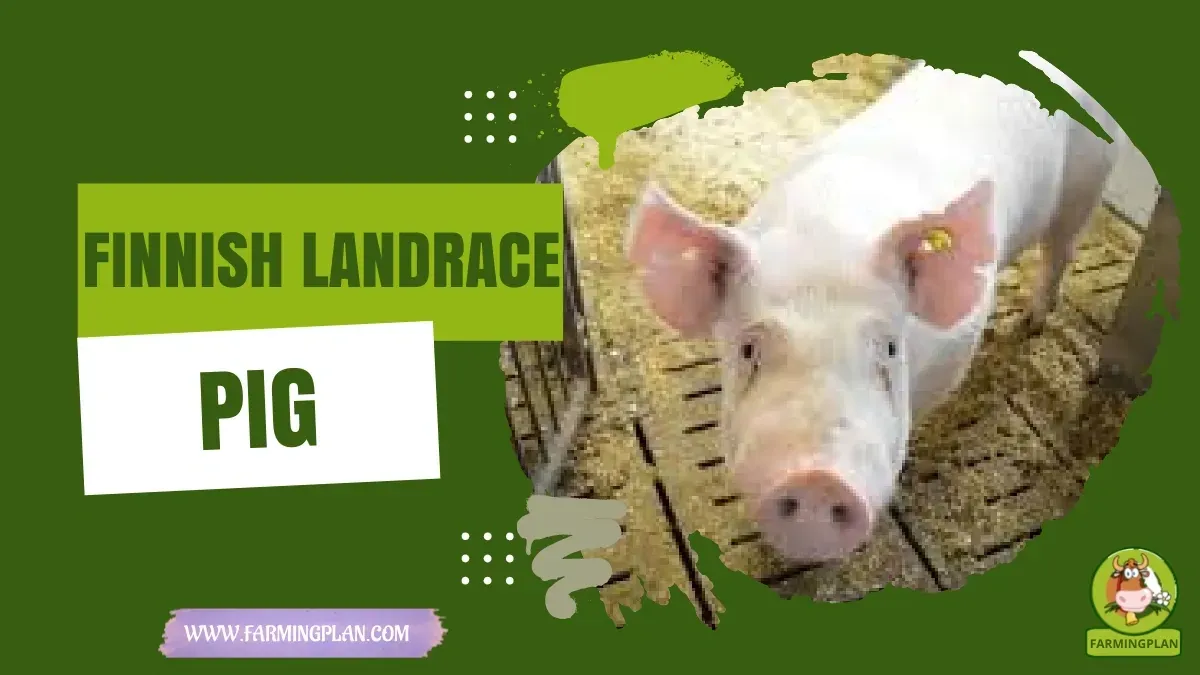
The head is long and refined with a straight to slightly concave nasal profile. The ears are large, thin, and distinctly lop-eared, carried horizontally forward over the eyes parallel to the snout. These pendulous ears protect the eyes from windblown bedding and pasture dust, contributing to the breed’s placid, unexcitable disposition during barn handling. Maintaining clean feeders and sanitized equipment supports sustainable finnish landrace pig care.
The coat is solid pure white, consisting of fine, smooth bristles laid flat over pale pink skin. The underline must be exceptionally clean and long, equipped with at least fourteen to sixteen evenly spaced, prominent teats. Mature boars weigh between 580 and 720 pounds (263 to 327 kg), while mature breeding sows maintain prime farrowing body condition between 460 and 580 pounds (209 to 263 kg). Consistent daily observation helps keepers spot early changes in finnish landrace pig health and behavior.
Leg conformation is straight, clean-jointed, and strong-boned. Pasterns stand upright with flexible spring to absorb shock on concrete slats or hard surfaces. The claws are hard, uniform, and white. Any individuals displaying splayed hooves, weak pasterns, or excessive back arch are strictly eliminated from registered breeding lines. Clean housing, fresh water, and balanced nutrition remain essential for finnish landrace pig productivity.
Maternal Prolificacy, Milking Capacity & Piglet Care
Maternal performance is the signature economic trait of the Finnish Landrace. Sows routinely farrow between 12 and 15 vigorous, well-developed piglets per litter, with high-indexing breeding herds regularly weaning over thirty pigs per sow per year. Spacious pelvic architecture ensures smooth, rapid farrowing with minimal labor intervention, reducing birth hypoxia and keeping stillbirths below 4%.
Lactation capacity is outstanding. Finnish Landrace sows produce copious, high-protein milk that supports rapid early piglet weight gains. Piglets routinely achieve weaning weights of 16 to 18 pounds at four weeks of age. Sows possess calm, protective temperaments, lying down carefully to avoid accidental piglet crushing. Tracking feed intake and body condition supports long-term finnish landrace pig performance.
Post-farrowing protocols include providing supplemental warmth in dedicated creep boxes maintained at 88°F to 90°F (31°C to 32°C). Handlers administer oral iron supplementation within seventy-two hours of birth to support rapid blood hemoglobin synthesis and prevent nutritional anemia during rapid early development. Following biosecurity best practices reduces disease risk in any finnish landrace pig operation.
Sow maternal longevity across Finnish herds is exceptionally high. Sows remain structurally sound and reproductively active through six to eight consecutive parities, significantly lowering gilt replacement costs compared to fragile commercial hybrid lines that often breakdown after two or three farrowing cycles. Seasonal adjustments to shelter and diet keep finnish landrace pig thriving year-round.
Nutritional Strategies: Precision Phase-Feeding & Feed Efficiency
Achieving rapid, lean muscle gain while maintaining superior feed conversion requires scientific phase-feeding protocols. Weaned nursery pigs (15 to 45 pounds) receive a digestible starter ration formulated to 20% to 22% crude protein, balanced with synthetic lysine, threonine, and methionine to foster healthy gut villi development. Proper record-keeping makes breeding and culling decisions easier for finnish landrace pig keepers.
Grower and finisher diets transition protein levels from 18% down to 14% as pigs advance from 50 to 240 pounds. Finnish Landrace pigs achieve superior feed conversion ratios between 2.5:1 and 2.8:1 on balanced cereal grains such as barley, oats, and soybean meal. Producers balancing feed logistics can study our dairy ration planning and nutrition guide for bulk ingredient handling insights. Providing adequate space and ventilation prevents common stress issues in finnish landrace pig.
Because long-bodied Landrace sows produce heavy daily milk yields, dietary calcium and phosphorus management during gestation and lactation is critical. Sows draw heavily on skeletal mineral stores; maintaining a 1.3:1 to 1.5:1 calcium-to-phosphorus ratio alongside vitamin D3 prevents lactation osteoporosis and posterior paralysis. Understanding breed-specific traits helps maximize finnish landrace pig longevity and output.
For homesteaders and alternative growers raising pigs on pasture, the Finnish Landrace displays surprising grazing vigor. When turned into diverse legume and brassica cover crops alongside hardy grazers like our heritage pig foraging traits stock, they harvest significant dietary nutrients while maintaining lean carcass development.
Health Management, Nordic Sanitary Standards & Biosecurity
The international reputation of the Finnish Landrace is anchored in Finland’s extraordinary sanitary status. Finnish herds are documented free from PRRS, Aujeszky’s disease, Brucella suis, and Mycoplasma hyopneumoniae. Maintaining this high health status requires rigid physical biosecurity and strict animal movement controls. Routine preventive care saves time and lowers veterinary costs for finnish landrace pig.
Facility biosecurity mandates shower-in, shower-out worker hygiene, dedicated internal barn clothing, and rigorous vehicle disinfection before feed trucks access property perimeters. Air filtration systems installed on modern nucleus barns screen out airborne pathogens, protecting breeding stock from external contamination. Matching forage or ration quality to life stage optimizes finnish landrace pig growth.
Due to their pale pink skin and fine white bristles, outdoor herds require protection against intense summer sunlight. Providing generous shade canopies, open-sided shelters, and clean mud wallows prevents solar blistering. Adapting infrastructure concepts from our farm infrastructure and biosecurity systems guide ensures optimal air exchange and thermal comfort. Gradual dietary transitions protect digestive stability in finnish landrace pig.
Regular serological surveillance and veterinary health audits ensure herd health is preserved. By maintaining closed herd management and introducing new genetics solely via certified pathogen-free frozen semen, breeders eliminate disease transmission risks and maintain premium seedstock values. For additional husbandry benchmarks and feeding standards, explore our complete Lacombe Pig care guide. Selecting healthy foundation stock is the cornerstone of successful finnish landrace pig management.
Carcass Quality, Bacon Uniformity & Terminal Heterosis
The Finnish Landrace was engineered specifically for high-efficiency bacon and lean pork processing. Slaughter pigs harvested at 240 to 250 pounds (109 to 113 kg) yield carcass dressing percentages of 75% to 78%, with lean meat content averaging 60% to 63%. The backfat layer is thin, firm, and uniform from shoulder to loin. Good predator-proofing and dry bedding safeguard finnish landrace pig comfort in harsh weather.
The elongated belly plate provides exceptional slice uniformity for industrial bacon curing. Strips of bacon cut from Finnish Landrace carcasses display an ideal lean-to-fat ratio without excessive fat seams, commanding top wholesale prices from commercial meat packers and specialty butchers alike.
In commercial rotational crossbreeding, Finnish Landrace sows are mated with Yorkshire (Large White) boars to generate F1 hybrid breeding females. When these F1 dams are crossed to terminal muscular sires like Duroc or Piétrain boars, the resulting three-way cross slaughter pigs express complete hybrid vigor, rapid growth, and outstanding carcass cutability. Monitoring water quality and mineral balance directly benefits finnish landrace pig vitality.
Meat quality testing confirms that the pork remains juicy and tender, displaying high water-holding capacity and balanced pH values. By avoiding the extreme halothane-linked PSE meat defects found in fragile terminal breeds, the Finnish Landrace ensures dependable, high-quality pork for culinary markets. Practical hands-on husbandry ensures consistent results when raising finnish landrace pig.
⚡ Estimated Annual Budget & Maintenance Costs (USD)
| Registered Purebred Breeding Gilts (2 Gilts) | Open breeding gilts from certified high-health nucleus lines: $1,300 |
| Farrowing Pen Setup & Heated Radiant Creep Box | Insulated farrowing stall, non-slip slatted floor, electric heat lamp: $850 |
| Starter, Grower & Lactation Formulated Feeds | Balanced pelleted rations, amino acid premix (sows & litters): $2,350 |
| Automated Stainless Nipple Waterers & Plumbing | High-flow freeze-proof nipples, pressure regulator valves: $250 |
| Veterinary Health Audits, Testing & Core Vaccines | Routine serological screen, iron paste, dewormers: $320 |
| Bedding Packs & Biosecurity Sanitation Supplies | Kiln-dried pine shavings, Virkon S broad-spectrum disinfectant: $280 |
| Custom USDA Butchering & Artisan Bacon Curing | Slaughter fees, nitrate-free bacon cure, vacuum packing: $1,200 |
| Estimated Total Annual Investment | $6,550 total baseline operational and breeding investment budget |
🐖 Finnish Landrace Pig Swine Daily Feed Calculator
Calculate daily grower/finisher rations (lbs), monthly 50-lb feed bags, pen space, and water needs for your Finnish Landrace Pig pigs.
Frequently Asked Questions (FAQ)
What makes the Finnish Landrace pig’s national herd health status unique?
Due to Finland’s strict sub-arctic biosecurity and isolated geography, Suomen maatiassika herds remain historically free of major global pathogens including PRRS, Aujeszky’s disease, and swine dysentery.
How big do Finnish Landrace pigs grow and how fast do they finish?
Mature boars weigh 580 to 720 lbs and sows weigh 460 to 580 lbs; market hogs finish at 240 to 250 lbs in 5.4 to 6.0 months with a superior 2.5:1 to 2.8:1 feed conversion ratio.
How many piglets do Finnish Landrace sows farrow per litter?
Finnish Landrace sows average 12 to 15 vigorous piglets per litter with calm farrowing temperament, deep milking persistence, and strong maternal survival rates.
What carcass lean meat yield does the Finnish Landrace achieve?
Finished market hogs deliver 60% to 63% lean meat yield with long, uniform belly plates tailored for export-grade sliced bacon.
What physical features distinguish a Finnish Landrace hog?
They carry solid white hair over pink skin, an elongated spine, straight topline, strong feet and legs adapted to Nordic barns, and thin forward-drooping lop ears.
Expert Verdict & Husbandry Roadmap
The Finnish Landrace pig stands as a masterwork of Nordic livestock engineering. By combining world-leading disease freedom, extraordinary maternal prolificacy, and outstanding bacon uniformity, it offers commercial producers and discerning smallholders a premier foundation for profitable, sustainable pork production. Early intervention at the first sign of lethargy protects overall finnish landrace pig flock or herd health.
Achieving peak herd performance demands strict attention to sanitary biosecurity, balanced calcium nutrition during peak lactation, and smooth pen flooring that protects elongated spines. When supported with disciplined management, the Finnish Landrace delivers dependable, profitable performance across every farrowing cycle. Structured culling and biosecurity protocols strengthen finnish landrace pig genetic quality.
In addition, maintaining detailed genealogical sow records and utilizing digital farrowing tracking systems allows herd managers to identify superior maternal bloodlines with high statistical confidence. Selecting replacement breeding stock from sows that demonstrate consistent 14-plus piglet weaning cohorts accelerates genetic progress and solidifies herd profitability over successive breeding seasons. Maintaining clean feeders and sanitized equipment supports sustainable finnish landrace pig care.
Investing in Finnish Landrace seedstock equips progressive producers with a proven, health-resilient foundation for long-term herd productivity. By prioritizing exceptional maternal milk flow, calm mothering temperament, and certified pathogen-free lineage, swine enterprises insulate their operations against reproductive inefficiencies and secure premium grading returns across demanding modern pork markets.
📚Agricultural Reference & Scientific Citations
Standards and physiological data referenced in this guide comply with USDA APHIS Swine Health, FAO Domestic Animal Diversity Information System, and the American Veterinary Medical Association (AVMA).


