

| Characteristic | Breed Standard | Dairy Farmstead Significance |
|---|---|---|
| Breed Classification | Indigenous Alpine Dairy Caprine (Capra hircus) | Specialized mountain dairy landrace adapted to seasonal transhumance |
| Mature Buck (Male) Weight | 150 to 175 lbs (70 to 80 kg) | Strong, agile sires with robust bone and high reproductive libido |
| Mature Doe (Female) Weight | 110 to 135 lbs (50 to 62 kg) | Medium frame balancing forage efficiency with elevated lactation capacity |
| Average Milk Yield | 770 to 1,100 lbs (350 to 500 kg) per lactation | Consistent 210-to-240-day lactation on pasture and mountain browse |
| Average Butterfat Content | 3.4% to 3.8% | High butterfat yield yielding dense, aromatic cheese curds |
| Average Milk Protein | 3.1% to 3.4% | Enriched in kappa-casein variants accelerating rennet coagulation |
| Signature Coat & Markings | Blonde/hazel body with white facial stripes and white leg stockings | Fine, long hair coat providing thermal protection against cold alpine rain |
Breed Overview and Production Statistics
The Bionda dell’Adamello goat—known in its native northern Italy as the *Capra Bionda dell’Adamello* or the blonde goat of the Adamello Alps—stands among Europe’s most distinctive and agriculturally valuable indigenous dairy caprine breeds. Originating in the high alpine valleys of the Camonica Valley (Val Camonica) around the Adamello mountain massif in the Province of Brescia, Lombardy, this elegant light brown goat has sustained mountain communities for centuries. Renowned for its calm disposition, surefooted alpine grazing stamina, and nutrient-dense cheese milk, the breed represents an elite model for sustainable pastoral dairying. Good predator-proofing and dry bedding safeguard Bionda Delladamello goat comfort in harsh weather. Monitoring water quality and mineral balance directly benefits Bionda Delladamello goat vitality.
Unlike industrial dairy goats bred exclusively for indoor confinement, the Bionda dell’Adamello is a transhumance specialist capable of climbing high alpine pastures at 6,000 to 8,000 feet during the summer months. Its milk forms the indispensable raw ingredient for celebrated regional artisanal cheeses, most notably *Fatulì della Val Camonica*—a traditional smoked raw goat cheese protected by the Slow Food Ark of Taste. For dairy goat producers, farmstead cheesemakers, and heritage livestock stewards, mastering this breed’s husbandry, nutrition, milking hygiene, and kidding protocols unlocks superior dairy profitability. Practical hands-on husbandry ensures consistent results when raising Bionda Delladamello goat.
Val Camonica Heritage and Alpine Mountain Origins
The historical evolution of the Bionda dell’Adamello centers on the rugged alpine valleys of Lombardy, particularly the high elevation pastures surrounding the Adamello Glacier. Genetic and historical studies demonstrate that the breed shares ancestral roots with the Swiss Toggenburg goat, which was historically introduced through ancient mountain trading passes connecting the Swiss canton of St. Gallen with the Italian Brescia region. However, centuries of localized adaptation to the unique floristic biodiversity and steep granite slopes of the Camonica Valley established the Bionda as a distinct genetic landrace. Early intervention at the first sign of lethargy protects overall Bionda Delladamello goat flock or herd health.
Traditionally, Val Camonica farmers operated small family herds of 10 to 30 goats. From October to May, goats were housed in stone valley barns (*stalle*), grazing lowland orchard meadows and feeding on cured mountain meadow hay. In June, herders led the goats up ancient transhumance trails to high alpine *malghe* (mountain summer farms) at elevations above 6,000 feet, where the animals browsed wild alpine herbs, alpine clover, and dwarf willows. In 1997, the breed was officially recognized by the Italian Ministry of Agriculture, leading to the creation of the official ASSONAPA herdbook and the Associazione Operatori Zootecnici della Valle Camonica. Structured culling and biosecurity protocols strengthen Bionda Delladamello goat genetic quality. Maintaining clean feeders and sanitized equipment supports sustainable Bionda Delladamello goat care.
Physical Conformation and Conformation Standards
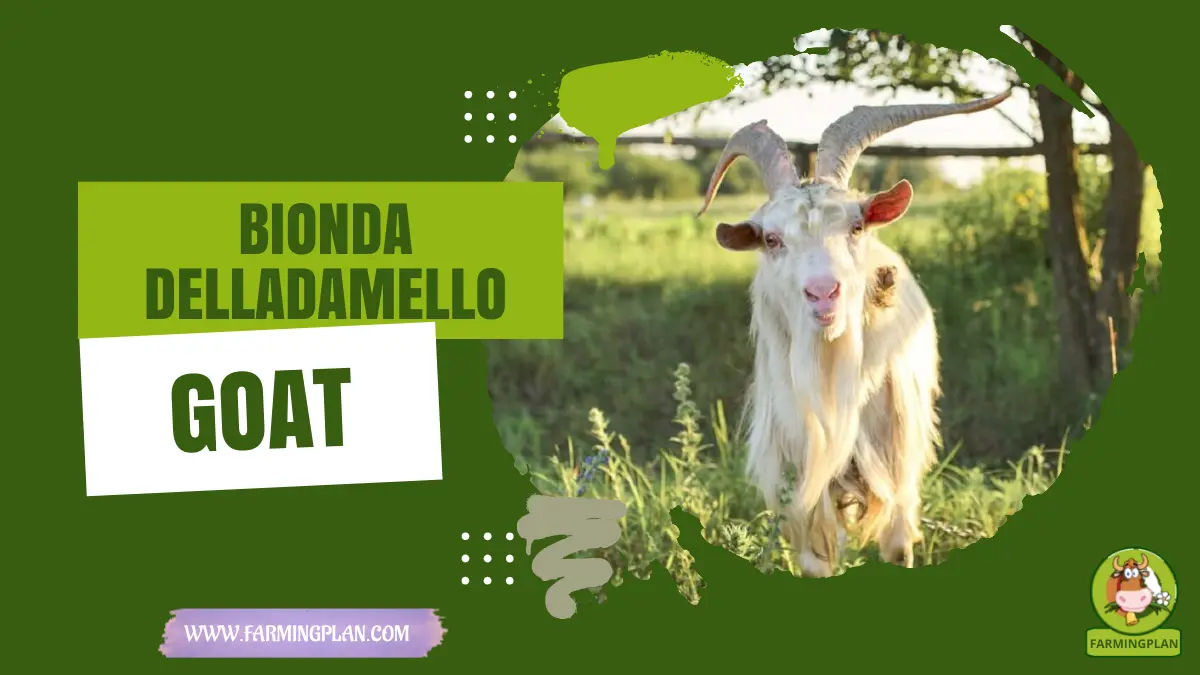
The Bionda dell’Adamello displays a harmonious, medium-large dairy caprine frame characterized by strength, nobility, and functional symmetry. The head is fine, dry, and well-proportioned, featuring a straight or slightly dished profile and alert, horizontally carried ears. Both sexes are predominantly horned; horns are backward-arching and slightly divergent, measuring 18 to 26 inches in mature bucks and 10 to 14 inches in does. Naturally polled individuals are occasionally observed and permitted in the herdbook. Consistent daily observation helps keepers spot early changes in Bionda Delladamello goat health and behavior.
The defining visual trademark of the breed is its warm blonde or light hazel coat, which can range from light wheat-gold to rich caramel brown. The face exhibits two clear, parallel white stripes extending from above the eyes down to the white muzzle. White markings also cover the lower limbs from the knees and hocks down to the hooves, as well as the perianal area and the underside of the tail. Clean housing, fresh water, and balanced nutrition remain essential for Bionda Delladamello goat productivity.
The fleece consists of fine, silky hair that is medium-to-long across the body, forming a protective cape over the back, with mature bucks displaying a generous beard and shoulder mane. Limbs are clean, strong, and supported by hard, black, highly durable hooves that excel on wet granite rock faces. Tracking feed intake and body condition supports long-term Bionda Delladamello goat performance. Following biosecurity best practices reduces disease risk in any Bionda Delladamello goat operation.
Milk Quality: Butterfat, Protein, and Fatulì Artisanal Cheese
The primary economic engine of the Bionda dell’Adamello is the exceptional artisanal cheesemaking quality of its milk. While modern industrial breeds like the Saanen produce higher fluid volume, their milk is often watery with lower solids. In contrast, Bionda dell’Adamello milk averages 3.4% to 3.8% butterfat and 3.1% to 3.4% protein, delivering a rich concentration of milk solids that yields dense, elastic curds under rennet coagulation. Seasonal adjustments to shelter and diet keep Bionda Delladamello goat thriving year-round.
The breed’s milk is celebrated as the exclusive raw material for *Fatulì della Val Camonica*. Fatulì is a traditional raw goat milk cheese produced by heating whole milk to 36 degrees Celsius, coagulating it with calf rennet, pressing the curds into small cylindrical forms (weighing 300 to 500 grams), and salting them by hand. The defining artisanal step is smoking: the cheese wheels are smoked over smoldering juniper branches and beechwood inside stone smokehouses for several days before aging. The resulting cheese delivers an intense, savory flavor profile with herbaceous juniper notes, commanding premium prices in European gastronomic markets. Proper record-keeping makes breeding and culling decisions easier for Bionda Delladamello goat keepers.
Nutritional Strategies: Mountain Pasture and Forage Rations
Managing the nutritional program of the Bionda dell’Adamello requires understanding that the breed evolved on diverse alpine forage rather than concentrated grain diets. Their rumen microbiome is adapted to extract energy and protein from a wide botanical spectrum of mountain grasses, legumes, and woody shrubs. Providing adequate space and ventilation prevents common stress issues in Bionda Delladamello goat.
During the active summer grazing season, milking does should be rotated through pastures rich in cool-season grasses (orchardgrass, meadow fescue, timothy) and nitrogen-fixing legumes (white clover, birdsfoot trefoil). In winter barn housing, feed clean, late-cut meadow hay supplemented with 0.8 to 1.5 lbs of balanced dairy goat concentrate per doe daily, formulated with rolled barley, beet pulp, alfalfa pellets, and soybean meal. Avoid excessive starchy grain, which destabilizes rumen pH and triggers enterotoxemia or subacute ruminal acidosis. Always provide free-choice loose caprine minerals containing copper, selenium, zinc, and white salt. Review our comprehensive guide on goat feed, daily rations, and feeding schedules to calculate precise forage dry matter requirements. Understanding breed-specific traits helps maximize Bionda Delladamello goat longevity and output. Routine preventive care saves time and lowers veterinary costs for Bionda Delladamello goat.
Housing Infrastructure, Barn Sizing, and Winter Management
While Bionda dell’Adamello goats spend four months each year grazing open alpine pastures, winter weather in mountain valleys requires secure, dry barn housing. Housing must provide at least 15 to 20 square feet of bedded pack resting area per adult doe, with dedicated individual kidding pens measuring 5 feet by 5 feet. Matching forage or ration quality to life stage optimizes Bionda Delladamello goat growth.
Ventilation is critical; caprines are susceptible to respiratory pneumonia when housed in damp, ammonia-laden environments. Construct high roof ridge vents and adjustable sidewall curtains that facilitate continuous passive air exchange without creating drafts at goat level. Deep bedding of kiln-dried pine shavings or clean wheat straw over well-drained gravel or concrete floors provides superior resting ground. Fencing for outdoor paddocks must stand at least 48 to 54 inches (120 to 140 cm) tall, utilizing 4×4-inch woven wire or electric net fencing to contain athletic, horned goats securely. Gradual dietary transitions protect digestive stability in Bionda Delladamello goat.
Veterinary Protocols, Health Management, and Biosecurity
Maintaining high dairy herd productivity requires systematic preventative healthcare under guidelines established by the USDA Animal and Plant Health Inspection Service. All animals must receive annual vaccinations with a Clostridial 8-way bacterin (CDT covering enterotoxemia and tetanus), administered subcutaneously four to six weeks prior to kidding to ensure maternal antibodies are concentrated in colostrum. Selecting healthy foundation stock is the cornerstone of successful Bionda Delladamello goat management. Good predator-proofing and dry bedding safeguard Bionda Delladamello goat comfort in harsh weather.
Perform seasonal fecal egg count testing to monitor for internal nematodes, particularly the barber pole worm (*Haemonchus contortus*) and coccidiosis. Utilize the FAMACHA eye mucous membrane scoring system to practice targeted selective deworming rather than whole-herd chemical drenches. Hooves must be trimmed every 8 to 12 weeks during indoor winter housing; on rocky alpine pasture, hooves wear naturally, but regular farrier inspection ensures correct balance and prevents foot rot (*Dichelobacter nodosus*). For clinical pathology and disease defense, explore our complete manual on goat diseases, symptoms, and clinical treatments. Monitoring water quality and mineral balance directly benefits Bionda Delladamello goat vitality.
Breeding Protocols, Kidding Performance, and Kid Rearing
The Bionda dell’Adamello is a seasonal polyestrous breeder, with breeding activity initiating in autumn as day length shortens (September through December). Does exhibit clear standing heat signs every 19 to 21 days, and breeding bucks display high libido and pheromone scent marking. The gestation period averages 150 to 153 days. Practical hands-on husbandry ensures consistent results when raising Bionda Delladamello goat.
Kidding ease is outstanding, with over 95% of births occurring unassisted thanks to wide pelvic dimensions and moderate kid birth weights (averaging 7.5 to 9.5 lbs or 3.5 to 4.3 kg). Prolificacy is high, with twinning rates averaging 60% to 75% in mature does. Kids are exceptionally vigorous, standing to nurse warm colostrum within 20 to 30 minutes of birth. In traditional Val Camonica dairy systems, kids are dam-reared on whole milk for 30 to 45 days, after which they are weaned or marketed as tender Easter milk kid (*capretto*), freeing the doe’s full milk yield for artisanal Fatulì cheese production. Early intervention at the first sign of lethargy protects overall Bionda Delladamello goat flock or herd health. Structured culling and biosecurity protocols strengthen Bionda Delladamello goat genetic quality.
Annual Enterprise Budget and Dairy Farmstead Economics
Operating a dairy enterprise with Bionda dell’Adamello goats generates strong commercial margins, particularly when milk is processed on-farm into premium raw-milk artisanal cheeses. While registered breeding does command purchase prices between $350 and $700 depending on pedigree and milk yield recording, their low maintenance feed costs and high milk solids deliver steady cash flow. Below is an annual enterprise budget for a milking doe managed in a pasture-and-forage dairy system. Maintaining clean feeders and sanitized equipment supports sustainable Bionda Delladamello goat care.
| Budget Category | Annual Estimate (USD) | Operational Notes & Financial Strategy |
|---|---|---|
| Alpine Pasture Grazing & Hay | $90 – $140 | Summer mountain grazing plus 650 lbs of high-grade meadow hay |
| Dairy Ration Concentrate & Minerals | $65 – $95 | 180 lbs of balanced dairy concentrate and loose goat minerals |
| Veterinary, CDT Vaccines & Dewormers | $18 – $30 | Annual CDT vaccine, FAMACHA testing, targeted anthelmintics |
| Milking Supplies & Parlor Utilities | $30 – $50 | Teat dip, milk filters, sanitizing detergents, bucket milker power |
| Bedding & Stall Maintenance | $20 – $35 | Kiln-dried pine shavings and stall lime applications |
| Cheesemaking Supplies (Rennet & Salt) | $15 – $25 | Natural calf rennet, cheese molds, smoking wood chips |
| Contingency & Replacement Reserve | $25 – $45 | Reserve for veterinary emergency care and breeding sire turnover |
| Total Projected Annual Operational Cost | $263 – $420 | Exceptional returns when transforming milk into artisanal Fatulì cheese |
To further examine heritage dairy caprines and conservation grazing systems, browse our dedicated goat farming resource hub. Compare the Bionda’s alpine hardiness with primitive island caprines in our Bilberry goat breed profile, study nutritional strategies in our comprehensive manual on dairy goat feeding and rations, or explore broader sustainable farming practices across our livestock farming portal. Consistent daily observation helps keepers spot early changes in Bionda Delladamello goat health and behavior.
🐐 Bionda Dell'Adamello Goat Herd Feed & Pasture Calculator
Calculate daily forage, monthly hay bales, loose minerals, and clean water needs for your Bionda Dell'Adamello Goat herd.
Frequently Asked Questions
What makes the Bionda dell’Adamello goat unique?
The Bionda dell’Adamello is famous for its warm blonde or light hazel coat paired with distinct white facial stripes and white leg stockings. It is also celebrated as the exclusive milk source for Fatuli della Val Camonica, an ancient smoked raw goat cheese protected by Slow Food.
How much milk does a Bionda dell’Adamello goat produce?
A mature Bionda dell’Adamello doe produces between 770 and 1,100 pounds (350 to 500 kg) of rich milk per 210-to-240-day lactation on pasture-based systems. Top-producing does on balanced dairy rations can exceed 1,300 pounds.
Where did the Bionda dell’Adamello originate?
The breed originated in the Camonica Valley (Val Camonica) surrounding the Adamello mountain massif in the Province of Brescia, Lombardy, in northern Italy, where it was traditionally managed under seasonal alpine transhumance.
Are Bionda dell’Adamello goats horned?
Yes, the majority of Bionda dell’Adamello bucks and does possess backward-arching, slightly divergent horns. Naturally polled (hornless) individuals are also recognized in the official herdbook.
What is Fatuli cheese made from?
Fatuli della Val Camonica is a rare traditional raw goat milk cheese produced exclusively from Bionda dell’Adamello milk. It is hand-pressed, salted, and smoked over smoldering juniper branches and beechwood, creating an intense, aromatic cheese with a rich heritage.
Conclusion and The Spirit of Alpine Cheesemaking
The Bionda dell’Adamello goat stands as an enduring tribute to the agricultural resilience and artisanal cheesemaking mastery of the Italian Alps. For smallholder dairymen, heritage caprine breeders, and farmstead cheese producers seeking an animal that pairs exceptional milk solids with docile handling and alpine hardiness, this blonde native delivers peerless performance. By providing high-quality forage diets, spacious dry winter barn housing, and clean milking protocols, caretakers ensure the proud legacy of the Val Camonica goat continues to enrich mountain pastures for generations to come. Clean housing, fresh water, and balanced nutrition remain essential for Bionda Delladamello goat productivity.

📚Agricultural Reference & Scientific Citations
Standards and physiological data referenced in this guide comply with USDA APHIS Small Ruminant Health, The Livestock Conservancy, and the American Veterinary Medical Association (AVMA).