

⚡ Bleu Du Maine Sheep at a Glance: Key Specifications & Benchmarks
| Scientific Classification | Ovis aries (Large Commercial Dual-Purpose Meat & Wool Ovine) |
| Breed Origin & Heritage | Maine-Anjou region, Western France; developed from Leicester Longwool crossings |
| Mature Ram Weight Range | 220 to 280 lbs (100 to 127 kg) |
| Mature Ewe Weight Range | 175 to 220 lbs (79 to 100 kg) |
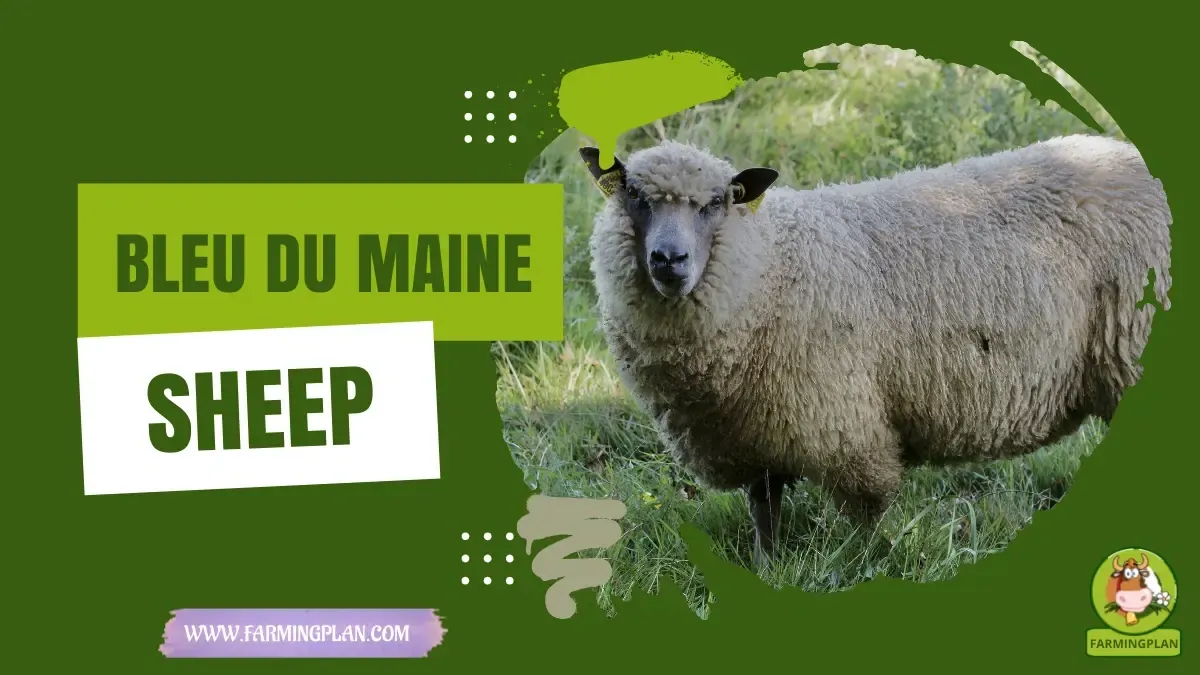
| Head & Skin Pigmentation | Distinctive bare slate-blue to dark steel-gray head and legs free of wool |
| Lambing Prolificacy Benchmark | 185% to 220% lambing percentage; highly maternal milk output |
| Fleece Weight & Quality | 8.5 to 11.0 lbs (4.0 to 5.0 kg); 50s–56s Bradford count demi-lustre wool |
| Average Expected Lifespan | 10 to 14+ years under sound pasture and rotational flock management |
The Bleu du Maine sheep is an outstanding, highly prolific French dual-purpose breed celebrated across European commercial agriculture for its distinctive slate-blue head, calm disposition, and exceptional terminal sire performance. Originating in the fertile valleys of Mayenne and Maine-et-Loire in western France during the nineteenth century, this large, polled sheep was developed by crossing British Leicester Longwool and Wensleydale stock with hardy local French landrace ewes. Matching forage or ration quality to life stage optimizes Bleu Du Maine Sheep growth.
Characterized by a completely bare, dark steel-blue head and unwoolled blue legs, the Bleu du Maine combines striking visual elegance with commercial utility. In our dedicated homestead sheep and wool guides, flock managers prize the breed as a premier maternal and terminal crossing sheep that boosts lambing percentages and market carcass weights without demanding expensive grain inputs.
Bleu du Maine ewes are legendary for their high prolificacy, routinely scanning at 200% to 220% and rearing vigorous twins and triplets with ease. Their generous milk supply, calm maternal temperament, and roomy pelvic conformation result in effortless unassisted lambing cycles on pasture. Gradual dietary transitions protect digestive stability in Bleu Du Maine Sheep.
Additionally, when crossed with commercial terminal meat breeds like the Texel or Charollais, Bleu du Maine rams produce fast-growing, lean butcher lambs that achieve heavy finish directly off grass forage. Homesteaders and commercial graziers alike appreciate their docile nature, making flock management smooth and enjoyable.
Physical Characteristics & Breed Standards
The Bleu du Maine Sheep Society maintains strict international breed benchmarks, defining the animal as a large-framed, long-backed, and well-balanced meat-and-wool sheep with prominent muscling across the loins and gigots.
Slate-Blue Pigmentation, Polled Head & Demi-Lustre Fleece
The defining visual trademark is the head. The head is completely bare of wool, carried proudly on a muscular neck, and covered in fine hair of a distinctive slate-blue or dark steel-gray shade. Both rams and ewes are naturally polled (hornless), displaying a wide flat crown, broad muzzle, and long, mobile ears matching the head’s blue hue. Selecting healthy foundation stock is the cornerstone of successful Bleu Du Maine Sheep management.
The body is long, broad, and deep-chested, providing substantial rumen volume for pasture conversion. The topline is straight and level, leading into wide hips and exceptionally well-filled thighs (gigots). The legs are clean of wool below the knees and hocks, exhibiting the same dark blue skin coloration and ending in strong, black hooves.
The fleece is bright white, dense, and semi-lustrous with a well-defined crimp, yielding 8.5 to 11 pounds of quality fleece per adult annual shearing. The fiber measures 50s to 56s on the Bradford count (27 to 31 microns), prized by handspinners and commercial mills for soft, durable apparel yarns. Good predator-proofing and dry bedding safeguard Bleu Du Maine Sheep comfort in harsh weather.
⚡ European Dual-Purpose Sheep: Performance & Carcass Comparison
| Production Parameter | Bleu du Maine Sheep | Texel Sheep | Charollais Sheep |
|---|---|---|---|
| Mature Ram Weight | 220 to 280 lbs (100 to 127 kg) | 220 to 260 lbs (100 to 118 kg) | 240 to 300 lbs (110 to 136 kg) |
| Average Lambing % | 185% to 220% (High prolificacy) | 140% to 160% (Moderate) | 170% to 190% (High) |
| Lambing Ease Score | Exceptional (Narrow heads & shoulders) | Moderate (Broad heads can cause dystocia) | High (Fine bone, easy lambing) |
| Fleece Yield & Type | 8.5 to 11 lbs demi-lustre white wool | 7.5 to 9.0 lbs dense medium wool | 4.5 to 6.5 lbs short fine down wool |
| Maternal Milk Output | Very high; easily rears triplets on grass | Moderate milk yield | Moderate to high milk yield |
Breed History, French Development & British Adoption
In the early 1800s, farmers in the Maine province of northwestern France sought to enhance the meat and fleece yield of their native landrace sheep (the Choletais). British agricultural travelers introduced champion Leicester Longwool and Dishley rams, which French graziers crossed onto local ewes.
Through systematic selection for growth rate, prolific twinning, and the distinctive blue facial skin, the breed stabilized into the modern Bleu du Maine by 1850. The French national flockbook was officially established in 1927, consolidating performance testing protocols across Normandy and the Loire Valley.
In the late 1970s, British commercial sheep producers imported the breed to establish the “Millennium Bleu” cross (Bleu du Maine crossed with Beltex). British farmers discovered that Bleu du Maine genetics provided superior maternal vigor and easy lambing while producing premium carcass grades. Monitoring water quality and mineral balance directly benefits Bleu Du Maine Sheep vitality.
Today, the breed is maintained by specialty breeders across Europe, North America, and Australia. Their docile nature and outstanding forage efficiency make them an ideal choice for both intensive commercial enterprises and regenerative smallholdings.
Housing, Pasture Engineering & Lambing Shed Standards
Bleu du Maine sheep are hardy, adaptable grazers that thrive on open pasture throughout the year, but require clean, draft-free lambing facilities to support their prolific multiple births. Practical hands-on husbandry ensures consistent results when raising Bleu Du Maine Sheep.
Field Fencing, Rotational Paddocks & Individual Jug Pens
Enclose pastures with 42 to 48-inch woven wire field fencing or five-strand high-tensile electric fencing. Bleu du Maines are calm, docile sheep that respect fence lines and do not test boundaries like wild mountain breeds.
Divide grazing land into multiple rotational paddocks to maximize pasture utilization and reduce internal parasite burdens. Moving the flock every 4 to 6 days allows forage swards to recover while breaking gastrointestinal worm life cycles naturally.
Construct a dry, well-ventilated lambing barn equipped with individual 5×5-foot wooden “jug” pens. Because ewes frequently kindle twins and triplets, individual pens allow mothers to bond securely with multiple offspring for 48 hours before returning to the main pasture flock. Early intervention at the first sign of lethargy protects overall Bleu Du Maine Sheep flock or herd health.
Nutritional Requirements & Pasture Grazing Rations
Supporting high twin lamb growth and heavy milk synthesis requires high-quality pasture forage and balanced mineral nutrition throughout the production cycle.
Forage Swards, Flushing Rations & Copper Sensitivity
Maintain lush, mixed grass-clover pasture swards containing orchard grass, perennial ryegrass, white clover, and chicory. A mature 200-pound ewe consumes 4.5 to 5.5 pounds of dry matter daily on pasture. Review general ruminant feed formulation in our homestead livestock feed guide.
Three weeks prior to autumn breeding, “flush” ewes by moving them onto fresh, high-protein clover pasture or offering 0.5 pounds of whole barley per head daily. Flushing stimulates ovulatory rates, ensuring consistent twin and triplet conceptions. Structured culling and biosecurity protocols strengthen Bleu Du Maine Sheep genetic quality.
Supply free-choice loose sheep minerals formulated strictly without supplemental copper. Like many British-derived breeds, Bleu du Maines are highly sensitive to chronic copper toxicity, which causes fatal hepatic crisis if cattle or goat feeds are mistakenly provided.
Health Management, Parasite Control & Biosecurity
Bleu du Maine sheep are naturally robust, but their bare blue heads and high productivity require vigilant flock health management. Maintaining clean feeders and sanitized equipment supports sustainable Bleu Du Maine Sheep care.
Flystrike Defense, CDT Vaccinations & Foot Care
Because their heads and legs are bare, inspect skin during humid summer months for biting flies and external parasites. Maintain clean tail crutching and apply preventive pour-on insect repellents to eliminate blowfly strike (myiasis) in dense fleece folds.
Administer core annual Clostridium perfringens Types C & D plus Tetanus (CDT) vaccinations four weeks prior to lambing, following veterinary biosecurity standards from the USDA Animal and Plant Health Inspection Service to pass passive antibody immunity to newborn lambs through maternal colostrum.
Trim hooves twice annually and run the flock through a 10% zinc sulfate footbath during wet autumn periods to prevent contagious foot rot from colonizing interdigital skin. Consistent daily observation helps keepers spot early changes in Bleu Du Maine Sheep health and behavior.
Breeding Biology, Lambing Ease & Meat Production
The reproductive efficiency of the Bleu du Maine is world-renowned. Ewes reach breeding age at 7 to 9 months, displaying strong estrus cycles from September through January.
Narrow Head Births, High Milk Yields & Fast Market Finishing
Lambing ease is exceptional due to the breed’s distinct conformation: lambs are born with narrow, streamlined heads and slender shoulders, gliding through the birth canal without requiring physical intervention. Dystocia rates are under 2% in well-managed flocks. Clean housing, fresh water, and balanced nutrition remain essential for Bleu Du Maine Sheep productivity.
Lambs are born vigorous, drying quickly and nursing within twenty minutes. Ewes produce abundant, rich milk from well-hung udders with small, clean teats, easily raising twins to weaning weights of 75 to 85 pounds at twelve weeks on grass alone.
Market lambs reach prime slaughter weights of 95 to 110 pounds at 16 to 20 weeks. Carcasses dress out at 52% to 56%, yielding lean, tender meat with full loins and heavy hindquarters free of excessive fat cover. For comparative small ruminant production, explore our guide on Jacob heritage sheep.
US Ownership Budget & Commercial Flock Economics
Investing in Bleu du Maine sheep provides rapid commercial returns through prolific lamb crops, premium grass-fed meat sales, and annual wool clip revenues. Tracking feed intake and body condition supports long-term Bleu Du Maine Sheep performance.
⚡ Estimated Annual Budget & Maintenance Costs (USD)
| Expense Category | Estimated Annual Cost Range (USD) | Management Strategy |
|---|---|---|
| Registered Purebred Ewe | $450.00 – $850.00 initial purchase | Acquire purebred stock registered with national breed societies with verified lambing records |
| Pasture Fencing & Lambing Shed | $550.00 – $1,200.00 setup | Install 48-inch woven wire fencing with modular wooden lambing jug pens |
| Winter Grass-Legume Hay (0.5 Tons/Ewe) | $75.00 – $130.00 per ewe/year | Purchase clean first-cut orchard grass-alfalfa round bales from local growers |
| Copper-Free Sheep Minerals & Salt | $20.00 – $35.00 per ewe/year | Provide free-choice loose sheep mineral mix in covered weather-proof dispensers |
| CDT Vaccines, Deworming & Shearing | $25.00 – $45.00 per ewe/year | Annual CDT booster, strategic deworming paste, and professional spring shearing |
| Custom Lamb Harvest & Butcher Fees | $90.00 – $130.00 per lamb | USDA-inspected harvest, hanging, custom sub-primal cuts, and vacuum freezing |
🐑 Bleu Du Maine Sheep Flock Forage & Pasture Calculator
Calculate winter hay bales, daily pasture forage intake, minerals, and water needs for your Bleu Du Maine Sheep flock.
Frequently Asked Questions (FAQ)
Why do Bleu du Maine sheep have blue heads?
The slate-blue coloration is a unique genetic pigmentation trait characteristic of the breed, resulting in completely bare, dark steel-blue skin across the head and lower legs.
How many lambs does a Bleu du Maine ewe produce?
Bleu du Maine ewes are highly prolific, routinely scanning at 185% to 220% lambing percentages and easily rearing vigorous twins and triplets on grass pasture.
Are Bleu du Maine sheep easy to lamb?
Yes, the breed has an exceptional lambing ease record because lambs are born with narrow heads and slender shoulders, resulting in over 98% unassisted births.
What type of wool does the Bleu du Maine produce?
They produce a bright white, semi-lustrous fleece weighing 8.5 to 11 pounds with a 50s–56s Bradford count, highly valued for soft, durable commercial and handspun knitting yarns.
Can Bleu du Maine sheep tolerate supplemental copper?
No, Bleu du Maine sheep are highly sensitive to copper toxicity. They must receive specialized sheep minerals formulated strictly without supplemental copper.
Expert Verdict & Next Steps
The Bleu du Maine sheep is an outstanding commercial and homestead dual-purpose breed, uniting unforgettable blue-headed aesthetics with prolific twinning, abundant maternal milk, and lean, fast-growing meat lambs. For producers seeking to maximize lamb yields per acre on rotational pasture, the Bleu du Maine is an exceptional livestock asset.
Source breeding stock from recognized societies affiliated with the Bleu du Maine Sheep Society. For comparative small ruminant options in meat and fiber farming, explore our breed guide on Jacob heritage sheep.
📚Agricultural Reference & Scientific Citations
Standards and physiological data referenced in this guide comply with USDA APHIS Small Ruminant Health, The Livestock Conservancy, and the American Veterinary Medical Association (AVMA).


