

📊 Baladi Black Rabbit at a Glance: Standards & Heat Benchmarks
| Scientific Classification | Oryctolagus cuniculus (Egyptian Autochthonous Heat-Tolerant Landrace) |
| Native Country of Origin | Nile Delta & Middle Egypt (Standardized by Egyptian Animal Production Research Institute) |
| Primary Production Role | Smallholder commercial meat production under high ambient temperatures (>100°F) |
| Mature Buck Live Weight | 6.0 to 7.8 lbs (2.7 to 3.5 kg) — Compact, heat-efficient commercial frame |
| Mature Doe Live Weight | 6.5 to 8.5 lbs (2.9 to 3.8 kg) — Highly fecund maternal desert doe |
| Signature Coat Feature | Solid jet-black short hair coat with high melanin skin pigmentation |
| Heat Tolerance Index | Maintains active breeding and feed conversion at 95°F to 104°F (35°C to 40°C) |
| Litter Size & Fecundity | Averages 6 to 9 vigorous kits per kindling; rapid uterine recovery |
| Primary Roughage Forage | Egyptian berseem clover (Trifolium alexandrinum) & agricultural byproducts |
| Foundation Stock Investment | $25 – $50 for certified breeding does or selected working bucks |
The Baladi Black Rabbit is an extraordinary indigenous small livestock landrace native to the floodplains, oases, and desert borderlands of Egypt. Developed over centuries of localized rural selection across the Nile Delta and formalized through research at Egyptian universities, this heat-adapted rabbit thrives in climatic conditions that cause acute reproductive collapse and mortality in temperate European breeds. Good predator-proofing and dry bedding safeguard Baladi Black Rabbit comfort in harsh weather.
Smallholders and tropical livestock managers consulting our rabbit farming operations guide value the Baladi Black as a climate-smart protein producer. While commercial giant breeds stop eating and suffer heatstroke when ambient temperatures surpass 86°F (30°C), the Baladi Black maintains normal metabolic activity, feed intake, and kit lactation up to 104°F (40°C). Producers planning a diversified homestead operation often cross-reference our Caldes Rabbit breed and care guide. Monitoring water quality and mineral balance directly benefits Baladi Black Rabbit vitality.
Their compact physiological frame features fine bone structure, an elevated surface-area-to-mass ratio, and highly vascularized ears that dissipate core body heat with remarkable efficiency. Additionally, their digestive system is uniquely adapted to extract complete nutrition from native berseem clover, vegetable residues, and cereal brans.
Successfully managing the Baladi Black rabbit requires designing shaded, evaporatively cooled hutch facilities, balancing green forage with dry fiber to prevent enteritis, and maintaining clean automated water supplies. Practical hands-on husbandry ensures consistent results when raising Baladi Black Rabbit.
Breed Conformation, Heat Physiology & Production Matrix
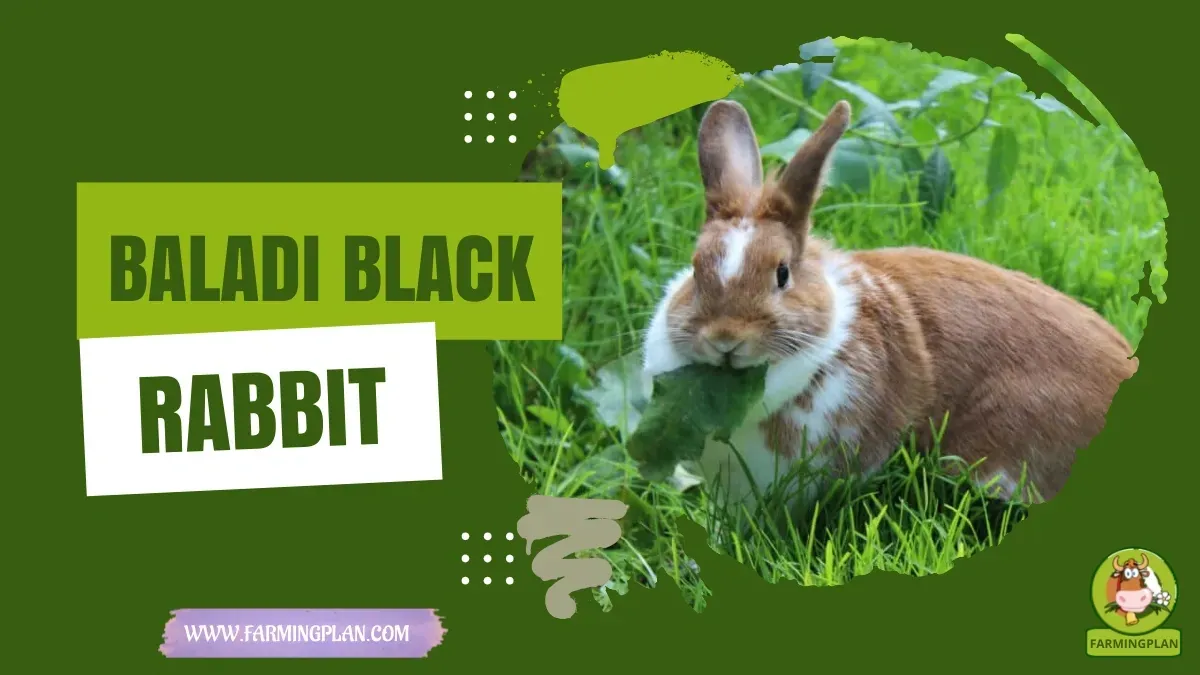
The Baladi Black rabbit exhibits a medium, semi-compact body type engineered for thermodynamic balance. The back is gently arched, with a firm, well-muscled loin and rounded rump. The limbs are slender but tough, ending in dark-nailed paws. Mature bucks weigh between 6.0 and 7.8 pounds, while mature does weigh between 6.5 and 8.5 pounds.
The head is lean and oval, featuring large, thin, upright ears (4.2 to 4.8 inches long). The skin of the ears is heavily vascularized with dilated blood capillaries that expand during hot weather, releasing internal body heat through radiant and convective transfer. Eyes are dark brown and bright. The coat is short, sleek, and uniformly jet-black, lying flat over pigmented slate skin that prevents solar radiation damage. Early intervention at the first sign of lethargy protects overall Baladi Black Rabbit flock or herd health.
Their muscle grain is fine, producing lean, delicate meat with exceptionally low subcutaneous fat trim. Carcass dressing percentages average 56% to 60% at 10 to 12 weeks of age. Structured culling and biosecurity protocols strengthen Baladi Black Rabbit genetic quality.
📊 Baladi Black Rabbit Morphological & Thermal Benchmarks
| Biological Parameter | Mature Bucks | Mature Does | Hot Climate Adaptive Utility |
|---|---|---|---|
| Live Body Weight | 6.0 – 7.8 lbs (2.7 – 3.5 kg) | 6.5 – 8.5 lbs (2.9 – 3.8 kg) | Compact mass reducing metabolic maintenance heat |
| Ear Length & Vascularity | 4.4 – 4.8 inches (11 – 12 cm) | 4.2 – 4.6 inches (10.5 – 11.5 cm) | Primary biological radiator for convective cooling |
| Heat Tolerance Range | Up to 104°F (40°C) | Up to 104°F (40°C) | Zero buck heat sterility; active doe conception |
| Litter Size at Birth | — | 6 to 9 kits per kindling | High doe fecundity under smallholder conditions |
| Weaning Survival % | — | 88% to 94% kit survival | Rich milk yield and attentive maternal nest building |
| Carcass Dressing % | 56% – 59% | 57% – 60% | High retail yield of lean, delicate white meat |
History, Nile Valley Domestication & Scientific Standardization
The origins of the Baladi rabbit (“Baladi” meaning “local” or “native” in Arabic) trace back centuries to rural Egyptian farming communities. Peasant families kept rabbits in underground mud-brick burrows or roof lofts, feeding them fresh berseem clover during winter and dry cereal straws in summer.
In the mid-20th century, the Animal Production Research Institute (APRI) of the Egyptian Ministry of Agriculture initiated systematic breeding programs at the Sakha and Dokki experimental stations. Researchers collected native strains from rural villages, standardizing them into distinct color varieties: Baladi Black, Baladi Red, and Baladi White. Maintaining clean feeders and sanitized equipment supports sustainable Baladi Black Rabbit care.
Extensive university trials confirmed that the Baladi Black possessed superior physiological resistance to tropical heat stress compared to imported New Zealand White stock. When summer temperatures soared, Baladi does continued to kindle and nurse litters successfully, while exotic breeds suffered total reproductive failure.
Today, development agencies and university extension programs across North Africa and the Middle East promote the Baladi Black as an ideal livestock model for village poverty alleviation and family food resilience. Consistent daily observation helps keepers spot early changes in Baladi Black Rabbit health and behavior.
Hot Climate Housing, Shaded Wire Hutches & Thermal Cooling
Housing Baladi Black rabbits in hot regions requires careful environmental engineering to maximize natural air movement. Hutches should be constructed inside open-sided sheds featuring high double roofs (thatched reed or insulated aluminum sheets) standing at least 10 feet tall to block radiant overhead heat. Clean housing, fresh water, and balanced nutrition remain essential for Baladi Black Rabbit productivity.
Individual cages should measure 30 inches wide by 24 inches deep by 16 inches high, manufactured from galvanized welded wire mesh. Wire walls allow 360-degree cross-ventilation, dissipating body heat and ammonia fumes. Install resting mats in each cage to protect feet from wire abrasion.
During extreme summer heat waves exceeding 100°F, install simple evaporative burlap curtains along the windward wall, saturating the fabric with water to create a cool microclimate as incoming desert breezes blow through. Ceramic tiles or frozen plastic water bottles placed in cages provide conductive cooling surfaces where rabbits can lie down to cool their abdomens. Review cage setups in our rabbit farming operations guide. Tracking feed intake and body condition supports long-term Baladi Black Rabbit performance.
Nest boxes should feature screened wire bottoms lined with cardboard and straw to provide adequate airflow during summer kindling, preventing heat prostration in newborn kits.
Berseem Clover Forage, Agricultural Byproducts & Hydration
The nutritional ecology of the Baladi Black rabbit is rooted in traditional Egyptian green forage feeding. In winter and spring, Egyptian berseem clover (Trifolium alexandrinum) provides rich crude protein (18% to 22%), digestible fiber, and carotene that fuels vigorous reproduction. Following biosecurity best practices reduces disease risk in any Baladi Black Rabbit operation.
Always wilt fresh berseem clover for 4 to 6 hours before feeding. Fresh, dew-soaked clover causes dangerous frothy bloat and explosive mucoid diarrhea in young rabbits. During summer dearth, feed good-quality grass hay alongside a balanced pellet concentrate containing wheat bran (35%), ground barley (25%), soybean meal (20%), and dehydrated alfalfa meal (15%). Review small farm livestock feeding fundamentals in our homestead animals and pet care hub.
Provide continuous access to cool drinking water. In arid climates, rabbits consume substantial water volumes to support panting and evaporative respiratory cooling; water lines should be insulated or buried to keep drinking water below 75°F (24°C). Seasonal adjustments to shelter and diet keep Baladi Black Rabbit thriving year-round.
Add a soluble electrolyte solution containing potassium chloride and sodium bicarbonate to drinking water during peak summer heat waves to maintain blood electrolyte homeostasis. Proper record-keeping makes breeding and culling decisions easier for Baladi Black Rabbit keepers.
Flock Biosecurity, Viral Hemorrhagic Disease & Parasite Defense
While the Baladi Black exhibits natural constitutional hardiness against environmental stress, commercial rabbitries must guard against acute viral pathogens. Rabbit Hemorrhagic Disease Virus (RHDV-1 and RHDV-2) represents the most fatal threat, causing acute systemic liver necrosis and sudden mortality.
Vaccinate all breeding stock annually with an approved inactivated RHDV vaccine at 10 weeks of age. Prevent external fly-borne pathogens and ear mange mites (Psoroptes cuniculi) through monthly cage disinfection using dilute sodium hypochlorite. Maintain dry manure pits beneath cages to suppress housefly breeding. Providing adequate space and ventilation prevents common stress issues in Baladi Black Rabbit.
Health management protocols should adhere to standards established by the American Rabbit Breeders Association (ARBA), the World Rabbit Science Association (WRSA), and international livestock biosecurity standards from the USDA APHIS Animal Welfare Program.
Enforce strict quarantine isolation for 30 days for any newly acquired breeding rabbits, monitoring for nasal discharges or subcutaneous abscesses before introduction into resident hutch batteries. Understanding breed-specific traits helps maximize Baladi Black Rabbit longevity and output.
Breeding Biology, Desert Doe Fecundity & Kit Care
Baladi Black rabbits display early sexual maturity, with bucks and does ready for breeding at 5 months of age (weighing 6.0 pounds). Does exhibit high libido and conception rates even during hot summer months, provided breeding takes place during the cooler hours of early dawn or late evening. Routine preventive care saves time and lowers veterinary costs for Baladi Black Rabbit.
Gestation averages 31 days. Does are attentive mothers, constructing insulated fur-lined nests and kindling litters of 6 to 9 kits. Newborn kits weigh approximately 1.8 to 2.2 ounces (50 to 60 grams), nursing once or twice daily on rich, high-fat maternal milk. Review small livestock breeding and incubation guidelines in our homestead poultry and small animal guide.
Wean kits at 4 to 5 weeks of age. Young Baladi Black fryers grow steadily on berseem and grain, reaching prime market weights of 4.5 to 5.0 pounds by 10 to 12 weeks of age with exceptional meat quality. Matching forage or ration quality to life stage optimizes Baladi Black Rabbit growth.
Baladi Black Enterprise Economics & 15-Doe Meat Budget
A 15-doe Baladi Black rabbit enterprise provides a profitable, resilient livestock model for smallholders in warm climates. Generating 5 litters per doe annually with an average of 7 weaned fryers per litter, the unit produces over 500 marketable meat fryers annually with exceptionally low feed overhead.
📊 Estimated Annual Production Budget: 15-Doe Baladi Black Meat Operation
| Operational Category | Description & Infrastructure Scale | Initial Capital Setup | Annual Recurring Expense |
|---|---|---|---|
| Foundation Breeding Stock | 15 selected Baladi Black does ($35 ea) + 3 working bucks ($45 ea) | $660 | $0 |
| Shaded Wire Hutch Battery | 18 breeding cages, 12 grow-out cages, PVC water lines & shade roof | $1,650 | $60 |
| Berseem Hay & Grain Mash | Purchased berseem hay bales & farm-mixed wheat bran/barley ration | $0 | $1,180 |
| Nest Boxes & Summer Coolers | 15 wire-bottom nest boxes, resting pads & burlap cooling curtains | $120 | $35 |
| Veterinary, RHDV Vaccines | Annual RHDV-2 vaccines, ear mite treatments & electrolytes | $40 | $95 |
| Gross Enterprise Revenue | 510 meat fryers sold at 11 weeks ($12 ea) + 20 breeding pairs sold | $0 | +$6,720 |
| Net Operating Margin | Annual net margin excluding capital hutch amortization | — | +$5,350 |
🐇 Baladi Black Rabbit Daily Hay & Pellet Calculator
Calculate daily Timothy hay (unlimited bulk), pellet rations, fresh greens, and clean water intake for your Baladi Black Rabbit.
Frequently Asked Questions (FAQ)
Why is the Baladi Black rabbit ideal for hot climates?
The Baladi Black has large vascularized ears for heat dissipation, a high surface-to-mass ratio, and dark pigmentation that protects against solar radiation.
What do Baladi Black rabbits eat in Egypt?
They thrive on wilted Egyptian berseem clover (Trifolium alexandrinum), dry grass hay, wheat bran, barley grains, and agricultural vegetable residues.
How much does a mature Baladi Black rabbit weigh?
Mature bucks weigh between 6.0 and 7.8 pounds (2.7 to 3.5 kg), while mature does weigh between 6.5 and 8.5 pounds (2.9 to 3.8 kg).
How many kits does a Baladi Black doe produce per litter?
A healthy Baladi Black doe produces between 6 and 9 kits per kindling, demonstrating high lactation yield and excellent kit survival in warm conditions.
Expert Verdict & Next Steps for Hot-Climate Cuniculturists
The Baladi Black Rabbit represents a triumph of natural and localized selection for arid and hot-climate cuniculture. While commercial European breeds suffer high summer mortality and reproductive cessation, the Baladi Black maintains continuous breeding, high doe fecundity, and efficient meat production on low-cost agricultural byproducts. Gradual dietary transitions protect digestive stability in Baladi Black Rabbit.
Equip your rabbitry with open-sided shaded hutches and automated cool watering systems to optimize their native heat tolerance. Explore our comprehensive guide to small livestock housing in our homestead animals and pet care hub to design an efficient, productive homestead enterprise.
📚Agricultural Reference & Scientific Citations
Standards and physiological data referenced in this guide comply with American Rabbit Breeders Association (ARBA), USDA APHIS Animal Health, and the FAO Domestic Animal Diversity Information System.


