

⚡ Baku Boinije Pigeon at a Glance: Key Specifications & Benchmarks
| Scientific Name | Columba livia domestica (Endurance Highflyer / Tumbler) |
| Breed Origin | Baku, Absheron Peninsula, Azerbaijan (Caspian Sea Basin) |
| Flight Duration | 5 to 10+ hours continuous high-altitude flight in trained kits |
| Signature Flight Style | Vertical ‘pole’ ascent with explosive wing-clapping (boyna) rolls |
| Average Mature Weight | 11.0 to 14.0 oz (310 to 400 grams) |
| Leg Feathering Status | Clean-legged or lightly feathered (muffed varieties exist) |
| Navigational Ability | Remarkable homing orientation even after extreme flight exhaustion |
| Average Lifespan | 10 to 15 years under structured predator-proof loft management |
Observing a trained kit of Baku pigeons ascending straight toward the upper atmosphere is an exhilarating experience for any poultry keeper. As the birds reach speck altitude, their sudden vertical surges and crisp wing claps echo across the homestead, demonstrating centuries of focused sporting selection. Seasonal adjustments to shelter and diet keep Baku Boinije Pigeon thriving year-round.
The Baku Boinije pigeon, originating along the sun-drenched shores of the Caspian Sea in Baku, Azerbaijan, is widely regarded as one of the world’s most capable endurance flying tumblers. Known among passionate breeders simply as the Baku Tumbler or Baku Boinije, this athletic columbid was bred not for static show cages, but for the open sky. It executes soaring flights that routinely last from five to over ten consecutive hours. Proper record-keeping makes breeding and culling decisions easier for Baku Boinije Pigeon keepers.
Homesteaders exploring our pigeon farming and aviary care resources will appreciate the Baku’s singular combination of high-altitude endurance and dramatic aerobatics. The term ‘boinije’ (or ‘boyna’) describes its signature performance: surging vertically like an arrow, locking its wings, and turning multiple backward somersaults accompanied by loud, whip-like wing claps audible from hundreds of feet below. Providing adequate space and ventilation prevents common stress issues in Baku Boinije Pigeon.
Beyond spectacular aerial acrobatics, Baku pigeons possess remarkable homing instincts. Even when swept away by maritime thermal winds or buffeted by summer storms across open plains, seasoned flyers consistently navigate back to their home loft, making them a prized breed for serious highflyer enthusiasts.
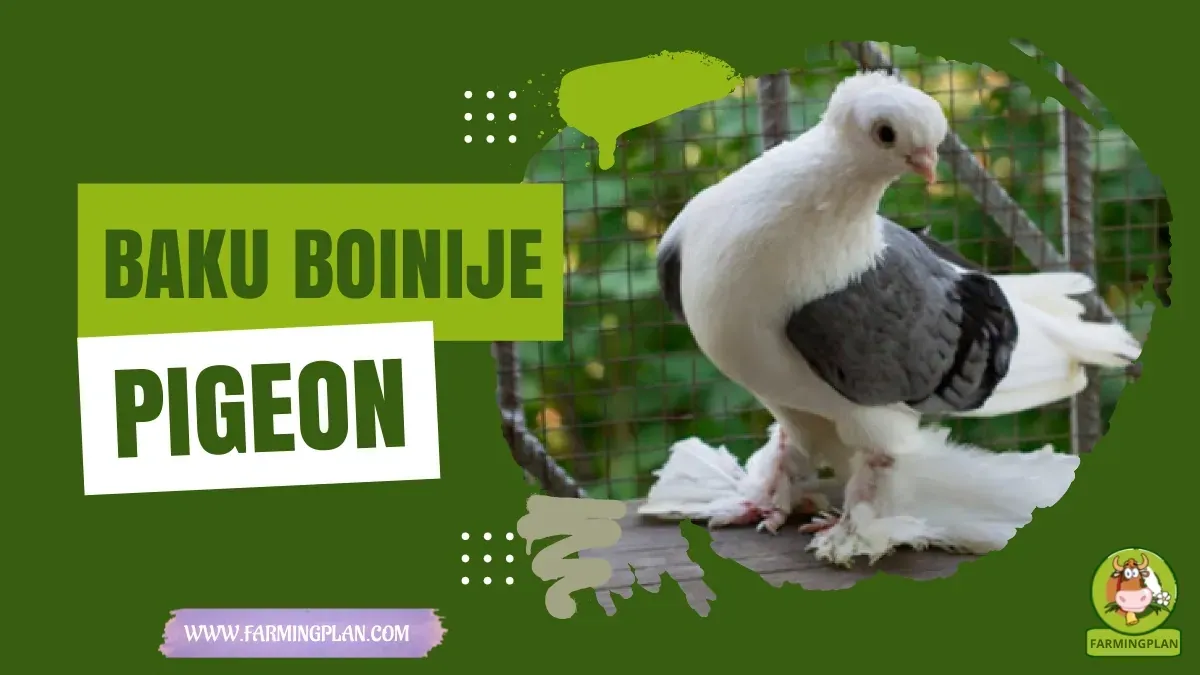
Physical Characteristics & Breed Standards
The Baku Boinije is built like an endurance athlete: lean, wiry, muscular, and exceptionally streamlined. There is zero excess fat or loose skin across its tapered frame, allowing it to conserve kinetic energy during prolonged soaring. Understanding breed-specific traits helps maximize Baku Boinije Pigeon longevity and output.
The head is elongated and dry, featuring a smooth, low-sloped forehead and a long, straight beak that fits flush against the skull. Eyes are typically pale straw yellow, pearl, or dark bull-eyed in white-headed patterns, ringed with narrow, pale ceres. Routine preventive care saves time and lowers veterinary costs for Baku Boinije Pigeon.
Conformation Standards & Anatomical Structure
The neck is medium-long and carried erect, flowing into a compact, firm torso with flat shoulder joints that minimize air resistance. The wings are long, powerful, and closely tucked, with broad primary flight feathers that extend nearly to the tip of the tail.
The tail is flat, tightly compressed, and composed of 12 strong rectrices that act as an aerodynamic rudder during vertical pull-ups. Legs are medium in length, sturdy, and usually bare (clean-legged), although regional strains from the Caucasus occasionally feature short feather boots. Breeders interested in comparing housing, diet, and productivity traits should see our Bango Pigeon husbandry guide. Matching forage or ration quality to life stage optimizes Baku Boinije Pigeon growth.
Size, Weight Benchmarks & Color Variations
Mature Baku cocks weigh between 12.0 and 14.0 oz (340 to 400 grams), while hens average 11.0 to 12.5 oz (310 to 350 grams). Their physical density is apparent when handled, feeling light yet remarkably firm and springy across the pectoral muscles. Gradual dietary transitions protect digestive stability in Baku Boinije Pigeon.
Color variants are diverse and expressive. Fanciers classify them into Agbash (white-headed with colored body), Chil (speckled or grizzled plumage), Karakoz (dark-eyed whites), and various solid red, yellow, black, and dun selfs. Feathers are dense, waxy, and highly water-repellent.
⚡ Baku Boinije Pigeon Performance & Production Matrix
| Flight Performance Metric | Baku Boinije Benchmark | Standard Roller Pigeon | Flight Kit Advantage |
|---|---|---|---|
| Flight Altitude | High altitude (frequently dot / invisible) | Low to medium altitude | Reduced exposure to ground-level urban hazards |
| Endurance Duration | 5 – 10+ hours | 30 – 90 minutes | Exceptional stamina and metabolic efficiency |
| Tumbling Style | Vertical pole ascent with audible clap | Deep downward rolling drop | Zero risk of ground impact collisions (‘roll-downs’) |
| Homing Tenacity | Exceptional rangeland homing | Moderate loft-bound return | High recovery rate from hawk attacks and storms |
| Grain Conversion | Lean high-carb utilization | High feed requirement | Economical grain consumption during training |
Breed History, Heritage & North American Development
The history of the Baku pigeon is interwoven with the centuries-old falconry and columbid traditions of Transcaucasia and Persia. Breeders in the ancient walled city of Baku selected birds that could withstand relentless maritime gales whipping off the Caspian Sea while evading native peregrine falcons. Selecting healthy foundation stock is the cornerstone of successful Baku Boinije Pigeon management.
Unlike European tumbler breeders who prioritized show-bench plumage color, Azerbaijani masters selected exclusively for two performance traits: flight duration and the quality of the ‘boyna’ (the vertical power climb and crisp wing clap). Birds that failed to fly for at least four hours were culled from breeding lofts. Good predator-proofing and dry bedding safeguard Baku Boinije Pigeon comfort in harsh weather.
Following the collapse of the Soviet Union, Baku highflyers spread across Russia, Germany, and North America. Today, specialized competition clubs host timed flying derbies where kits are judged on cumulative air hours, altitude penetration, and audible tumbling frequency.
Housing, Shelter Dimensions & Winter Hardiness
Housing Baku highflyers requires specific structural accommodations tailored to active flight birds. A cramped, dark coop will ruin the endurance conditioning of these athletes, while poor drop traps lead to landing hesitation that invites hawk predation. Monitoring water quality and mineral balance directly benefits Baku Boinije Pigeon vitality.
The loft should feature an elevated release trap or ‘sputnik’ landing bay that allows birds to land instantly upon descending from high altitude. Provide 4 square feet of floor space per pair, with individual box perches arranged in vertical tiers to prevent droppings from soiling lower perches. Practical hands-on husbandry ensures consistent results when raising Baku Boinije Pigeon.
Spatial Density & Enclosure Engineering
Keep flight training birds separate from active breeding pairs. Breeding compartments require privacy to prevent aggressive cocks from disturbing nesting hens, while the flight kit loft should be kept austere, encouraging birds to enter promptly upon landing.
Ensure cross-flow ventilation with mesh vents positioned along the roofline. In hot climates, insulate the ceiling to prevent interior loft temperatures from exceeding 90°F, which impairs respiratory conditioning and increases water loss. Early intervention at the first sign of lethargy protects overall Baku Boinije Pigeon flock or herd health.
Equipping flight lofts with separate resting boxes allows tired highflyers to roost in peace without aggressive cocks challenging them for territory after grueling eight-hour training flights. This calm recovery environment speeds muscle recovery and maintains kit morale throughout the flying season. Structured culling and biosecurity protocols strengthen Baku Boinije Pigeon genetic quality.
Nutritional Requirements, Daily Rations & Feeding Protocols
Conditioning Baku pigeons for 8-hour flights requires meticulous dietary carbohydrate and fat management. Feeding an overly rich, high-protein diet causes birds to become heavy, lethargic, and prone to early landing. Maintaining clean feeders and sanitized equipment supports sustainable Baku Boinije Pigeon care.
Comparing feeding protocols to our King pigeon care and management guide demonstrates the dramatic difference between heavy meat breeds and athletic highflyers. High-energy carbohydrates are essential for sustained flight stamina.
Crude Protein Benchmarks Across Life Stages
During non-flying winter months, feed a light maintenance ration (12% CP) consisting of 40% barley, 30% red wheat, 20% milo, and 10% safflower. Three days prior to long training tosses, adjust to an energy-dense flight mix: 40% yellow corn, 25% safflower, 20% milo, and 15% polished rice. Consistent daily observation helps keepers spot early changes in Baku Boinije Pigeon health and behavior.
Supply clean water enriched with electrolytes and glucose immediately upon flight trap return to speed glycogen replenishment. Always offer insoluble flint grit and trace mineral salt to facilitate digestive gizzard grinding. Clean housing, fresh water, and balanced nutrition remain essential for Baku Boinije Pigeon productivity.
Health Management, Common Diseases & Biosecurity Standards
Because Baku pigeons operate at peak metabolic output during sustained flight, their respiratory tract must remain pristine. Mycoplasmosis, ornithosis complex, and trichomoniasis quickly degrade aerobic capacity, grounding highflyers.
Loft keepers must maintain strict biosecurity standards aligned with the USDA Animal and Plant Health Inspection Service (APHIS) to shield flocks from Newcastle disease and wild migratory waterfowl pathogens. Tracking feed intake and body condition supports long-term Baku Boinije Pigeon performance.
Biosecurity Protocols & Veterinary Defenses
Administer annual subcutaneous vaccinations against Paramyxovirus-1 (PMV-1) to all birds six weeks before the training season begins. Regular preventative treatments for canker (using ronidazole or carnidazole protocols under veterinary guidance) keep oral and crop tissues free of necrotic plaques. Following biosecurity best practices reduces disease risk in any Baku Boinije Pigeon operation.
Inspect flight feathers monthly for feather lice (*Columbicola columbae*) and quill mites that damage wing surface area. Provide weekly bath water containing natural apple cider vinegar to condition flight feather barbs and eliminate skin parasites.
Breeding Management, Training Kits & Flight Protocols
Breeding high-performance Baku pigeons requires pairing proven flight performers rather than breeding solely for feather color. Select cocks and hens that possess verified flight records of at least 6 hours, tight feathering, and strong pectoral muscle spring. Seasonal adjustments to shelter and diet keep Baku Boinije Pigeon thriving year-round.
Pairing begins in late winter, with hens depositing two eggs within 8 to 10 days of mating. Both parents share brooding duties over the 17 to 18 day incubation window. Once squabs reach 28 days, transfer them to the young-bird flight loft to begin immediate trap training. Proper record-keeping makes breeding and culling decisions easier for Baku Boinije Pigeon keepers.
Young birds must learn the sound of the feed can and enter the trap door within seconds of touchdown. Once loft-trained, release kits in early morning light, gradually increasing flock air time from 30 minutes up to multiple hours, similar to protocols in our Giant Homer pigeon flight care guide.
US Ownership Budget & Annual Maintenance Costs
Maintaining a competitive kit of Baku highflyers is economically practical, requiring modest feed and equipment. Below is a realistic annual expenditure outline in US dollars. Providing adequate space and ventilation prevents common stress issues in Baku Boinije Pigeon.
💰 Estimated Annual Budget & Maintenance Costs (USD)
| Budget Category | Item Description & Scope | Initial Capital Outlay | Annual Recurring Expense |
|---|---|---|---|
| Foundation Performance Pair | Flight-tested breeding stock from verified lines | $150 – $350 | Initial investment |
| Specialized Flight Grain Mix | Cleaned grains, safflower, and energy seeds | $40 – $60 | $80 – $120 per pair annually |
| Electrolytes, Grit & Supplements | Insoluble grit, vitamin complexes, and recovery salts | $20 – $35 | $30 – $50 annually |
| Vaccines & Respiratory Health | PMV-1 vaccine, canker and respiratory treatments | $30 – $50 | $40 – $70 annually |
| Loft Accessories & Trap Traps | Sputnik trap, perches, and bath pans | $75 – $150 | $25 – $50 maintenance |
🕊️ Baku Boinije Pigeon Loft & Grain Mix Calculator
Estimate daily grain ration (lbs), mineral grit, monthly 50-lb feed bags, and minimum indoor loft and outdoor aviary space (sq ft) for your Baku Boinije Pigeon loft.
Frequently Asked Questions (FAQ)
What does ‘boinije’ mean in Baku Boinije pigeons?
‘Boinije’ (or boyna) refers to the pigeon’s signature vertical flight ascent where it pulls straight upward like a pillar and performs backward flips accompanied by loud, audible wing-clapping.
How long can a Baku pigeon fly continuously?
Well-conditioned Baku pigeons routinely fly for 5 to 10 consecutive hours, with elite competition specimens documented flying over 12 hours at high altitude before returning to the loft.
Do Baku pigeons suffer from ground roll-downs?
No, unlike Birmingham rollers that tumble rapidly downward, Baku pigeons pull vertically upward before somersaulting, virtually eliminating the hazard of striking ground obstacles.
What is the best diet for flying Baku pigeons?
Flying Baku pigeons require a high-carbohydrate grain ration of corn, milo, wheat, and safflower (12% to 14% protein) to provide steady energy without excess body fat.
Are Baku pigeons good homing birds?
Yes, Baku pigeons possess exceptional orientation and homing ability, frequently returning home through adverse weather and high winds after long hours in the air.
Expert Verdict & Next Steps for Highflyer Enthusiasts
The Baku Boinije stands at the pinnacle of high-altitude endurance and acrobatic display, offering an unmatched spectator experience as they climb thousands of feet above your homestead. Their physical toughness and fierce homing tenacity make them one of the most rewarding performance breeds in existence. Understanding breed-specific traits helps maximize Baku Boinije Pigeon longevity and output.
Before launching a training kit, construct a secure loft equipped with a quick-entry sputnik landing bay and complete a full PMV-1 vaccination series. Reviewing training methods with historic flight breeds like the Belgian Homer pigeon flight guide will elevate your loft management skills.
📚Agricultural Reference & Scientific Citations
Standards and physiological data referenced in this guide comply with American Poultry Association (APA), The Livestock Conservancy, and USDA APHIS Avian Biosecurity Standards.


