

⚡ Altex Rabbit at a Glance: Key Specifications & Benchmarks
| Attribute / Parameter | Standard Specification | Production / Field Benchmark |
|---|---|---|
| Breed Classification & Role | Terminal meat sire composite breed (Commercial Cuniculture) | Developed by Texas A&M University-Kingsville |
| Mature Buck Weight | 5.5 – 6.5 kg (12 – 14.3 lbs) | Heavy, muscular hindquarters with wide loin width |
| Mature Doe Weight | 5.0 – 6.0 kg (11 – 13.2 lbs) | Large frame; terminal line bred primarily for sire output |
| Market Fryer Slaughter Age | 70 – 77 days (10–11 weeks) | 2.2 – 2.5 kg (4.8 – 5.5 lbs) live target weight |
| Carcass Dressing Percentage | 58% – 62% | Exceptional meat-to-bone ratio and lean meat yield |
| Feed Conversion Ratio (FCR) | 2.7 – 3.0 : 1 | Efficient conversion of pelleted forage and grains |
| Thermal Endurance & Tolerance | High heat tolerance (Up to 38°C / 100°F) | Superior spermatogenesis and libido in hot summers |
| Color & Fur Type | Californian / Pointed white marking pattern | Flyback commercial pelt with dense white underfur |
The Altex rabbit is an elite composite terminal sire breed engineered specifically for commercial meat production under high-temperature environments. Developed through extensive genetic research at Texas A&M University-Kingsville and Alabama A&M University (hence the portmanteau “Al-Tex”), this specialized breed was designed to resolve the long-standing problem of summer heat-induced buck sterility while dramatically increasing commercial fryer growth rates and carcass dressing percentages. Clean housing, fresh water, and balanced nutrition remain essential for Altex Rabbit productivity.
Commercial rabbit producers looking to maximize meat yield find the Altex terminal sire unmatched. When crossed with maternal commercial does such as New Zealand White or Californian, Altex bucks produce crossbred market fryers that gain weight faster, convert feed more efficiently, and yield thicker loins. Reviewing our comprehensive guidelines on raising sheep and broader livestock frameworks in poultry farming for beginners highlights the profound economic value of specialized terminal sire genetics. Tracking feed intake and body condition supports long-term Altex Rabbit performance.
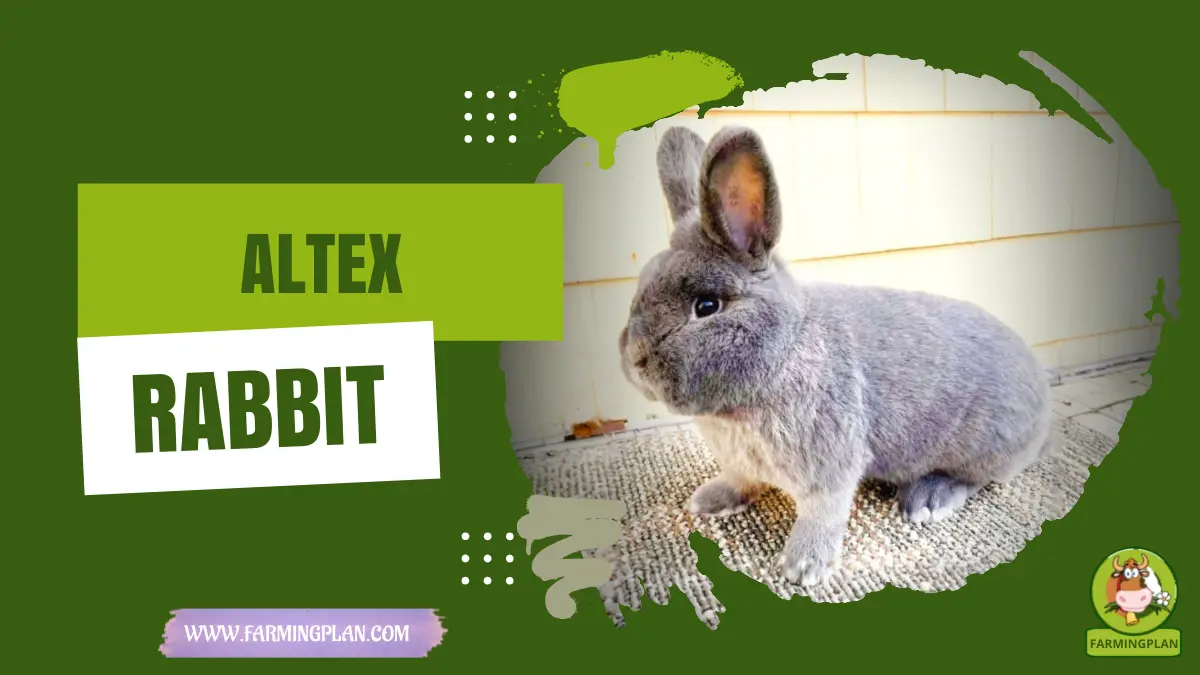
University Origins & Terminal Sire Composite Development
The genesis of the Altex rabbit dates back to the 1980s and 1990s under the leadership of Dr. Steven Lukefahr at Texas A&M University-Kingsville. Commercial rabbit meat producers throughout the southern United States struggled with severe production slumps during summer months, as standard European breeds suffered buck infertility when ambient temperatures exceeded 29°C (85°F). Researchers set out to construct a composite breed that merged high thermal resilience with rapid muscling. Following biosecurity best practices reduces disease risk in any Altex Rabbit operation.
The genetic foundation was established by systematically synthesizing four distinct breeds: Flemish Giant (for immense skeletal frame and fast growth), Champagne d’Argent (for early muscular development), Californian (for commercial body type and pointed marking), and New Zealand White (for vigor and feed efficiency). Decades of performance-tested selection in subtropical climates established a fixed composite sire line documented by the FAO Animal Production Directory. Seasonal adjustments to shelter and diet keep Altex Rabbit thriving year-round.
Today, the Altex is recognized worldwide as an industry benchmark for terminal meat sires. Unlike traditional heritage breeds managed for exhibition beauty, the Altex is judged strictly on functional economic parameters: average daily gain, post-weaning survival, dressed meat yield, and thermal reproductive longevity. Proper record-keeping makes breeding and culling decisions easier for Altex Rabbit keepers.
Physical Conformation, Muscle Geometry & Pelt Characteristics
The Altex rabbit presents a massive, semi-arch to commercial body type with heavy, rounded hindquarters and broad, deep shoulders. Mature bucks achieve live weights between 5.5 and 6.5 kilograms (12 to 14.3 pounds), while adult does reach 5.0 to 6.0 kilograms. The spine displays exceptional width across the lumbar loin region, tapering into full, plump thighs that yield prime culinary cuts. Providing adequate space and ventilation prevents common stress issues in Altex Rabbit.
The head is broad with strong jaw development, upright ears of moderate thickness, and pink albino eyes. Plumage color generally displays the pointed white pattern reminiscent of the Californian breed—a clean white body complemented by dusky dark points on the nose, ears, feet, and tail. The pelt is commercial flyback fur with dense undercoat development, providing clean pelt salvage value after fryer processing. Understanding breed-specific traits helps maximize Altex Rabbit longevity and output.
Bone structure is robust yet lightweight relative to muscle volume, creating an advantageous meat-to-bone ratio. When market fryers reach slaughter maturity, the lean meat yield exceeds standard purebred lines by 4% to 7%, dramatically improving farm profitability. Routine preventive care saves time and lowers veterinary costs for Altex Rabbit.
Commercial Rabbitry Housing, Caging & Thermal Control
Because the Altex is a heavy breed, cage design and flooring require careful engineering to prevent ulcerative pododermatitis (sore hocks). Standard all-wire cages should measure at least 76 cm wide by 91 cm deep by 45 cm high (30 by 36 by 18 inches) for individual mature bucks. Floor wire must be constructed from heavy 14-gauge galvanized-after-weld wire with 1.25 cm by 2.5 cm (0.5 by 1 inch) mesh spacing, supplemented with durable plastic resting pads. Matching forage or ration quality to life stage optimizes Altex Rabbit growth.
Ventilation systems in commercial rabbitries must supply continuous air movement to remove ammonia, humidity, and body heat. Tunnel ventilation systems paired with evaporative cooling pads maintain barn temperatures below 28°C (82°F) even during blistering summer heatwaves. Coordinating infrastructure with guidelines in poultry equipment provides actionable blueprints for commercial livestock environmental controls. Gradual dietary transitions protect digestive stability in Altex Rabbit.
Waste management demands daily or continuous automated manure removal beneath wire cages. Manure pits with automated scrapers or sloping collection trays treated with agricultural lime suppress fly proliferation and eliminate respiratory irritation caused by volatilized ammonia gas. If you are balancing utility output and herd resilience, take a look at our Aurora Negro Rabbit reference guide. Selecting healthy foundation stock is the cornerstone of successful Altex Rabbit management.
Cuniculture Nutrition, Feed Conversion & Water Delivery
Altex rabbits require high-quality pelleted commercial rations formulated to support rapid lean tissue deposition without causing hepatic fat buildup. Mature working bucks maintain optimal condition on 120 to 150 grams of a 16% crude protein, 18% crude fiber complete pellet daily, supplemented with fresh grass hay (such as Timothy, Orchard, or Coastal Bermudagrass) to ensure proper gastrointestinal motility.
Growing crossbred fryers sired by Altex bucks demonstrate exceptional feed efficiency, achieving feed conversion ratios (FCR) of 2.7 to 3.0 kilograms of feed per kilogram of liveweight gain. Fryers should have ad-libitum access to an 18% crude protein grower ration from weaning at 28 to 35 days through marketing at 70 to 77 days. Adequate dietary fiber (minimum 16%) prevents enteropathy and supports beneficial cecal microflora. Good predator-proofing and dry bedding safeguard Altex Rabbit comfort in harsh weather.
Continuous water delivery via pressurized automatic nipple drinkers is non-negotiable. An adult Altex consuming dry pellets drinks twice as much water as dry feed volume—roughly 500 to 750 ml daily per adult animal. Water lines must be insulated or regularly flushed during hot weather, as rabbits will refuse to drink warm water, immediately triggering feed refusal and rapid weight loss. Monitoring water quality and mineral balance directly benefits Altex Rabbit vitality.
Biosecurity, Pasteurellosis & Heat Stress Mitigation
The primary health concern in intensive commercial cuniculture is Pasteurella multocida, a bacterial organism responsible for snuffles, pneumonia, abscesses, and inner ear infections. Maintaining strict biosecurity protocols—including closed-herd policies, quarantine of newly introduced breeding stock, and strict culling of chronically sneezing animals—safeguards herd respiratory health. Practical hands-on husbandry ensures consistent results when raising Altex Rabbit.
While the Altex breed was bred for enhanced heat tolerance, active mitigation during heat waves remains essential. When temperatures climb above 32°C (90°F), install high-velocity circulation fans and frozen water bottles in hutches to prevent acute heat stroke. Inspecting biosecurity frameworks analogous to poultry vaccination standards reinforces the importance of environmental sanitization in intensive livestock production. Early intervention at the first sign of lethargy protects overall Altex Rabbit flock or herd health.
Regular parasite management targets ear mites (Psoroptes cuniculi) and intestinal coccidiosis (Eimeria species). Sanitation protocols utilizing flaming of metal wire cages and non-toxic surface disinfectants disrupt coccidial oocyst cycles, ensuring healthy gut absorption across growing litters. Structured culling and biosecurity protocols strengthen Altex Rabbit genetic quality.
Terminal Crossbreeding Systems & Buck Management
The true power of the Altex breed is realized in a structured terminal crossbreeding program. Commercial operations maintain purebred or maternal cross does (such as New Zealand White x Californian) renowned for high fertility, large litter sizes, and heavy milk yields. Mating these maternal does exclusively to purebred Altex bucks exploits hybrid vigor (heterosis), yielding market fryers with explosive growth rates and superior carcass muscling. Maintaining clean feeders and sanitized equipment supports sustainable Altex Rabbit care.
Altex working bucks should begin breeding service between 6 and 7 months of age. A mature buck can comfortably service 20 to 30 breeding does under a natural mating schedule, or up to 100 does when utilized in artificial insemination (AI) programs. Maintain records of service dates and pregnancy palpaton results at 10 to 14 days post-mating to maintain steady weekly production cycles. Consistent daily observation helps keepers spot early changes in Altex Rabbit health and behavior.
Crossbred fryers sired by Altex bucks routinely reach live weights of 2.2 to 2.5 kilograms (4.8 to 5.5 pounds) by 10 to 11 weeks of age, cutting up to a full week off traditional commercial finishing schedules and saving substantial cumulative feed costs. Clean housing, fresh water, and balanced nutrition remain essential for Altex Rabbit productivity.
Economic Value: High-Yield Meat Fryers & Wholesale Offtake
Commercial rabbit meat production centers on carcass yield and labor efficiency. The Altex terminal cross delivers hot carcass dressing percentages of 58% to 62%, significantly outperforming standard commercial fryers. The meat is mild, white, low in sodium, and virtually fat-free, commanding premium prices among health-conscious consumers, specialty culinary markets, and ethnic grocery distributors. Tracking feed intake and body condition supports long-term Altex Rabbit performance.
Beyond meat marketing, Altex breeding stock commands significant premiums among commercial rabbitries seeking to upgrade their herd sire genetics. Selling performance-tested young working bucks provides diversified enterprise income alongside weekly meat fryer sales. Following biosecurity best practices reduces disease risk in any Altex Rabbit operation.
In addition, clean pelts from commercial processing find ready markets in tanning and craft industries, while nutrient-rich rabbit manure—naturally cold and high in nitrogen, phosphorus, and potassium—sells rapidly to organic vegetable growers and commercial nurseries. Seasonal adjustments to shelter and diet keep Altex Rabbit thriving year-round.
Interactive Cuniculture Feed & Fryer Production Calculator
Calculate feed conversion ratios, fryer slaughter projections, and terminal breeding schedules using our dedicated livestock calculator below:
🐇 Altex Rabbit Daily Hay & Pellet Calculator
Calculate daily Timothy hay (unlimited bulk), pellet rations, fresh greens, and clean water intake for your Altex Rabbit.
Frequently Asked Questions (FAQ)
What is the Altex rabbit breed designed for?
The Altex rabbit is a specialized composite terminal sire breed developed by Texas A&M University specifically for commercial meat production, rapid fryer growth, high meat-to-bone ratios, and heat tolerance in hot climates.
How fast do Altex crossbred fryers reach market slaughter weight?
Crossbred meat fryers sired by an Altex buck typically achieve market slaughter weights of 2.2 to 2.5 kilograms (4.8 to 5.5 pounds) in 70 to 77 days (10 to 11 weeks) with exceptional feed conversion.
Are Altex does recommended as commercial mothers?
While Altex does can produce litters, the breed was engineered primarily as a terminal sire line. Best commercial results occur when mating Altex bucks to maternal New Zealand White or Californian does that excel in maternal instincts and milk production.
How does the Altex handle summer heat compared to other breeds?
The Altex demonstrates superior heat resilience compared to European breeds, maintaining strong libido and viable sperm counts up to 38°C (100°F) when provided with shade, cool water, and good ventilation.
Step-by-Step Alai & Altex Herd Husbandry Protocol
- Equip Heavy-Duty Wire Hutches: Provide 14-gauge wire cages measuring at least 76x91x45 cm with plastic resting pads to protect heavy buck hocks from sore foot lesions.
- Install Automatic Pressurized Waterers: Set up stainless-steel nipple drinkers connected to pressure regulators, ensuring adult stock have constant access to cool drinking water.
- Formulate Controlled Rations: Feed mature bucks 120 to 150 grams of 16% protein pelleted feed daily alongside grass hay to maintain lean muscling without obesity.
- Execute Terminal Crosses: Mate Altex bucks to productive maternal New Zealand White does to maximize hybrid vigor, growth rate, and dressed fryer yield.
- Enforce Strict Biosecurity: Quarantine new breeding stock for 30 days and cull any animals exhibiting symptoms of chronic Pasteurella snuffles or ocular discharge.
- Implement Summer Cooling Protocols: Run circulation fans and evaporative cooling pads when temperatures exceed 29°C (85°F) to preserve buck fertility and prevent heat stress.
- Market Fryers at 10 to 11 Weeks: Harvest uniform fryers at 2.2 to 2.5 kg liveweight to secure optimum feed conversion ratios and peak carcass tenderness.
📚Agricultural Reference & Scientific Citations
Standards and physiological data referenced in this guide comply with American Rabbit Breeders Association (ARBA), USDA APHIS Animal Health, and the FAO Domestic Animal Diversity Information System.


